
To stay safe with extension cords, choose a gauge suited for your needs—thicker gauges like 12 or 14 are better for higher power use outdoors. Avoid overloading the cord by checking its wattage and not plugging in too many devices. Watch for heat buildup or damage, and unplug if the cord gets warm or shows signs of wear. Properly managing your cords helps prevent hazards; more tips are just a step away.
Key Takeaways
- Use extension cords with appropriate gauge (12 or 14) for the intended load to prevent overheating.
- Always check the cord’s wattage rating and avoid overloading by exceeding its capacity.
- Regularly inspect cords for signs of heat damage like melting, scorch marks, or frayed insulation.
- Do not daisy-chain multiple extension cords; use a single cord rated for the total load.
- Ensure the cord is rated for outdoor use and keep connection points protected from moisture to prevent safety hazards.
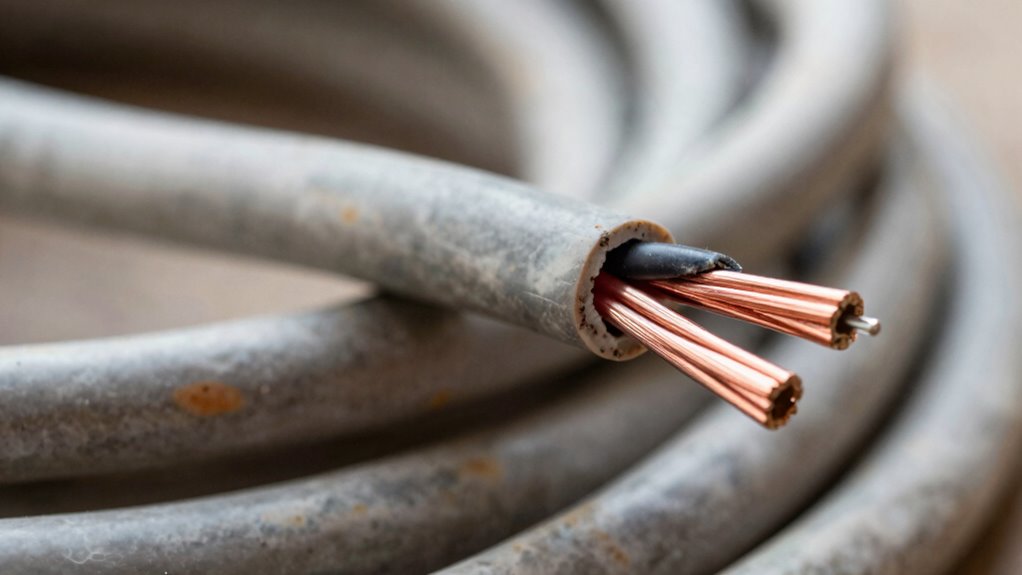
Extension cords are convenient tools that help you power devices when outlets are out of reach, but improper use can lead to serious hazards. When it comes to outdoor use, it’s especially important to choose the right cord designed for the elements. Outdoor extension cords are built with tougher insulation to withstand moisture, sunlight, and temperature changes. Using indoor cords outside can cause deterioration, increasing the risk of electrical shock or fire. Always look for cords labeled for outdoor use and avoid improvising with indoor cords in outdoor settings.
Proper cord management is essential for safety. Keep extension cords away from high-traffic areas to prevent tripping hazards. If you’re running cords across walkways or driveways, secure them with tape or cord covers to prevent accidents. Avoid running cords through puddles, snow, or areas where they can get wet or damaged. Water and electricity are a dangerous combination, so maintaining a dry, safe environment is a top priority. When outdoors, make sure the connection points are protected from the elements by using weatherproof covers or outdoor-rated connectors.
Overloading an extension cord is a common mistake that can lead to overheating and fires. Always check the cord’s gauge and maximum wattage rating before plugging in multiple devices or high-power tools. Thicker gauge cords (like 12 or 14 gauge) can handle more current than thinner ones, so match the cord to your power needs. Never plug too many devices into a single extension cord or daisy-chain multiple cords together, as this can overload the circuit. Instead, use multiple cords or, better yet, run a properly rated outdoor power strip from a grounded outlet.
Heat buildup is another concern that ties into overloads and cord quality. When a cord is overloaded or of insufficient gauge, it can heat up quickly, increasing the risk of melting insulation or igniting nearby materials. Regularly inspect your extension cords for signs of heat damage, such as melting or scorch marks. If a cord feels warm to the touch, unplug it immediately and reevaluate your power setup. Use extension cords that are rated for the total load you’ll be drawing, and avoid using damaged or worn-out cords altogether. Additionally, understanding the importance of proper electrical safety can help prevent accidents and ensure safe usage.
Frequently Asked Questions
Can I Use a Higher Gauge Cord for Heavy-Duty Appliances?
Yes, you can use a higher gauge cord for heavy-duty appliances, but make sure it has durable cord material and proper cord insulation. A thicker gauge (lower number) handles more current safely, reducing heat buildup. Confirm the cord’s insulation is rated for the appliance’s power level. Always check the manufacturer’s recommendations, and avoid overloading the cord, as using the wrong gauge can cause overheating or fire hazards.
How Can I Tell if an Extension Cord Is Overloaded?
You can tell if your extension cord is overloaded by paying attention to warning signs like overheating, a burning smell, or visible sparks. Longer cords increase resistance, so safety precautions become even more critical. Always check the cord’s rated capacity, avoid daisy-chaining multiple cords, and don’t surpass the recommended wattage. If you notice any signs of stress, unplug immediately—overloading can be dangerous and cause fires.
Are Indoor and Outdoor Extension Cords Interchangeable?
Indoor and outdoor extension cords aren’t interchangeable because they differ in cord length and insulation material. Outdoor cords are designed with tougher insulation to withstand weather, moisture, and temperature changes, while indoor cords use lighter insulation for indoor use. Using an outdoor cord indoors can be unsafe due to inadequate insulation, and vice versa. Always check the cord’s label to confirm it’s suitable for your specific needs and environment.
What Are Signs of a Damaged Extension Cord?
Imagine a glowing, frayed wire poking through worn cord insulation, signaling trouble. You’ll notice cracked or peeling insulation, visible frayed wiring, or scorch marks. If the cord feels hot or looks damaged, it’s unsafe to use. These signs indicate the cord’s protective layer is compromised, risking shocks or fires. Always inspect your extension cords regularly, replacing any showing damage to keep your workspace safe.
How Often Should I Replace My Extension Cords?
You should replace your extension cords every 3 to 5 years, especially if you notice signs of wear or damage. Proper cord storage helps prevent deterioration, so coil them loosely and keep them in a dry, cool place. Also, consider the cord length; longer cords are more prone to damage and overheating. Regularly inspect your cords for fraying or cracks, and replace them promptly to guarantee safety and peak performance.
Conclusion
Think of your extension cord as a trusty bridge—carrying power safely across a busy landscape. When you choose the right gauge, avoid overloads, and watch for heat, you’re maintaining its strength and integrity. Neglect these details, and the bridge could falter, risking damage or danger. By respecting your cord’s limits, you ensure your electrical journey remains smooth and secure. Stay vigilant, and let your extension cord be the reliable bridge it’s meant to be.