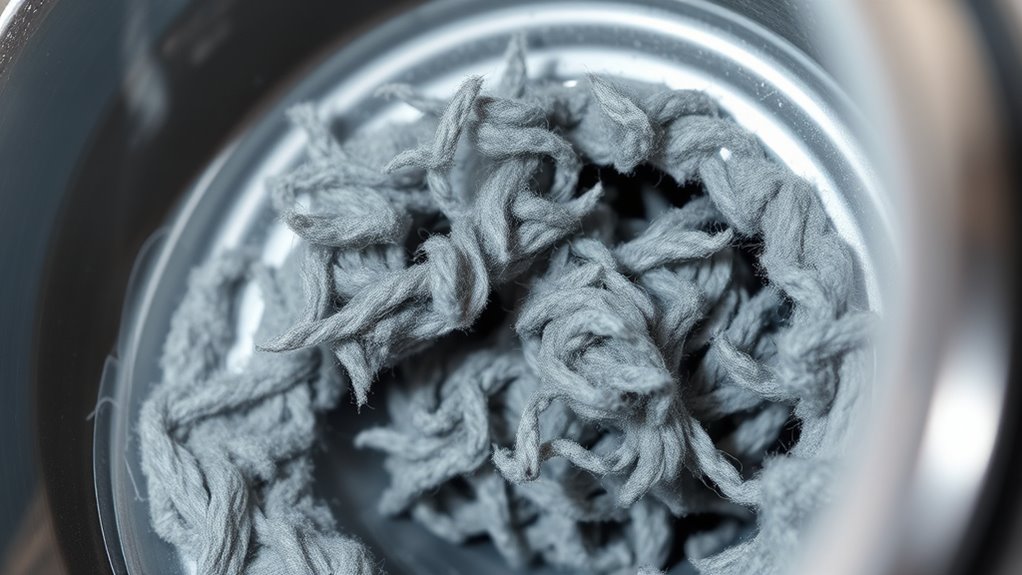

I understand that lint buildup in your dryer vent creates a serious fire risk and can make your dryer less efficient. It’s essential to clean the vent regularly to prevent dangerous blockages caused by lint accumulation. I recommend inspecting the vent at least once a year and cleaning it thoroughly using a vacuum or brush. Keep in mind, neglecting maintenance can lead to longer drying times and potential fire hazards—if you want to learn more, stay with me.
Key Takeaways
- Lint buildup inside dryer vents is highly flammable and significantly increases fire risk.
- Regular cleaning of the vent at least once a year helps prevent dangerous lint accumulation.
- Blocked vents reduce airflow, cause longer drying times, and force the dryer to work harder, increasing fire hazards.
- Signs like clothes taking longer to dry or a burning smell indicate the need for immediate vent cleaning.
- Proper maintenance and timely cleaning enhance dryer efficiency, save energy, and reduce the risk of house fires.
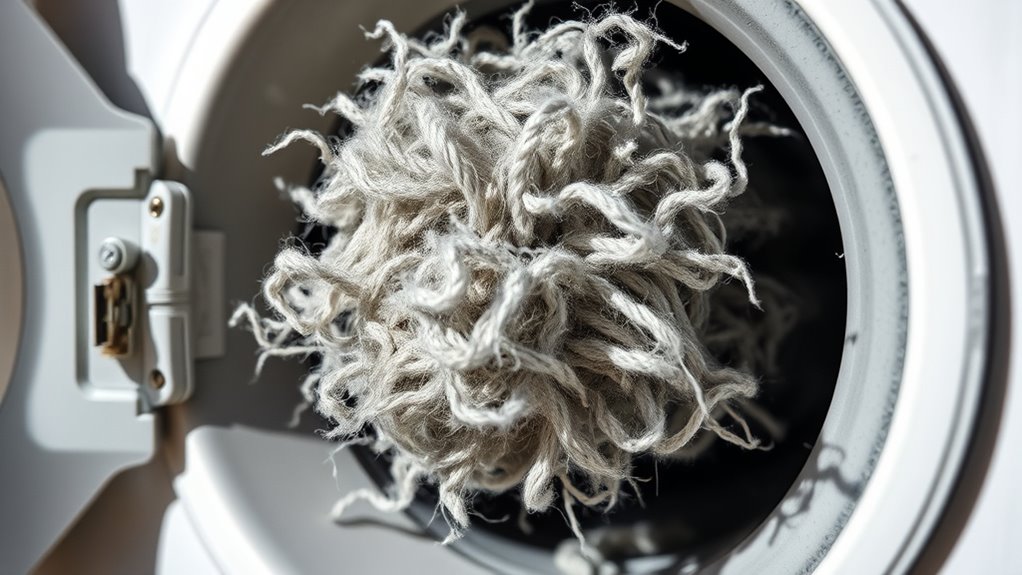
Dryer vent lint might seem like a minor nuisance, but it can pose serious safety risks if not cleaned regularly. Over time, lint accumulates in your dryer vent, creating a layer of material that’s highly flammable. The more lint builds up, the greater the risk of vent blockage, which can lead to inefficient drying and, more alarmingly, increase the chance of a fire breaking out in your home. I’ve seen firsthand how neglected vent maintenance can turn a minor inconvenience into a dangerous situation. That’s why I always stress the importance of routine cleaning.
When lint builds up, it not only blocks airflow but also traps heat inside the vent. This heat, combined with the flammable nature of lint, creates the perfect environment for a fire to ignite. A blocked vent causes your dryer to work harder, which generates more heat and increases your energy bills. Plus, with limited airflow, your clothes won’t dry properly, leading to longer drying times and potential wear on your machine. The problem starts subtly—perhaps you notice your dryer taking longer to dry clothes—but if you ignore it, the risk of vent blockage and lint buildup escalating into a fire hazard becomes very real.
To prevent this, I recommend inspecting your dryer vent at least once a year, especially if you notice longer drying times or a burning smell. Regular cleaning removes lint accumulation before it becomes a serious problem. You can do this by disconnecting the vent hose and using a vacuum or a specialized brush to clear out lint inside the duct. It’s a quick task that can save you from costly repairs or worse, a house fire. For homes with pets or heavy laundry loads, more frequent cleanings might be necessary because lint can accumulate faster. Additionally, understanding the impact of wood-burning practices emphasizes the importance of maintaining safe, sustainable habits and avoiding additional fire hazards in your home.
Frequently Asked Questions
How Often Should I Replace My Dryer Vent Hose?
I recommend replacing your vent hose every 3 to 5 years for ideal vent hose maintenance. Over time, the hose can develop cracks or become clogged, reducing efficiency and increasing fire risk. Regularly check for damage or lint buildup, and if you notice any issues, don’t wait—replace the vent hose promptly. This proactive approach helps keep your dryer safe, efficient, and in good working condition.
Can Dryer Lint Cause Health Problems?
You might be surprised, but dryer lint can subtly impact your health. It often contains airborne allergens and irritants that can worsen respiratory issues or cause allergies to flare up. When lint builds up and isn’t cleaned regularly, these particles can circulate in your home’s air, posing a hidden health risk. Staying vigilant and cleaning your dryer vent frequently helps reduce these airborne dangers, keeping your environment safer and healthier.
Are There Specific Tools for Cleaning Dryer Vents?
Yes, there are specific tools for cleaning dryer vents. I recommend using vacuum attachments designed for tight spaces and flexible brushes, which help reach deep into the vent to remove lint buildup effectively. These tools make the job easier and safer, preventing fire hazards. Always guarantee you follow safety precautions and consider professional cleaning if you’re uncomfortable or unsure about doing it yourself.
What Signs Indicate a Clogged Dryer Vent?
Like a warning bell ringing in your ears, signs of a clogged dryer vent include increased drying times and lint accumulation around the lint trap. You might notice the dryer gets hotter than usual or takes longer to dry clothes. Ventilation blockages cause your dryer to work harder, wasting energy and risking fires. Keep an eye out for these signs to prevent hazards and keep your dryer running safely.
Is Professional Cleaning More Effective Than DIY?
Professional cleaning is generally more effective than DIY because experts have specialized tools and experience that guarantee a thorough job. While DIY safety is important, it’s easy to miss hidden lint or blockages, increasing fire risk. Hiring professionals offers benefits like reducing fire hazards, improving dryer efficiency, and saving you time. I recommend professional cleaning periodically to keep your vent safe and functioning at its best, especially if you’re unsure about DIY safety.
Conclusion
I’ve read that lint buildup might actually attract pests or even cause fires, not just block airflow. While some say lint is just harmless debris, I believe it’s better to stay cautious. Regularly cleaning your dryer vent isn’t just about avoiding fires—it’s about peace of mind. So, I make it a habit to check and clear my vent schedule. Trust me, a quick clean now can prevent a costly disaster later.