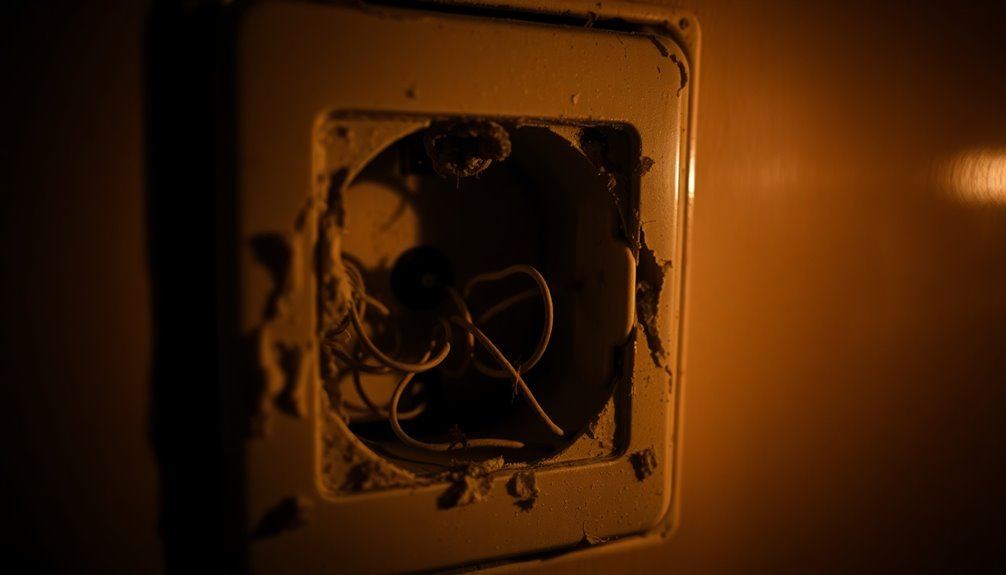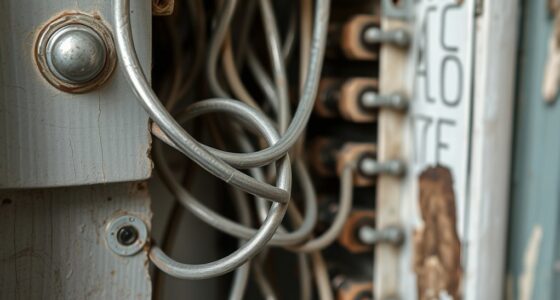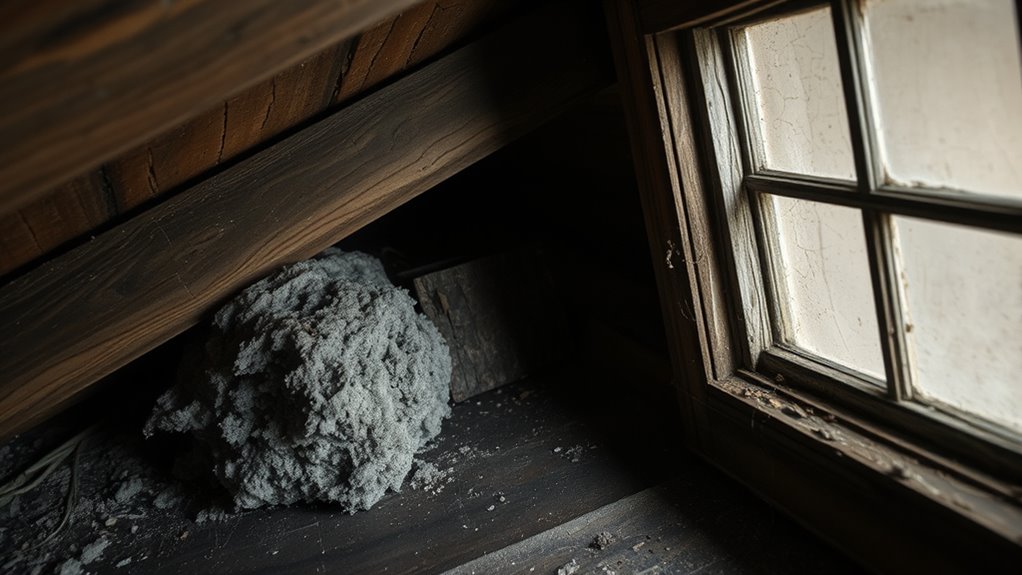

In older homes, I’ve found asbestos tucked inside insulation, ceiling tiles, and around pipes, while lead paints are often hidden beneath layers of newer coatings. Both materials can be inside walls, floors, and sometimes even inside window sashes or siding. Disturbing these without proper safety measures can release dangerous fibers and dust. To stay safe, it’s essential to know where these hazards hide and seek professional help—there’s more to uncover if you keep looking.
Key Takeaways
- Asbestos is commonly concealed in insulation, fireproofing, and building materials within walls, ceilings, and floors of older homes.
- Lead-based paint often remains hidden beneath multiple layers of older paint, especially in homes built before the 1980s.
- Deteriorating or disturbed materials can release asbestos fibers and lead dust, posing health risks during renovation or repair.
- Hazardous substances may be embedded inside wall cavities, behind panels, or under flooring, requiring professional testing to locate.
- Proper identification and safe removal or encapsulation by experts are essential to prevent exposure to asbestos and lead hazards.
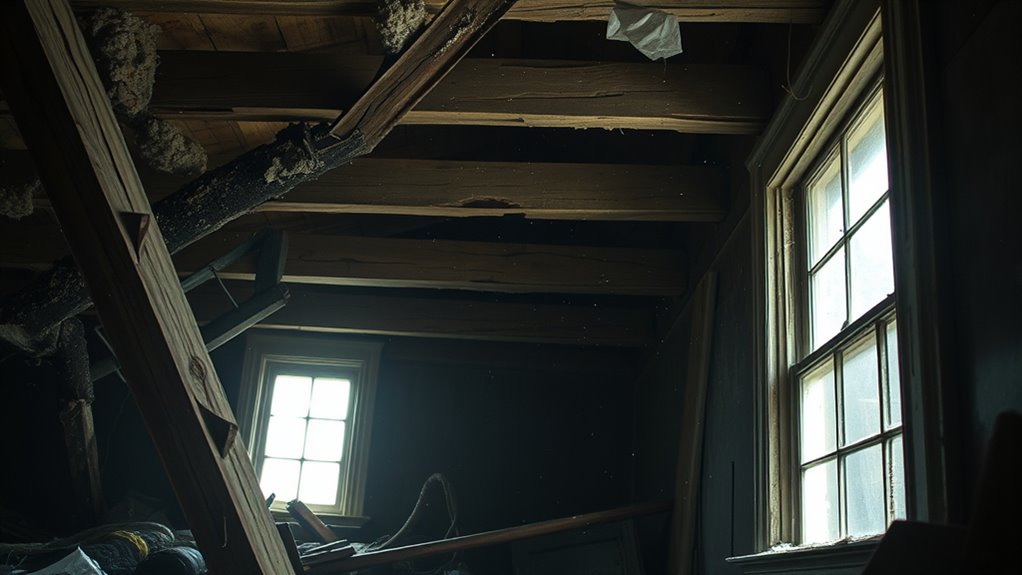
Have you ever wondered if your older home might contain hazardous materials like asbestos or lead? It’s a common concern for homeowners, especially those living in houses built before the 1980s. These materials were widely used in construction, and many of us don’t realize the potential health risks lurking behind walls, beneath floors, or inside paint layers. When I started researching my own home’s history, I was surprised to find that these toxins can hide in plain sight, often in areas I never considered.
One of the biggest dangers is attempting DIY removal. Sure, it might seem straightforward—just scrape off some paint or remove old insulation—but this is precisely where things can go wrong. Disturbing asbestos or lead-based materials without proper training and equipment can release dangerous fibers or dust into the air. These tiny particles are invisible to the naked eye but pose serious health risks when inhaled over time. Long-term exposure can lead to respiratory issues, asbestos-related diseases, or lead poisoning, which can cause neurological damage, especially in children. That’s why I quickly learned that handling these hazards isn’t a do-it-yourself job, no matter how tempting it might be to save money or time.
DIY removal of asbestos and lead risks releasing dangerous fibers and dust, making professional testing essential for safety.
The health risks associated with asbestos and lead aren’t something to take lightly. Asbestos, once used extensively for insulation and fireproofing, becomes deadly when fibers become airborne and inhaled. Lead, common in old paint, is equally dangerous if ingested or inhaled as dust. I realized that many older homes still have these materials intact, which isn’t always an immediate problem unless disturbed. But renovation projects, repairs, or even simple deterioration can turn a safe home into a health hazard. That’s why I advocate for professional testing before starting any renovation or demolition work. Professionals can identify these hidden dangers using specialized tools and safely remove or encapsulate the materials, minimizing risk.
Living in an older home offers charm and character, but it also means being aware of potential hazards lurking behind the walls. I’ve learned that understanding where asbestos and lead might hide is key to protecting myself and my family. While it’s tempting to handle things on our own, the health risks involved are just too significant. Proper testing and professional removal aren’t just precautions—they’re essential steps to ensure a safe living environment. If your home is old, don’t ignore these risks. Instead, educate yourself, consult experts, and prioritize safety every step of the way. Additionally, understanding the role of color accuracy and contrast ratio in home safety can help identify issues related to deteriorating materials or structural problems that might not be visible at first glance.
Frequently Asked Questions
How Can I Identify Asbestos and Lead in My Home Without Professional Testing?
You can start with DIY detection by looking for visual clues like brittle, peeling paint or stained, discolored materials, which may indicate lead. For asbestos, check for old insulation, textured ceilings, or flooring materials that feel brittle or fibrous. However, I strongly advise against disturbing suspect materials and recommend professional testing for accurate identification, as health risks are involved. Always prioritize safety when inspecting your home.
Are There Safe Ways to Remove Asbestos and Lead Hazards Myself?
Think of DIY removal as walking a tightrope—dangerous without proper tools and knowledge. I wouldn’t recommend tackling asbestos or lead hazards myself, even if you’ve done home testing. These materials are hazardous and require professional removal to guarantee safety. Instead, focus on hiring certified specialists who follow strict protocols. Your health’s worth more than risking exposure during a DIY project—leave asbestos and lead removal to the experts.
What Are the Health Risks of Exposure to Asbestos and Lead?
Exposure to asbestos and lead can cause serious health complications, especially with long-term exposure. I know that inhaling asbestos fibers can lead to lung diseases like asbestosis and mesothelioma, while lead poisoning may result in neurological issues, especially in children. Even brief contact can be risky, but prolonged exposure increases the chances of severe health problems. It’s essential to handle these hazards with care and seek professional help for removal.
How Often Should Older Homes Be Inspected for Asbestos and Lead?
Think of your home as a living entity needing regular checkups. I recommend inspecting for asbestos and lead during routine maintenance or property renovation, ideally every 1-2 years. This proactive approach helps catch hidden hazards early, protecting your health and preserving your home’s integrity. Staying vigilant ensures these silent threats don’t become unseen enemies, allowing you to enjoy your space safely and confidently.
What Is the Cost Range for Professional Asbestos and Lead Removal?
The abatement costs for professional asbestos and lead removal typically range from $1,500 to $15,000, depending on the extent of contamination and the home’s size. Removal expenses can vary widely based on the complexity of the job, with larger or more hazardous areas costing more. I recommend getting multiple quotes from certified specialists to make certain you’re getting the best service at a fair price.
Conclusion
If you’re living in or considering an older home, it’s essential to be aware of hidden dangers like asbestos and lead. Did you know that over 80% of homes built before 1978 contain some level of these hazardous materials? Staying informed and getting professional inspections can protect your family’s health. Don’t wait—taking action now can prevent serious health issues later. Your home’s safety is worth the effort!