Restaurant noise can make hearing and conversation difficult, but it’s not a personal failure. Factors like background chatter, clattering dishes, and acoustics create a challenging environment, especially for older adults. Modern hearing aids help, but environmental noise still affects clarity. Strategies like choosing better seats, activating hearing aid programs, and communicating with staff can improve your experience. If you want to learn more about managing these challenges, keep exploring ways to make dining more enjoyable.

Get oils, diffusers and self-care delivered free with Prime
- Fast, free delivery on millions of items
- Prime Video, Amazon Music and more included
- Member-only deals all year
Key Takeaways
- High ambient noise and reverberation in restaurants make hearing difficult, regardless of personal hearing ability.
- Modern hearing aids assist but cannot fully overcome environmental acoustic challenges.
- Strategies like seating closer and choosing quieter times improve hearing in noisy restaurant settings.
- Open communication with companions and staff helps adapt the environment for better listening.
- Understanding environmental factors prevents misperception of hearing failure and encourages proactive solutions.
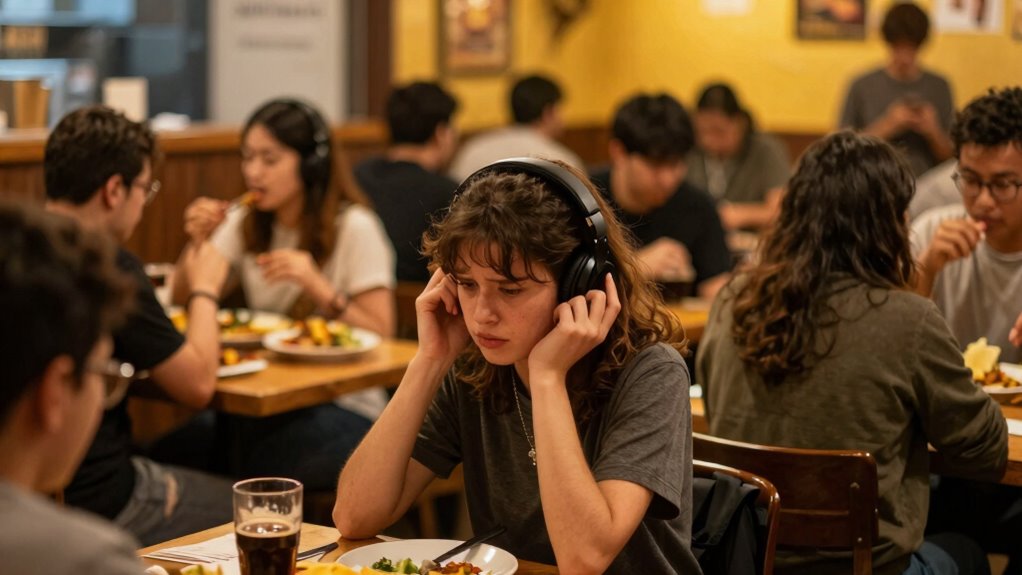
Walking into a busy restaurant can feel overwhelming, especially when the noise levels make it hard to hear your dining companions. For many, this isn’t just an annoyance—it’s a real challenge to enjoy conversation and connect fully. If you’re among the elderly patrons, you might notice that background chatter, clattering dishes, and music create a symphony of sound that can drown out voices. It’s important to remember that this isn’t a reflection of your hearing ability alone; restaurant acoustics and ambient noise play a considerably role.
Advancements in hearing aid technology now offer some relief, but they aren’t a complete fix for every noisy environment. Modern hearing aids come with features like noise reduction and directional microphones, which help focus on speech and block out background noise. However, even the best devices can struggle in highly reverberant spaces, where sound reflects off walls and surfaces, making it difficult to distinguish individual voices. You should know that experiencing difficulty hearing in such settings isn’t a personal failure but an environmental challenge.
Hearing aids help but may struggle in echoing spaces; environment, not personal hearing, is often the challenge.
When you find yourself in a noisy restaurant, there are practical steps you can take. Sitting closer to your dining companions makes a big difference, as it reduces the distance sound needs to travel and minimizes the effects of background noise. Choosing a seat away from kitchens, bars, or speakers can also help. Don’t hesitate to use your hearing aid’s features or ask your audiologist for advice on optimizing device settings for noisy environments. Some hearing aids have programs specifically designed for restaurants or social settings—activating these can improve your experience considerably.
It’s also helpful to communicate openly with your friends or family about your hearing needs. Letting them know when you’re having trouble hearing can encourage patience and understanding. Many restaurants now offer quieter days or times, especially during off-peak hours, which can be more comfortable for elderly patrons. If noise remains problematic despite these adjustments, consider speaking with the restaurant staff politely; they might be able to accommodate you by adjusting music volume or seating arrangements. Additionally, awareness of ambient noise and how it impacts hearing can help you better plan for social outings and make informed decisions to improve your dining experience. Understanding acoustic factors can further empower you to choose environments that are more conducive to hearing and social interaction. Being aware of hearing aid features and how to utilize them effectively can also significantly enhance your ability to communicate in noisy settings. Recognizing the importance of environmental modifications can lead to more comfortable and enjoyable dining experiences.
restaurant noise reduction hearing aids
As an affiliate, we earn on qualifying purchases.
As an affiliate, we earn on qualifying purchases.
Frequently Asked Questions
How Can I Protect My Hearing in Noisy Restaurants?
To protect your hearing in noisy restaurants, use noise-canceling headphones or earplugs to block out excessive noise. Ear protection tips include choosing comfortable, high-quality ear protection and taking breaks from loud environments when possible. Keep conversations short or suggest quieter spots to dine. Remember, protecting your hearing is essential, so don’t hesitate to prioritize your comfort and health with effective ear protection methods.
Are There Specific Foods That Help Reduce Noise Sensitivity?
Certain foods can help reduce noise sensitivity by leveraging dietary antioxidants and their food sensory effects. You should include antioxidant-rich options like berries, nuts, and dark leafy greens in your diet. These foods support ear health and may lessen noise sensitivity. Additionally, incorporating foods with calming sensory effects, such as chamomile or herbal teas, can help you feel more relaxed in noisy environments, making restaurant visits more enjoyable.
What Are Signs That Restaurant Noise Is Harming My Hearing?
If you notice ringing in your ears, difficulty understanding speech, or muffled hearing after dining out, noise exposure may be harming your hearing. These signs indicate that restaurant noise is impacting your hearing health. Consistently high noise levels can cause damage over time, so it’s essential to protect your ears by reducing exposure, using earplugs, and seeking quieter environments to maintain healthy hearing.
Can Hearing Aids Improve Communication in Loud Dining Environments?
Hearing aids can considerably improve communication in loud dining environments. Modern hearing aid technology enhances background noise reduction, making conversations clearer. Additionally, auditory training helps you adapt to challenging sounds, improving your ability to focus on speech amid noise. With these tools, you’ll find it easier to engage in conversations, enjoy meals, and connect with others, transforming noisy restaurants from stressful to enjoyable social settings.
How Do Restaurant Acoustics Vary Across Different Types of Venues?
Think of each venue as a unique symphony—its acoustic materials and venue design shape its soundscape. A cozy café might use soft fabrics and warm woods, creating intimate acoustics, while a lively bar might have hard surfaces that amplify noise. Larger banquet halls often rely on suspended ceilings and sound-absorbing panels. Your experience depends on how these elements harmonize, influencing how easily you can hear amid the noise.
Conclusion
Think of the restaurant as a bustling forest, where the sounds of chatter and clatter are like the wind rustling through leaves. If your ears feel overwhelmed, it’s not a personal flaw but simply that you’re sensitive to the storm of noise. Like a bird seeking quiet branches, you deserve understanding and patience. Remember, your hearing is a part of you, not a weakness. With support, you can enjoy the feast of life, even amidst the noise.
Columbus Day / Indigenous Peoples' Day Picks
long weekend sales
As an affiliate, we earn on qualifying purchases.