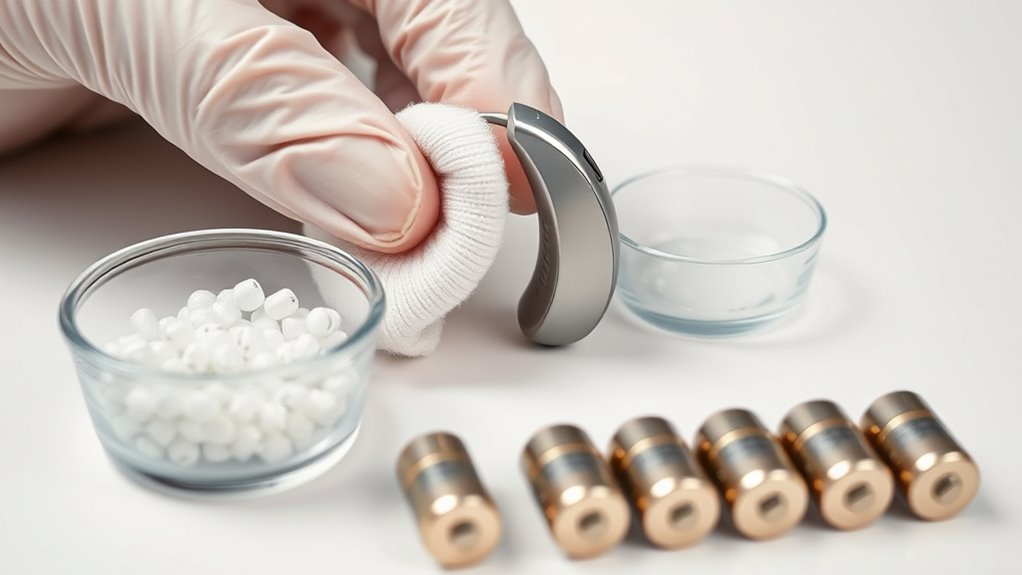

To keep your hearing aids working well, I recommend cleaning them regularly with warm, soapy water and drying thoroughly before reattaching. Always remove and replace the batteries with fresh ones, and store them in a cool, dry place. Also, use dehumidifiers or drying kits to prevent moisture buildup. Maintaining a clear line of sight and updating firmware helps keep their connectivity strong. Keep going to discover more tips for ideal hearing aid care.
Key Takeaways
- Clean ear molds regularly with warm, soapy water and dry thoroughly before reattaching.
- Wipe hearing aids with a soft cloth after each use and use dehumidifiers for deep drying.
- Keep firmware updated and maintain clear line of sight for optimal wireless connectivity.
- Replace batteries promptly at first sign of volume decline and store spares in a cool, dry place.
- Remove batteries overnight or when not in use to prevent corrosion and ensure reliable performance.
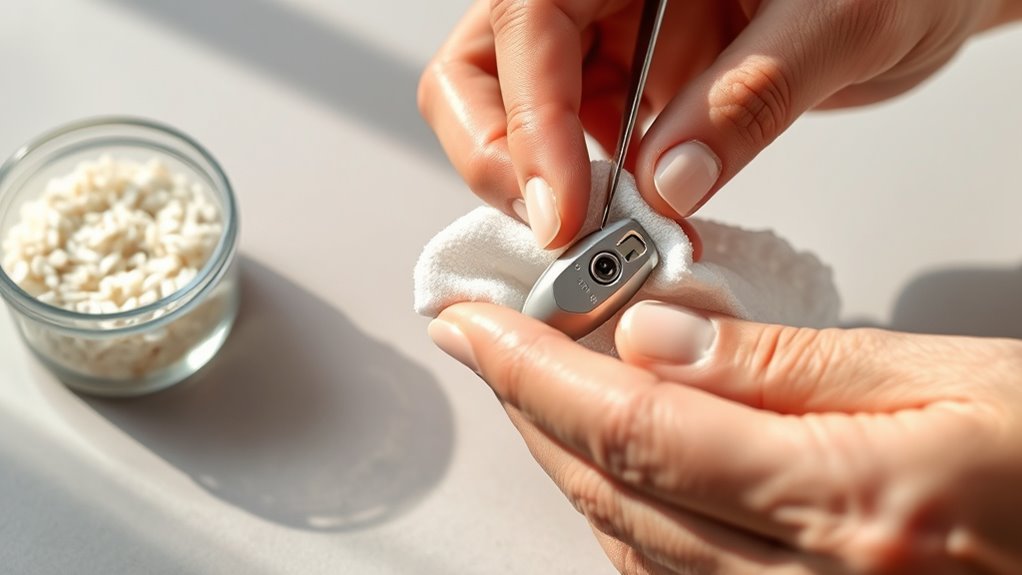
Taking good care of your hearing aids is essential to guarantee they work properly and last longer. One of the key aspects of maintenance is ensuring that your devices stay connected seamlessly, especially if they have wireless connectivity features. Wireless connectivity allows your hearing aids to sync effortlessly with your phone, TV, or other devices, providing a better listening experience. To keep this feature functioning at its best, you should regularly check the wireless connection and reset it if you notice any disruptions. Keep the firmware updated as recommended by your audiologist or manufacturer, since updates often fix bugs and improve connectivity stability. Maintaining a clear line of sight between your hearing aids and the device they connect to can also help prevent connection drops.
Regularly check and reset your wireless connection for optimal hearing aid performance.
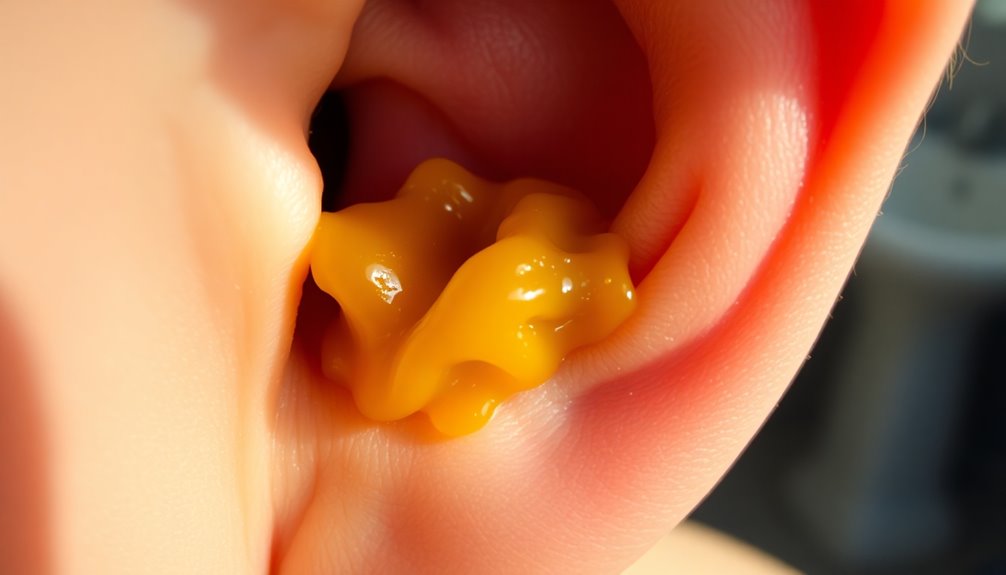
Another critical step in hearing aid care is ear mold cleaning. Ear molds are the part of your device that fits into your ear canal, and they can accumulate wax, moisture, and dirt over time. If not cleaned properly, these residues can affect sound quality and even cause discomfort or infections. To clean your ear mold, gently remove it from the hearing aid and wash it with warm, soapy water. Avoid using harsh chemicals or alcohol, which can damage the material. Make sure it dries thoroughly before reattaching it to your device, as moisture can lead to malfunction or mold growth. Regular cleaning, ideally daily or every few days, helps prevent build-up and keeps your hearing aid performing at its best.
Drying your hearing aids is another essential step. Moisture can get trapped inside, especially if you sweat or are exposed to humid environments, leading to corrosion or electronic issues. Using a soft, dry cloth to wipe down your device after each use can remove surface moisture. For deeper drying, consider using a specialized hearing aid dehumidifier or drying kit. These devices pull moisture out of the device and help maintain its integrity over time. Never expose your hearing aids to direct heat or submerge them in water, as this can cause irreparable damage. Proper drying not only prolongs the lifespan of your hearing aids but also ensures they continue to function reliably day after day.
Finally, remember that batteries are a fundamental part of your hearing aid maintenance routine. Always carry spare batteries, and replace them as soon as you notice a decline in sound quality or volume. Remove the batteries at night or when you’re not using your device to prevent corrosion, especially if your hearing aids are not rechargeable. Keep the batteries in a cool, dry place and avoid touching the metal contacts with your fingers, as oils can interfere with the connection. Proper battery care ensures your hearing aids stay powered and ready to deliver clear sound whenever you need them. Paying attention to the contrast ratio of your hearing aids can also help optimize their performance in different lighting conditions.
Frequently Asked Questions
How Often Should I Schedule Professional Hearing Aid Cleaning?
I recommend scheduling a professional hearing aid cleaning every 3 to 6 months. Regular maintenance routines, including cleaning tips like gentle wiping and checking for debris, help keep your devices in peak condition. Professionals can deep clean components I might miss, ensuring superior performance and longevity. Don’t wait too long between cleanings; consistent care prevents issues and keeps your hearing aids working smoothly.
Can I Use Household Cleaners on My Hearing Aids?
You should avoid using household cleaners or cleaning solutions on your hearing aids. These products can damage delicate components or cause residue buildup, which may impair your device’s function. Instead, I recommend using only manufacturer-approved cleaning tools and solutions. Gently wiping your hearing aids with a soft, damp cloth and avoiding harsh chemicals guarantees they stay in good condition without risking damage or voiding your warranty.
What Are Signs My Hearing Aid Battery Needs Replacing?
If your hearing aid battery needs replacing, you’ll notice a decline in battery life and possibly weak or distorted sound. Indicator signals, like beeping or flashing lights, often alert you when the power is low. I recommend keeping an eye on these signals and replacing the battery promptly to maintain peak performance. Always carry spare batteries and test your hearing aids regularly for the best hearing experience.
How Long Do Hearing Aid Batteries Typically Last?
Imagine you’re about to leave for an important meeting, and suddenly your hearing aid stops working. Typically, battery life lasts about 3 to 7 days, depending on usage and model. I’ve seen batteries need replacement sooner when hearing aids are used heavily. To avoid surprises, I recommend checking your battery size regularly and replacing batteries promptly when they weaken. Proper battery care guarantees peak performance and longer-lasting battery life.
Are There Specific Drying Devices Recommended for Hearing Aids?
Yes, there are specific drying devices recommended for hearing aids. I suggest using drying boxes or electronic drying devices designed for hearing aids, as they effectively remove moisture without damaging the devices. Some popular recommended products include Dry & Store or drying kits with desiccant packs. I always use a recommended drying device after cleaning my hearing aids to keep them in ideal condition and extend their lifespan.
Conclusion
Taking good care of your hearing aid is like tending a delicate garden—you’ll enjoy its full bloom when you give it regular attention. Keep it clean, dry, and powered with fresh batteries, and it’ll serve you well for years to come. Remember, a little everyday effort goes a long way in preserving your hearing comfort. With just a bit of gentle care, you’ll continue to experience the world’s sounds in all their vibrant beauty.