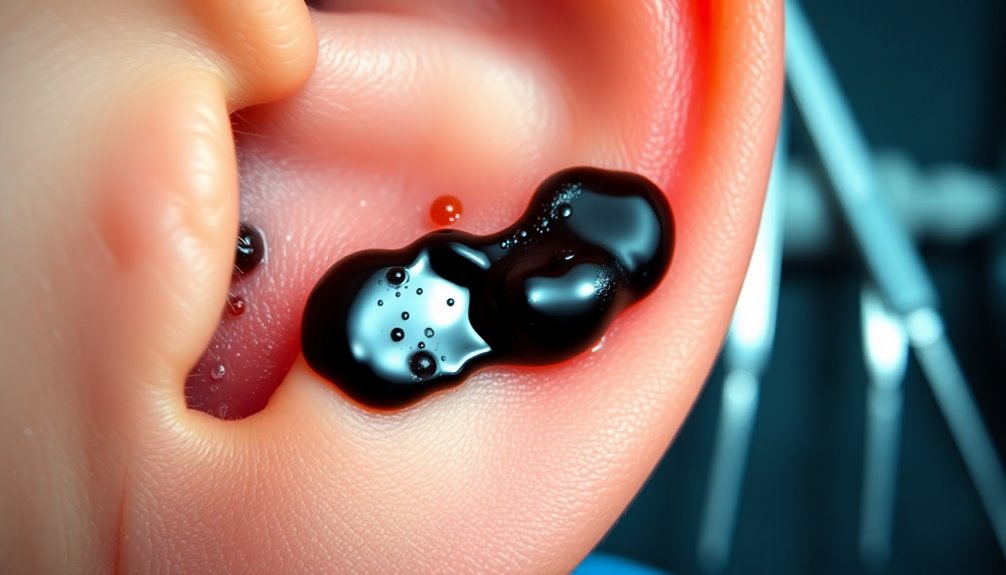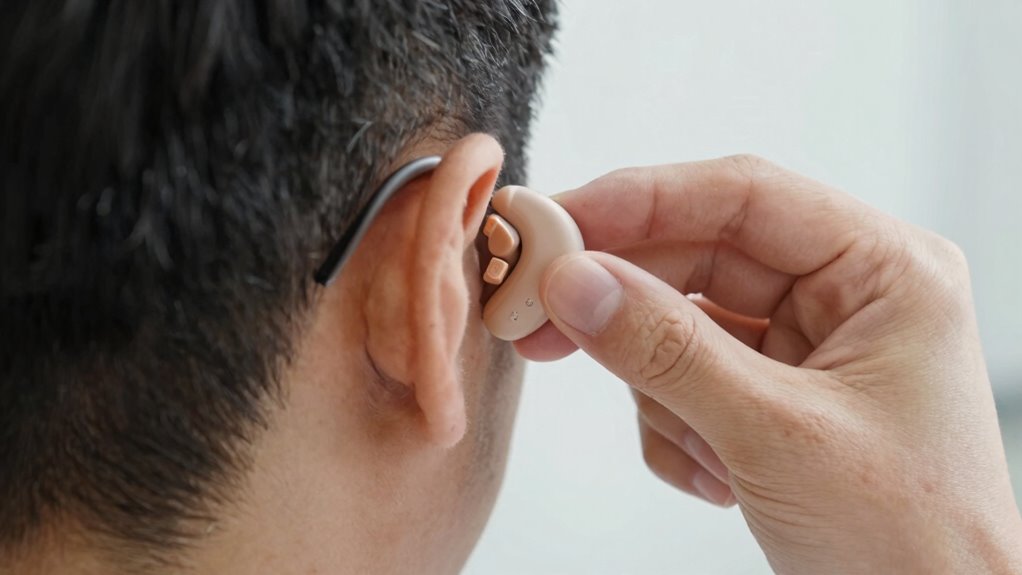

A proper hearing aid fit is key because discomfort or poor sealing can reduce sound quality and harm performance. When your device doesn’t feel comfortable, you’re more likely to adjust or remove it, disrupting sound clarity. An ill-fitting aid can cause feedback, soreness, or pressure, making it harder to enjoy what you hear. Ensuring a snug, comfortable fit improves both sound and wearability, so keep exploring to discover how proper fitting can enhance your hearing experience.
Key Takeaways
- Proper fit ensures the device is comfortable, encouraging consistent use and better adaptation.
- Comfort impacts sound quality by maintaining an effective acoustic seal and reducing feedback.
- An ill-fitting device can cause soreness, irritation, or pressure, affecting overall performance.
- Adjustments during fitting optimize microphone and receiver function, enhancing sound clarity.
- A well-fitted hearing aid conserves battery life and reduces power drain caused by movement or feedback.
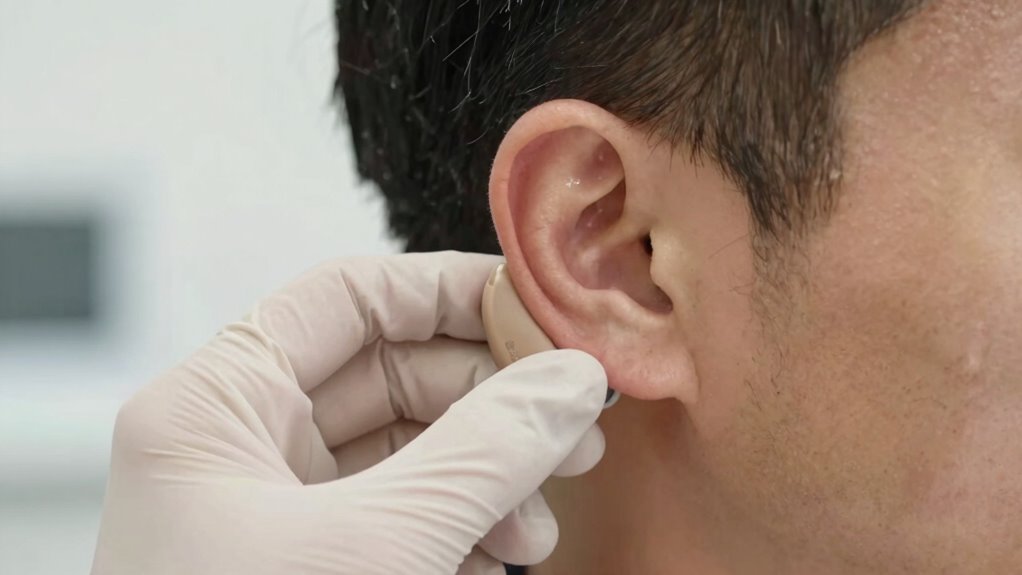
Getting a hearing aid is just the first step; the real key to benefiting from it lies in proper fitting. When your device fits well, it not only feels comfortable but also performs at its best. One of the most important factors to consider is your ear canal size. Everyone’s ears are different, and an ill-fitting hearing aid can cause discomfort, reduce sound quality, and even lead to further hearing issues. If your device is too tight, it can cause soreness or pressure, while a loose fit might result in whistling or feedback. That’s why a thorough fitting process, which accounts for your unique ear canal size, is vital. Properly fitted hearing aids sit snugly without causing pain, ensuring you get the best possible sound clarity and comfort throughout the day. sound quality is heavily influenced by how well the device fits, as an improper fit can disrupt the acoustic seal necessary for optimal hearing.
Comfort directly impacts how often you wear your hearing aid, which influences its overall effectiveness. If it’s uncomfortable, you’re likely to take it out sooner, missing out on the continuous auditory benefits. On the other hand, a well-fitted device encourages consistent use, helping you adapt more quickly and gain maximum benefit from the technology. During fitting, your audiologist will carefully check that the device matches your ear canal dimensions, making adjustments as needed. They might use different molds or tips to get the perfect fit, considering factors like ear canal size and shape. This personalized approach helps prevent issues like irritation or feedback, which can arise from improper fitting.
Another aspect of fitting is guaranteeing your hearing aid’s battery longevity. A device that fits well is less likely to have issues related to power drain. For example, if the device is loose and causes feedback or unnecessary movement, it can lead to increased battery consumption. Conversely, a snug fit ensures the device functions efficiently, conserving battery life longer between charges or replacements. Proper fitting also means that the microphone and receiver work optimally, reducing the need to increase volume and thereby saving battery power. When your hearing aid fits comfortably and correctly, it not only performs better but also maintains its battery life longer, reducing the hassle and cost of frequent replacements.
Frequently Asked Questions
How Do I Know if My Hearing Aid Fits Correctly?
You can tell if your hearing aid fits correctly by paying attention to ear canal fit and device comfort. If it feels snug without pain or pressure, it likely fits well. You shouldn’t experience discomfort, soreness, or frequent adjustments. Additionally, if your hearing aid stays secure during daily activities and provides clear sound, it’s a good sign. Schedule a follow-up with your audiologist to ensure ideal fit and comfort.
Can Discomfort From Hearing Aids Cause Long-Term Ear Damage?
You might think discomfort is just a minor annoyance, but it can actually harm your ear canal health over time. Persistent irritation from poorly fitted hearing aids could lead to infections or damage, potentially accelerating hearing loss progression. Ironically, what’s supposed to help you hear better might end up causing long-term harm if overlooked. Always consult your audiologist to ensure your hearing aid fits well and protects your ear health.
How Often Should I Visit My Audiologist for Adjustments?
You should visit your audiologist about every 6 to 12 months for adjustments. Regular visits guarantee your hearing aid stays in top shape, optimizing hearing aid maintenance and performance. As hearing aid technology advances, updates and fine-tuning become essential for comfort and effectiveness. If you notice discomfort, reduced sound quality, or other issues, don’t wait—schedule an appointment sooner to prevent long-term problems and keep your hearing aids functioning properly.
What Are the Signs That My Hearing Aid Needs Recalibration?
Ever notice sounds seem muffled or inconsistent? These are signs your hearing aid needs recalibration. Poor hearing aid maintenance or issues with ear canal health can cause performance drops. If you experience feedback, difficulty understanding speech, or discomfort, it’s time to see your audiologist. Regular check-ups ensure your device functions effectively, and addressing ear canal health prevents issues that compromise your hearing aid’s accuracy.
Does a Perfect Fit Eliminate All Background Noise?
A perfect fit doesn’t eliminate all background noise, but it does improve your hearing experience by ensuring fit accuracy. When your hearing aid fits well, it reduces unwanted noise and enhances speech clarity. However, some background noise is inevitable, especially in noisy environments. Regular adjustments and proper maintenance help optimize performance, but complete elimination of background noise isn’t realistic. Focus on achieving the best fit for comfort and clarity.
Conclusion
Remember, your hearing aid is like a trusted compass guiding you through life’s noise. When it’s comfortable, it points true and steady, enhancing your journey. But if it shifts or feels wrong, even the brightest path can seem lost. Regular adjustments make certain your device remains your faithful navigator, helping you reconnect with the sounds that matter most. Keep tuning in, and let your hearing aid be the steady lighthouse guiding you home each day.