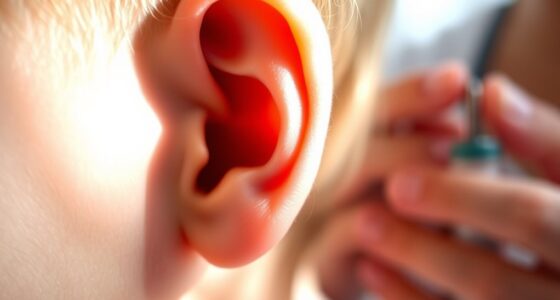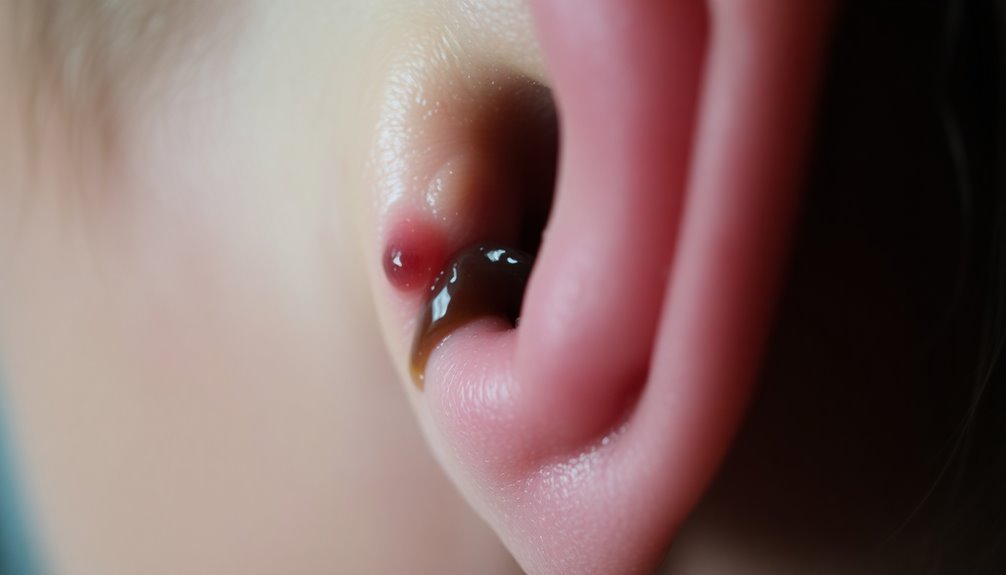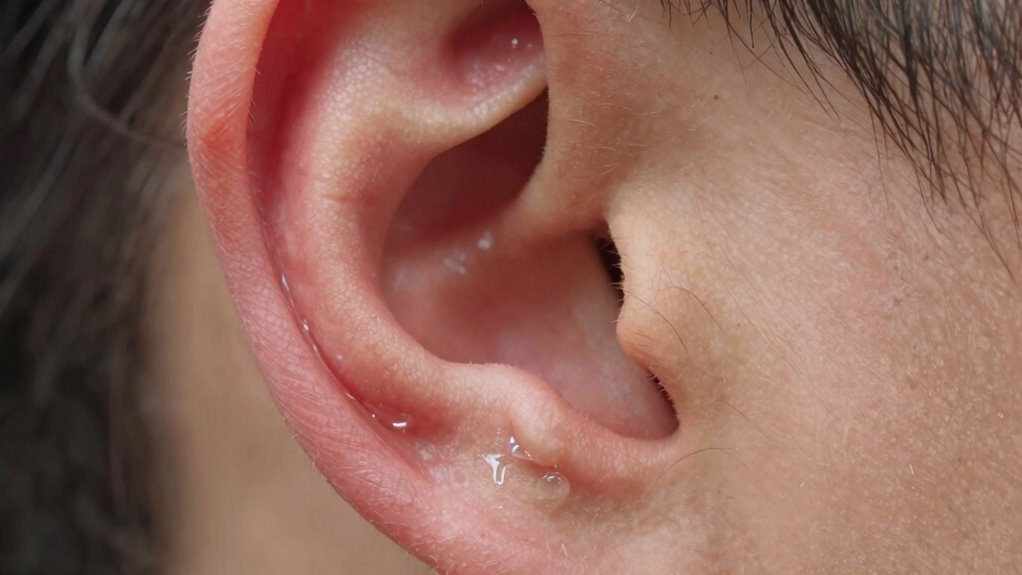
Moisture in your ears can cause more damage than you think because it creates a warm, dark space where bacteria and fungi thrive. When water gets trapped, it disrupts your ear’s natural balance, increasing the chance of infections like swimmer’s ear. This leads to irritation, pain, and redness. Many underestimate how quickly moisture can cause issues, but if you keep going, you’ll discover ways to protect your ears more effectively.

Get oils, diffusers and self-care delivered free with Prime
- Fast, free delivery on millions of items
- Prime Video, Amazon Music and more included
- Member-only deals all year
Key Takeaways
- Ears have a warm, dark environment that promotes bacterial and fungal growth when moisture is trapped.
- Moisture disrupts the ear’s natural balance, increasing infection risk more quickly than expected.
- Water can be pushed deep into the ear canal by cotton swabs, worsening moisture retention.
- Prolonged moisture contact causes irritation, swelling, and pain, escalating discomfort and infection severity.
- The delicate ear anatomy makes it highly susceptible to damage and infections from moisture buildup.
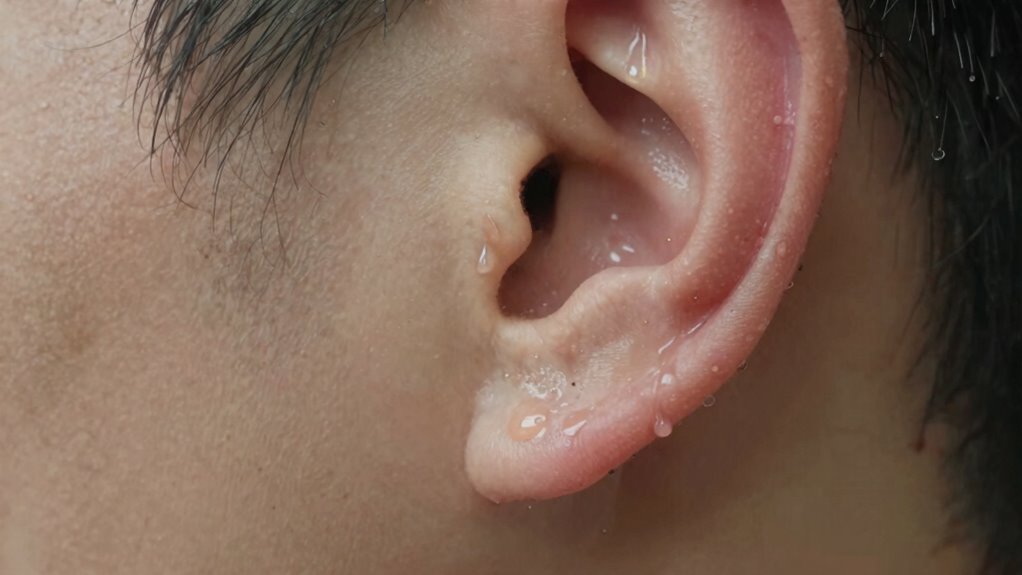
When moisture gets trapped in your ears, it can cause discomfort and sometimes lead to infection. Your ears are especially sensitive to moisture because of their unique anatomy. The ear canal is a warm, dark environment, perfect for bacteria and fungi to thrive if moisture stays trapped for too long. This is why ear canal infections are common after swimming, sweating, or exposure to humid conditions. Many people underestimate how quickly moisture can build up and how damaging it can be. It’s not just about feeling damp; the prolonged presence of water can disrupt the natural balance of your ear’s environment, leading to irritation, itching, and pain.
Trapped moisture in ears can cause discomfort and lead to infections like swimmer’s ear.
You might think that water in your ears will naturally drain out or evaporate, but that’s not always the case. When moisture remains, it creates an ideal breeding ground for bacteria, increasing the risk of infection. That’s why moisture buildup prevention is essential. You can take simple steps like tilting your head to drain excess water after swimming or showering, or gently pulling on your earlobe to help air circulate. Using earplugs designed for water activities can also minimize water entry and reduce your risk. Drying your ears thoroughly with a soft towel or using a blow dryer on a low setting at a safe distance can help evaporate residual moisture. Additionally, ensuring proper ear hygiene can prevent bacteria from accumulating in the moist environment. Avoid inserting cotton swabs deep into your ear canal, as they can push water further in and damage your ear canal lining, increasing susceptibility to infection. Moreover, understanding ear anatomy can help you better grasp how moisture affects these delicate areas.
Ears tend to react badly to moisture because of their delicate protective barriers. Once bacteria or fungi gain a foothold, infections like swimmer’s ear develop quickly. These infections can cause swelling, redness, and a painful sensation that worsens if moisture keeps coming into contact with the affected area. If you notice persistent discomfort, it’s important to seek treatment promptly to prevent complications. Proper moisture management and preventive measures can make a big difference in avoiding these issues. Recognizing how moisture affects ear health is crucial for maintaining optimal hearing function and preventing future problems.
Understanding why your ears are so reactive to moisture helps you take better care of them. Keeping your ears dry isn’t just about comfort—it’s about safeguarding your hearing health. By practicing moisture buildup prevention and being mindful of water exposure, you can reduce the chances of developing ear canal infections and other moisture-related problems. Additionally, understanding the anatomy of the ear can help you better grasp why moisture impacts these areas so significantly. Proper knowledge about the ear’s vulnerability can help you implement more effective protective measures. Remember, your ears are vital, and protecting them from excess moisture keeps them healthy and functioning properly.
waterproof earplugs for swimming
As an affiliate, we earn on qualifying purchases.
As an affiliate, we earn on qualifying purchases.
Frequently Asked Questions
Can Moisture Cause Permanent Ear Damage?
Yes, moisture can cause permanent ear damage if left untreated, especially if it leads to infections or damage in your ear canal. Your ear’s moisture sensitivity makes it vulnerable, and prolonged exposure can weaken ear tissues or cause persistent infections. If you notice persistent moisture or pain, see a healthcare professional promptly. Taking care of your ears and keeping them dry helps prevent long-term damage.
How Quickly Can Moisture Lead to an Infection?
Moisture buildup in your ears can lead to an ear infection within just a day or two if not addressed. When water gets trapped, it creates a damp environment perfect for bacteria and fungi to grow. You might notice symptoms like itching, discomfort, or discharge quickly. To prevent this, dry your ears thoroughly after water exposure and avoid inserting objects that can trap moisture, reducing your risk of infection.
Are There Specific Ear Types More Prone to Moisture Issues?
Certain ear types, like narrow or bent ear canals, are more prone to moisture buildup because they trap water more easily. If your eustachian tube is less effective at draining fluid, moisture can linger, increasing infection risk. You should pay extra attention if you have these ear characteristics, especially after swimming or sweating. Keeping ears dry and well-ventilated helps prevent moisture-related issues and protects your ear health.
Does Earwax Protect Against Moisture-Related Problems?
Yes, earwax acts as a natural barrier against moisture, helping your ears respond better to excess water. It traps moisture and prevents it from reaching sensitive parts inside your ear canal, reducing the risk of infections and irritation. Your ear’s moisture response is improved by this wax, which also helps maintain a healthy environment. Regularly cleaning ears without removing all wax supports this protective earwax barrier, keeping moisture issues at bay.
Can Swimming Goggles Prevent Moisture Buildup in Ears?
Yes, swimming goggles can effectively prevent moisture buildup in your ears. Their seal creates a barrier, keeping water out and reducing the risk of moisture-related problems. Goggles effectiveness depends on fit and quality, so choose well-fitting, waterproof options for the best moisture prevention. Wearing goggles during swimming helps maintain dry ears, minimizing discomfort and potential infections caused by trapped moisture.
Conclusion
So, next time your ears get wet, remember that they’re more delicate than you think. Moisture can quickly lead to infections or discomfort if you’re not careful. Don’t brush off the warning signs or think it’s no big deal—sometimes, it’s better to be safe than sorry. After all, a little prevention goes a long way, and you don’t want to be caught with your ears down when trouble strikes. Stay dry and protect your hearing!
Halloween Picks
halloween
As an affiliate, we earn on qualifying purchases.