Vertigo caused by the inner ear often comes from BPPV, where tiny calcium crystals called otoconia become dislodged and move into the semicircular canals. This disrupts the normal signals your ear sends to your brain about head movement, causing spinning sensations. Usually triggered by specific positions or movements, BPPV is benign and treatable with simple head maneuvers. If you want to understand more about what causes this and how to manage it, there’s much more to explore.
Key Takeaways
- BPPV is caused by dislodged calcium crystals (otoconia) in the inner ear’s semicircular canals.
- Head movements trigger the shifting of these crystals, leading to vertigo episodes.
- Symptoms are brief spins or dizziness often provoked by specific positions or movements.
- The condition results from false signals sent to the brain due to crystal displacement.
- Treatment involves repositioning maneuvers that effectively move crystals back to their normal location.
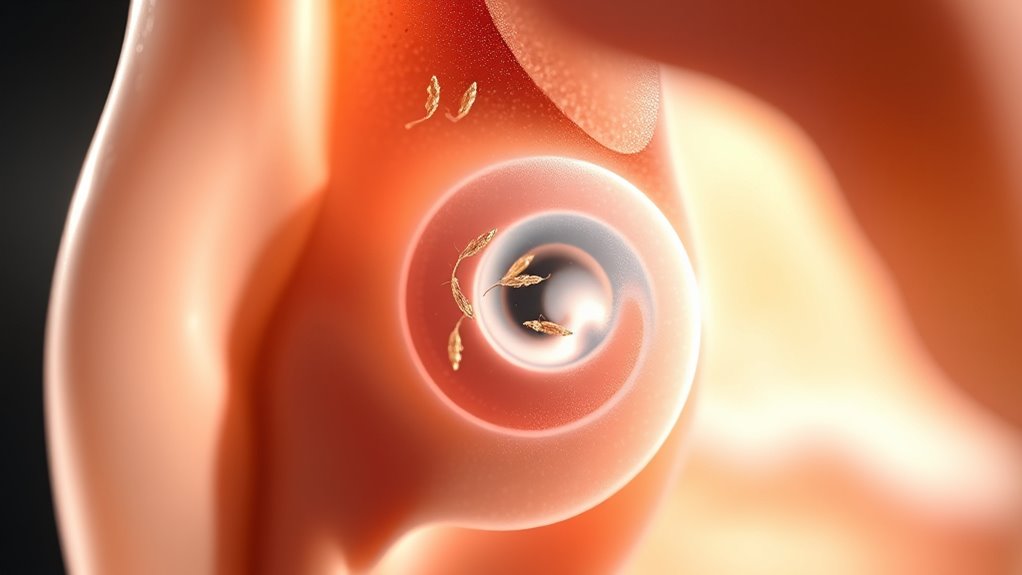
Have you ever experienced a spinning sensation that makes the room seem to tilt or sway? If so, you’re not alone. That dizzy feeling can be unsettling, and it’s often linked to issues within the inner ear. One common cause of vertigo is Benign Paroxysmal Positional Vertigo, or BPPV, which is a condition that affects the inner ear’s delicate balance system. To understand BPPV, it helps to know a bit about the inner ear anatomy. The inner ear contains tiny structures called semicircular canals, filled with fluid and lined with sensory hair cells. These canals detect rotational movements of your head. When your head moves, the fluid shifts, and the hair cells send signals to your brain about your position. This system works seamlessly most of the time, helping you stay balanced.
Inner ear structures called semicircular canals detect head rotations and help maintain balance.
However, in BPPV, small calcium carbonate crystals—called otoconia—become dislodged from their usual place within the inner ear. Instead of staying embedded in a gel-like layer, they drift into one of the semicircular canals. When this happens, even simple head movements—like looking up, lying down, or turning over in bed—can cause these crystals to shift inside the canal. That shifting sends false signals to your brain, creating the sensation of spinning or vertigo. You might notice that certain positions trigger your dizziness, and the episodes tend to come suddenly and last for a brief period, often less than a minute.
I find it fascinating how the inner ear’s anatomy plays such a vital role in balance. With BPPV, it’s not a problem with your overall ear health but a tiny mechanical issue involving these displaced crystals. The good news is that BPPV is considered benign, meaning it’s not dangerous or linked to permanent damage. Still, it can be quite disruptive. Many people describe the sensation as feeling like the ground is moving beneath them or that the room is spinning. These episodes can make everyday activities—like driving, bending, or even sitting up—challenging.
Understanding the specific inner ear structures involved can help in comprehending how BPPV causes vertigo and how treatments work. The key to managing BPPV lies in understanding its mechanics rooted in inner ear anatomy. Treatments often involve specific head movements designed to reposition the crystals back to where they belong. These maneuvers are straightforward and highly effective, often providing relief after just a few sessions. So, if you experience these dizzy spells, knowing about the inner ear’s role and how BPPV disrupts it can help you seek the right treatment and regain your balance.
Frequently Asked Questions
Can BPPV Be Cured Permanently?
Yes, BPPV can be cured permanently in many cases. I often recommend the Epley maneuver, which effectively moves the displaced ear crystals back to their proper place. Vestibular rehabilitation exercises also help strengthen your balance. While some people experience recurrences, many find these treatments provide long-lasting relief. I encourage you to consult a specialist who can tailor these therapies to your needs for the best chance at a permanent solution.
Are There Natural Remedies for Vertigo Relief?
Did you know that up to 80% of vertigo cases can improve with natural remedies? I’ve found that herbal remedies like ginger and ginkgo can help reduce symptoms. Dietary adjustments, such as reducing caffeine and staying hydrated, also make a difference. While these aren’t guaranteed cures, they’re worth trying alongside medical advice. Always consult a healthcare professional before starting any new herbal or dietary regimen.
How Does Age Affect BPPV Risk?
As you age, your risk for BPPV increases due to age-related degeneration and vestibular decline. These changes weaken the inner ear’s structures, making crystals more likely to dislodge and cause vertigo episodes. I’ve seen many older adults experience more frequent BPPV symptoms, so staying aware of these age-related effects is essential. Regular check-ups and gentle balance exercises can help manage and reduce your risk.
Is BPPV Linked to Other Ear Conditions?
Think of your inner ear as a busy city, where problems like infections or cochlear damage can disrupt traffic flow. BPPV is often linked to these conditions because they affect tiny structures in your ear. Inner ear infections can inflame the area, and cochlear damage might weaken the ear’s balance system, increasing BPPV risk. So yes, BPPV is connected to other ear issues that disturb this delicate balance.
What Are the Long-Term Effects of BPPV?
The long-term effects of BPPV are usually minimal if treated properly, but it can cause ongoing balance issues if left unaddressed. As a balance disorder rooted in the inner ear, BPPV may lead to repeated vertigo episodes, increasing fall risk. However, with effective treatment, most people regain their balance and normal function, so I recommend seeing a specialist promptly to manage symptoms and prevent lasting effects.
Conclusion
Understanding vertigo and its link to the inner ear can feel like charting a stormy sea, but you’re not alone. Once you recognize the signs of BPPV, you can take steps to find calm amidst the chaos. Remember, knowledge is your anchor, and seeking help is a sign of strength. Don’t let dizziness throw you off course—power through, and you’ll find your balance again. Sometimes, it’s just about riding out the waves until smooth sailing returns.