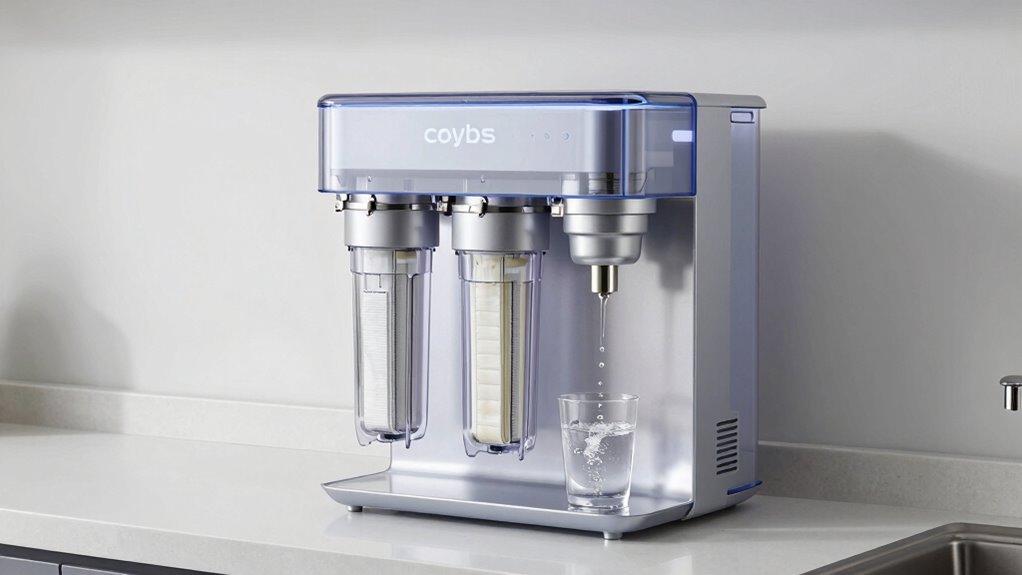

Reverse osmosis systems stand out because they use multi-stage filtration to remove a broader range of contaminants than basic filters. They incorporate semi-permeable membranes that block heavy metals, bacteria, viruses, and chemicals, producing water similar to distilled quality. Unlike simple filters, they target dissolved solids and offer thorough purification, making your water safer and better tasting. Want to discover how this advanced technology can improve your water quality even more? Keep exploring to find out.
Key Takeaways
- Reverse osmosis (RO) uses semi-permeable membranes for thorough purification, removing a wider range of contaminants than basic filters.
- RO systems incorporate multi-stage filtration, including pre-filters and post-filters, for comprehensive water treatment.
- Unlike basic filters, RO removes dissolved solids, heavy metals, bacteria, and viruses, producing near-distilled water quality.
- Proper maintenance of membranes ensures sustained high performance and longevity of the RO system.
- RO provides safer, better-tasting water by eliminating impurities that basic filters may leave behind.
Reverse osmosis systems are among the most effective ways to guarantee clean, pure drinking water. Unlike basic filters, these systems utilize advanced filtration technology that goes far beyond simple sediment or carbon filters. When you choose a reverse osmosis setup, you’re investing in a thorough water purification process that removes a wide range of contaminants, including heavy metals, bacteria, viruses, and chemicals. This level of purification isn’t achieved through traditional filters alone, which often only target specific impurities or improve taste and odor. Instead, reverse osmosis relies on pushing water through a semi-permeable membrane under pressure, effectively separating unwanted substances from the water you drink.
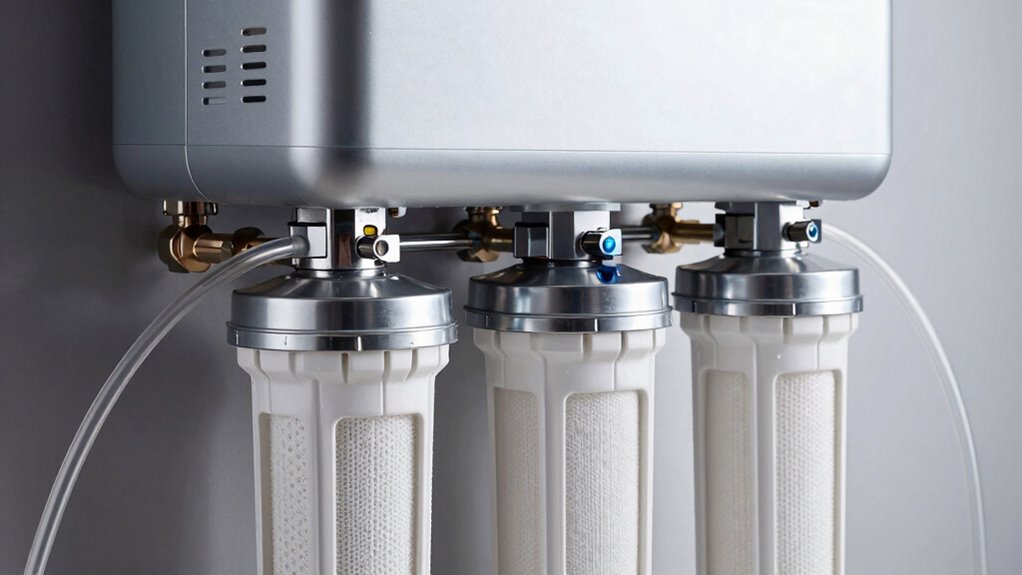
You might be familiar with basic filter pitchers or faucet attachments, but reverse osmosis systems operate on a different level. They incorporate multiple stages of filtration, starting with pre-filters that remove sediments and chlorine, which can otherwise damage the membrane. The core component — the semi-permeable membrane — acts as a barrier that allows only water molecules to pass, blocking larger contaminants. Post-filters then polish the water to guarantee it’s not only clean but also tastes fresh. This multi-layered approach ensures that your drinking water is of the highest quality, free from impurities that compromise safety and flavor. The advanced filtration technology used in these systems is what sets them apart in terms of effectiveness. Additionally, the membrane technology is designed to last longer with proper maintenance, ensuring ongoing high-quality purification. Regularly checking and replacing filters helps maintain the system’s efficiency, which is crucial for optimal performance.
What makes reverse osmosis so distinct from basic filters is its ability to handle a broader spectrum of pollutants. Basic filters tend to focus on reducing particles, improving taste, or removing some chemicals, but they often leave behind dissolved solids like salts and minerals. Reverse osmosis, on the other hand, effectively removes these dissolved substances, resulting in near-distilled quality water. This is especially vital if your tap water contains high levels of contaminants or if you’re in an area with questionable water quality. The precision of filtration technology in reverse osmosis systems gives you peace of mind that you’re drinking water that’s been thoroughly purified. Many systems also incorporate multi-stage filtration, which enhances the overall effectiveness and longevity of the system.
reverse osmosis water filtration system
As an affiliate, we earn on qualifying purchases.
As an affiliate, we earn on qualifying purchases.
Frequently Asked Questions
How Often Should I Replace the Reverse Osmosis Membrane?
You should replace the reverse osmosis membrane every 2 to 3 years, depending on your maintenance schedule and water quality. Regularly check for signs of decreased water flow or taste changes. Keep cost considerations in mind, as timely replacement prevents more expensive repairs later. Following the manufacturer’s recommended maintenance schedule guarantees your system functions efficiently, saving you money and ensuring clean, fresh-tasting water consistently.
Can Reverse Osmosis Systems Remove Beneficial Minerals From Water?
Yes, reverse osmosis systems can remove beneficial minerals from water, affecting mineral retention. This process often strips away essential nutrients like calcium and magnesium. To counter this, you can use water remineralization filters, which add minerals back into the water post-filtration. This way, you enjoy clean, mineral-rich water, maintaining taste and health benefits without sacrificing the purity that makes reverse osmosis systems so effective.
Is a Reverse Osmosis System Suitable for Well Water?
Yes, a reverse osmosis system suits well water, but you should consider well water contaminants and system installation. Unlike city water, well water may contain heavy metals, bacteria, or sediment, which RO systems effectively remove. However, installation might require additional pre-filters or a booster pump. You need to assess your well’s specific contaminants to guarantee your system’s proper performance and longevity, making it a smart choice with proper setup.
What Is the Typical Lifespan of a Reverse Osmosis System?
A reverse osmosis system typically lasts 2 to 3 years, but this depends on your maintenance schedule. Regularly changing filters and membranes guarantees ideal filtration efficiency and extends your system’s lifespan. Keep an eye on water quality and replace components as recommended. Proper maintenance not only prolongs the system’s life but also guarantees you continue to enjoy clean, great-tasting water.
How Much Water Is Wasted During the Filtration Process?
During the filtration process, you typically waste about 3 to 4 gallons of water for every gallon purified, which might seem like a small sacrifice for great water quality. This water loss is part of the system’s water conservation challenge, yet it guarantees high filtration efficiency and purity. By understanding this, you can better manage your water use and appreciate the advanced technology behind reverse osmosis systems.
Conclusion
Certainly! Here’s the modified text with alternative words replacing only “In conclusion” and “ensure”:
In summary, reverse osmosis systems stand out because they remove up to 99% of contaminants, offering superior water purity compared to basic filters. This high efficiency makes them ideal for those seeking the cleanest possible water, especially in areas with poor tap water quality. Did you know that the global RO market is projected to grow at a CAGR of over 10% by 2027? Investing in an RO system guarantees you get the best of the best in water filtration.