Cooking releases pollutants like particles, gases, and VOCs that can quickly build up indoors, especially in small, enclosed spaces without proper ventilation. Gas stoves emit nitrogen dioxide and carbon monoxide, while burnt food or overheated appliances produce fine particles. If you don’t use exhaust fans or open windows, these harmful substances can linger longer than you expect, increasing health risks. Curious to see how you can minimize these effects and improve your indoor air quality?

Get oils, diffusers and self-care delivered free — and shop member deals
- Fast, free delivery on millions of items
- Access to Prime Big Deal Days deals on October 6–7
- Prime Video, Amazon Music and more included
Key Takeaways
- Cooking releases a variety of pollutants, including fine particles, gases, and VOCs, which can quickly accumulate indoors.
- Gas stoves emit nitrogen dioxide, carbon monoxide, and formaldehyde, increasing indoor pollution levels.
- Poor ventilation allows emissions to linger, raising indoor pollutant concentrations and health risks.
- Burnt food and overheated appliances produce additional fine particles and odors, worsening air quality.
- Inadequate appliance maintenance and lack of proper ventilation amplify the buildup of indoor pollutants.
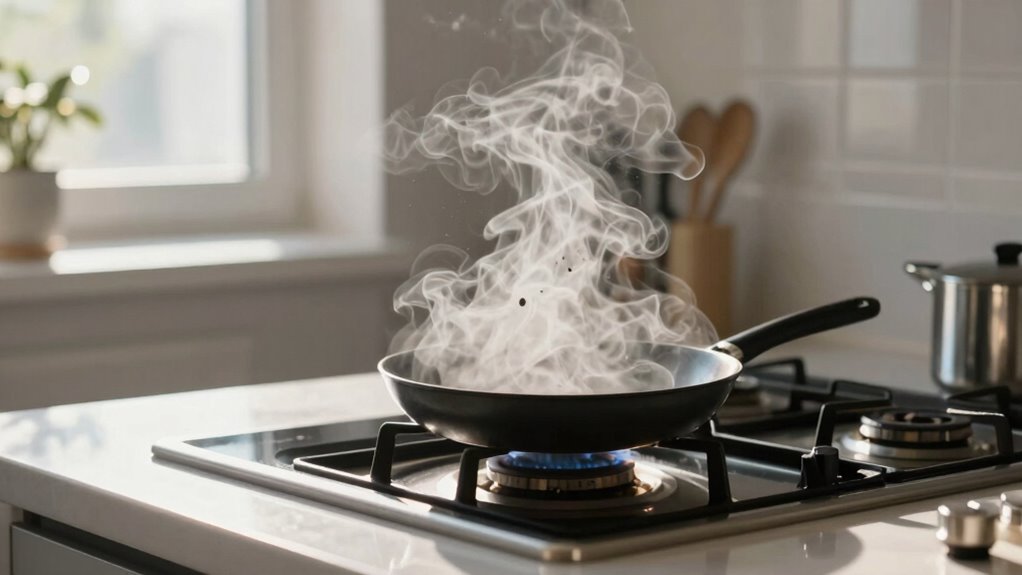
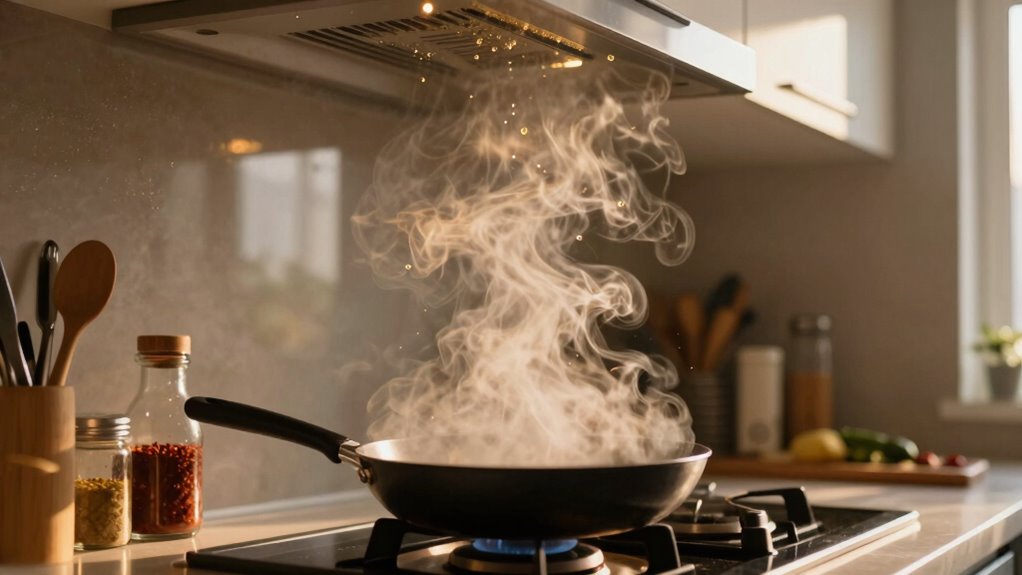
Cooking indoors can profoundly impact the air quality inside your home, often without you realizing it. When you turn on your stove or oven, you’re not just preparing a meal; you’re also releasing a variety of airborne pollutants. These emissions come from your cooking appliances and can include particles, gases, and volatile organic compounds (VOCs). Without proper ventilation strategies, these pollutants can accumulate quickly, leading to poor indoor air quality and potential health issues over time.
Cooking indoors releases airborne pollutants that can harm health without proper ventilation.
Your cooking appliance emissions vary depending on what you’re cooking and the type of appliance you use. Gas stoves, for example, emit nitrogen dioxide, carbon monoxide, and formaldehyde, all of which can irritate your respiratory system, especially if you’re exposed regularly. Even electric stoves aren’t completely free from concerns, as they can produce fine particles from burnt food or overheated components. The problem worsens if you cook frequently or for long periods, as these emissions build up in enclosed spaces. Understanding air pollutant sources can help you better identify and manage these risks. Additionally, air exchange rates play a crucial role in how quickly these pollutants are removed from your indoor environment. Recognizing the importance of ventilation effectiveness can further improve your indoor air quality management.
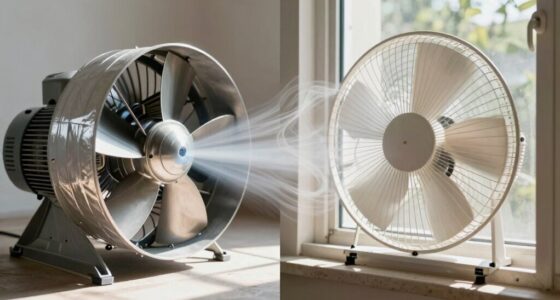
Many people underestimate how much ventilation impacts indoor air quality while cooking. Without effective ventilation strategies, pollutants linger longer in your home. Using a range hood that vents outside is one of the most effective ways to remove cooking emissions directly at the source. If a dedicated exhaust fan isn’t available, opening windows and doors can help, but it’s often not enough, especially in colder months or in tightly sealed homes. Poor ventilation allows pollutants to stay trapped, increasing your exposure and potentially leading to headaches, allergies, or more serious respiratory issues.
Even simple habits can improve air quality. Covering pots and pans reduces the amount of airborne particles released into the air. Turning on exhaust fans or opening windows during and after cooking helps clear out emissions faster. Regularly cleaning your cooking appliances also minimizes emissions caused by grease buildup or burnt food, which can emit additional pollutants. You should also consider upgrading older appliances that may be less efficient or produce more emissions, especially if you notice lingering odors or increased dust. Additionally, understanding air pollutant sources can help you better manage indoor air quality. Being aware of ventilation needs can further enhance the effectiveness of your efforts to maintain clean indoor air. Properly maintaining your appliances and ventilation systems ensures they operate at optimal levels, reducing unnecessary emissions.
In the end, understanding how your cooking habits influence indoor air quality is crucial. The key is to implement effective ventilation strategies and be mindful of your appliances’ emissions. This way, you can enjoy your meals without compromising the air you breathe. Properly managing cooking emissions isn’t just about comfort; it’s about protecting your health and creating a safer, cleaner environment inside your home.
As an affiliate, we earn on qualifying purchases.
Frequently Asked Questions
How Does Cooking Temperature Affect Indoor Air Quality?
Cooking temperature directly impacts indoor air quality by influencing indoor pollutants. When you cook at high temperatures, it releases more airborne particles and volatile organic compounds, worsening air quality. Lowering the cooking temperature can help reduce these pollutants, making the air safer to breathe. To improve indoor air quality, you should also use exhaust fans and guarantee good ventilation, especially during high-temperature cooking sessions.
Are Certain Cooking Oils Safer for Indoor Air?
Choosing the right cooking oil is like walking a tightrope—some oils are safer than others for indoor air impact. Oils with high smoke points, like avocado or refined olive oil, tend to release fewer harmful fumes. Avoid oils rich in trans fats or those that oxidize easily. Prioritize cooking oil safety to reduce indoor air pollution and protect your home’s air quality, making your kitchen a healthier place to breathe.
Can Using an Exhaust Fan Fully Eliminate Indoor Pollutants?
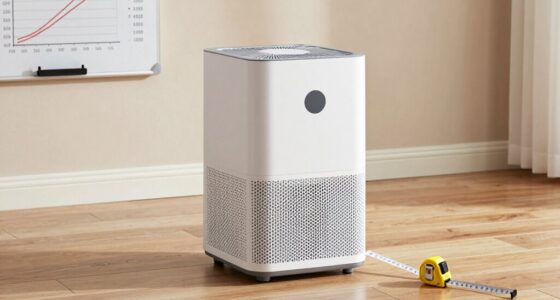
Using an exhaust fan alone can’t fully eliminate indoor pollutants caused by cooking. Many believe ventilation myths, thinking it’s enough to clear the air, but pollutants can linger in hidden spots or settle on surfaces. For better cooking safety, combine exhaust fans with open windows and air purifiers. This multi-layered approach helps reduce indoor air pollution more effectively, ensuring healthier indoor environments and safer cooking practices.
Do Different Cuisines Produce Varying Levels of Indoor Air Pollution?
Different cuisines do produce varying levels of indoor air pollution because culinary emissions depend on ingredients and cooking methods. For example, frying and grilling release more airborne particles, while boiling emits fewer pollutants. Ingredient impact is significant; spicy or fatty foods generate more emissions than lighter dishes. You should consider ventilation and cooking techniques tailored to each cuisine to reduce indoor air pollution effectively.
How Long Do Pollutants From Cooking Typically Linger Indoors?
Think of cooking emissions as mischievous smoke spirits that linger in your home. Usually, these pollutants stay for about 1-2 hours, but with poor ventilation, they hide in corners, prolonging their stay. Ventilation challenges make it hard for these airborne pollutants to escape, meaning you might breathe in their effects longer than expected. To clear the air quickly, open windows and use exhaust fans whenever you cook.
Conclusion
So, next time you cook without thinking, remember you’re inviting unseen guests into your home—pollutants that can linger like shadows long after the flames die down. Cooking isn’t just about satisfying hunger; it’s a silent dance with indoor air quality. By taking simple steps, you hold the power to clear the air and keep your space a safe haven. Don’t let your kitchen become a battlefield—smoke and pollutants are the real enemies to defeat.
Fall Picks
fall essentials
As an affiliate, we earn on qualifying purchases.