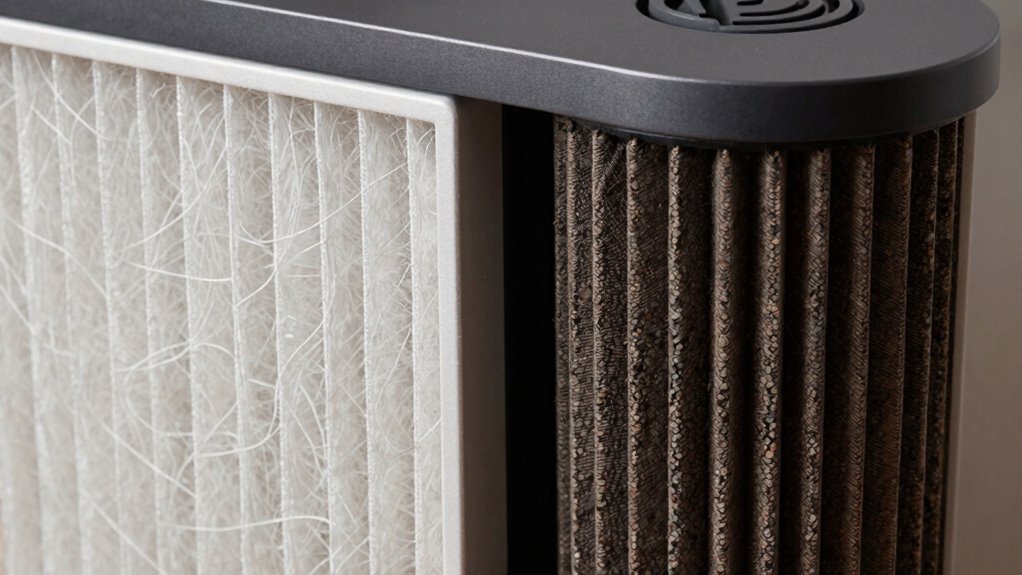
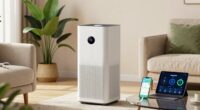
HEPA filters trap tiny airborne particles like dust, pollen, pet dander, and smoke, making them ideal if you have allergies or respiratory issues. Carbon filters, on the other hand, absorb gases, odors, and chemical fumes, which is great for eliminating smells from cooking, smoking, or pets. Each filter solves a different problem, so combining them can give you more complete air cleaning. Keep exploring to learn how to choose the best setup for your needs.
Key Takeaways
- HEPA filters trap tiny airborne particles, while carbon filters adsorb gases and odors, addressing different types of pollutants.
- HEPA filters are effective against allergens, dust, and pollen, whereas carbon filters target chemical fumes and smells.
- Combining both filters provides comprehensive air purification by removing particles and gaseous contaminants simultaneously.
- HEPA filters require physical trapping of particles, while carbon filters chemically adsorb gases, making their functions complementary.
- Proper maintenance and replacement are essential for each filter type to maintain their specific pollutant removal effectiveness.
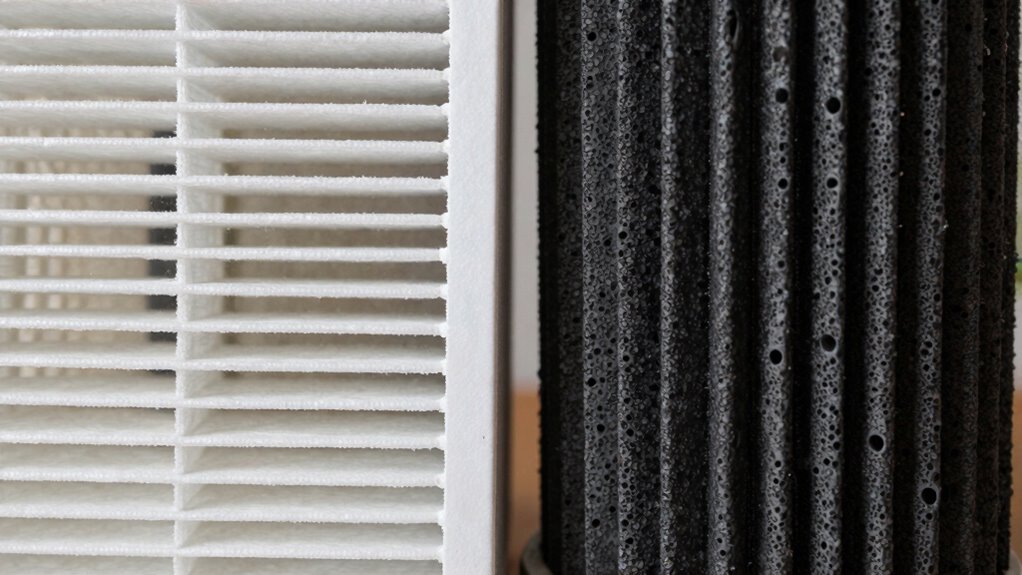
HEPA filters are designed to trap tiny particles that float in the air—things like dust, pollen, pet dander, and smoke particles. These filters are incredibly efficient, removing at least 99.97% of particles as small as 0.3 microns. When you focus on air purification in environments with allergies or respiratory issues, HEPA filters are often the best choice. It’s important to remember that HEPA filters need regular filter maintenance. Over time, they accumulate debris and become less effective, so changing or cleaning them according to the manufacturer’s instructions is crucial. Neglecting filter maintenance can reduce the purifier’s efficiency and compromise air quality.
Carbon filters, on the other hand, excel at absorbing gases, odors, and volatile organic compounds (VOCs). They are particularly useful if you’re dealing with cigarette smoke, cooking smells, pet odors, or chemical fumes. Unlike HEPA filters, carbon filters don’t trap particles but chemically adsorb gases, effectively neutralizing odors and harmful pollutants in the air. Since carbon filters tend to become saturated over time, filter maintenance involves replacing them at intervals recommended by the manufacturer. Failing to do so means they lose their ability to adsorb gases, allowing odors and fumes to persist. Proper filter replacement ensures continued effectiveness of the carbon filter and maintains air quality. Additionally, understanding the different functions of these filters helps you select the most suitable type for your specific needs. Regular filter maintenance is also essential for preventing the buildup of contaminants that could affect overall air quality. Knowing about filter lifespan can help you plan timely replacements and maintain optimal air purification. Understanding that these filters serve different purposes helps you optimize your air purification strategy. If allergies are your concern, a HEPA filter will be your primary defense. If odors or chemical fumes are problematic, a carbon filter will be more effective. Many air purifiers combine both filters to provide comprehensive air cleaning, but keep in mind that each type requires proper filter maintenance to perform optimally. Regularly checking, cleaning, or replacing filters ensures that your purifier continues to work efficiently, maintaining a healthy indoor environment. Proper filter maintenance is crucial for ensuring the longevity and efficiency of your air purifier.

6 Pack HPA300 HEPA Filter Replacement for Honeywell Air Purifiers HPA300 Series, HPA300, HPA304, HPA8350, HPA300VP, HPA3300b, HPA5300, Replace HRF-R3, Pack of 6 HEPA R and 8 Pre filters A HRF-AP1
- Compatible Models: Fits Honeywell HPA Series and R Filters
- High-Quality Materials: Made of non-woven fabric and activated carbon
- Energy Efficient: Advanced low-energy filtration technology
As an affiliate, we earn on qualifying purchases.
As an affiliate, we earn on qualifying purchases.
Frequently Asked Questions
Can HEPA and Carbon Filters Be Used Together Effectively?
Yes, HEPA and carbon filters can be used together effectively. Combining these filters enhances air quality improvement by targeting both airborne particles and odors or gases. You should check filter compatibility to guarantee they fit your air purifier properly. Using both types together provides thorough filtration, capturing allergens, dust, and pollutants while removing unpleasant smells, making your indoor air cleaner and healthier.
How Long Does a Typical HEPA or Carbon Filter Last?
You might think HEPA filters last forever, but typically, they need replacing every 6 to 12 months, depending on usage and air quality. Carbon filters usually last 3 to 6 months. Investigating filter lifespan reveals that regular maintenance is essential to keep your air clean. Follow maintenance tips like checking for discoloration or reduced airflow, and replace filters promptly to guarantee peak performance and indoor air quality.
Are HEPA Filters Safe for Asthma Sufferers?
Yes, HEPA filters are generally safe for asthma sufferers because they effectively trap airborne allergens like dust, pollen, and pet dander, providing allergy relief. Just remember to perform regular filter maintenance to keep the filter functioning at its best and avoid mold or bacteria buildup. Proper use and upkeep ensure your air stays clean and safe, helping you breathe easier and reducing asthma symptoms.
Do Carbon Filters Remove Viruses From the Air?
Carbon filters don’t effectively remove airborne pathogens like viruses because they mainly target chemical absorption and odors. They excel at trapping gases, VOCs, and fumes, but viruses are too small and require HEPA filters for proper removal. If you’re concerned about airborne viruses, rely on HEPA filters, but for odors or chemical pollutants, a carbon filter works best. Using both can provide thorough air purification.
Which Filter Is More Energy-Efficient for Air Purification?
You’ll find that carbon filters are more energy-efficient for air purification, using about 50% less energy than HEPA filters. This efficiency means reduced energy consumption and lower utility bills. When it comes to filter maintenance, carbon filters generally require replacement every 3 to 6 months, while HEPA filters last longer but may consume more power. Choosing a carbon filter helps save energy without sacrificing air quality.
Conclusion
So, when choosing between a HEPA and a carbon filter, think of it like picking the right tool for a job. HEPA filters are your best bet for catching tiny particles, like a sieve catching grains of sand. Carbon filters, on the other hand, are perfect for absorbing odors and gases, like a sponge soaking up spills. Knowing their strengths helps you tackle the specific air quality issues in your space more effectively.