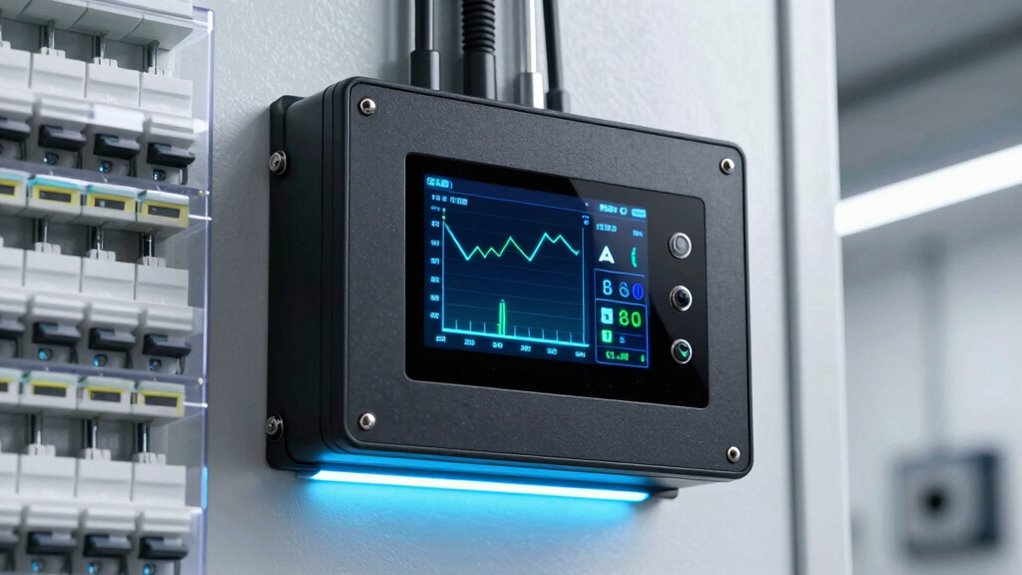

When searching for a smart electrical panel energy monitor, the goal is to gain real-time insights into your home’s power consumption while integrating seamlessly with your smart home setup. The SIEMENS Inhab Smart Home Energy Monitor stands out for its comprehensive circuit-level sensors, making it ideal for detailed analysis. The Emporia Vue 3 offers a balanced mix of affordability and advanced features, perfect for tech-savvy homeowners. Users face tradeoffs between detailed monitoring features, ease of installation, and connectivity options. Continue reading for a full breakdown of the best options to fit your needs.

Get oils, diffusers and self-care delivered free with Prime
- Fast, free delivery on millions of items
- Prime Video, Amazon Music and more included
- Member-only deals all year
Key Takeaways
- Top picks differ mainly in sensor capacity and connectivity options, influencing ease of installation and data granularity.
- Many monitors offer real-time power tracking but vary in their integration with smart home ecosystems like Home Assistant or Z-Wave.
- Higher sensor count and circuit capacity typically come with increased cost and installation complexity.
- Open API and local control are features that appeal to tech enthusiasts seeking privacy and customization.
- Choosing the right monitor depends heavily on your existing setup, whether you prioritize detailed insights or simple plug-and-play installation.
| SIEMENS Inhab Smart Home Energy Monitor with Circuit Level Sensors |  | Best Overall – Comprehensive Panel and Circuit Monitoring with Mobile Control | Circuit Sensors: 16-50Amp | Main Sensors: 2-200Amp | Compatibility: Mobile app (USA and Canada) | VIEW ON AMAZON | See Our Full Breakdown |
| Emporia Vue 3 Home Energy Monitor – Smart Home Automation Module and Real-Time Electricity Usage Monitor |  | Best for Solar and Net Metering – Supports Renewable Energy Integration | Certification: UL Listed | Supported Systems: Single phase, 3-phase, Wye | Sensors: Sixteen 50A branch sensors | VIEW ON AMAZON | See Our Full Breakdown |
| Smart Home Energy Monitor with 16 50A Circuit Sensors, Real-Time Power Usage & Cost Tracking |  | Best for Rental and Shared Spaces – Local Network and Custom Monitoring | Sensor Count: 16 sensors | Sensor Current Rating: 50A | Supported Voltages: 120/240VAC, three-phase | VIEW ON AMAZON | See Our Full Breakdown |
| Meross Smart Home Energy Monitor |  | Best for Privacy and Local Control – No Subscriptions, Home Assistant Support | Certification: ETL, UL 61010 | Supported Systems: Single-phase, 3-phase, Wye | Max Current: 200A main, 60A branch | VIEW ON AMAZON | See Our Full Breakdown |
| Aeotec Home Energy Meter 8 – Smart Electricity Monitor with Z-Wave Long Range |  | Best for Z-Wave Ecosystem – High Accuracy with Extended Wireless Range | Model: Home Energy Meter 8 | Connectivity: Z-Wave Long Range | Sensor Capacity: 2x200A Clamp-On | VIEW ON AMAZON | See Our Full Breakdown |
| Emporia Vue 3 Home Energy Monitor – Smart Home Automation Module and Real-Time Electricity Usage Monitor |  | Best Overall for Flexibility and Automation | Certification: UL Listed | Supported Systems: Single phase, 3-phase, 2-wire, 3-wire, Wye | Sensor Capacity: Up to 16 branch sensors (sold separately) | VIEW ON AMAZON | See Our Full Breakdown |
| Emporia Vue 3 Home Energy Monitor – Smart Home Automation Module and Real-Time Electricity Usage Monitor |  | Best for Whole-Home Monitoring with Solar Support | Part Number: EMV3A-2P-8 | Item Weight: 3.36 pounds | Product Dimensions: 10 x 5 x 5 inches | VIEW ON AMAZON | See Our Full Breakdown |
| Refoss Smart Home Energy Monitor with 16 60A Circuit Sensors |  | Best for Circuit-Level Detail and Local Control | Number of Sensors: 16 | Sensor Current Rating: 60A | Supported Systems: Single-phase, Split-phase, 3-phase Wye | VIEW ON AMAZON | See Our Full Breakdown |
| Refoss Smart Home Energy Monitor with Open API, Home Assistant, No Cloud |  | Best for Open-Source and Privacy-Focused Homes | Model: EM16P | Weight: 4.24 pounds | Dimensions: 4.5 x 3.5 x 1.1 inches | VIEW ON AMAZON | See Our Full Breakdown |
| Smart Home Energy Monitor with 16 50A Circuit Sensors |  | Best for Multi-Circuit Monitoring with Alerts | Number of Sensors: 16 | Sensor Current Rating: 50A | Supports: Single-phase, split-phase, three-phase | VIEW ON AMAZON | See Our Full Breakdown |
| Smart Home Energy Monitor 2×80A, Dual-Channel WiFi Electricity Usage Tracker with App Control |  | Best for Household Circuit Monitoring and Solar Integration | Power Source: Corded Electric | Minimum Operating Voltage: 110 volts | Measurement Type: Ammeter | VIEW ON AMAZON | See Our Full Breakdown |
| WiFi Home Energy Monitor with 3 80A CT Clamps |  | Best for Multi-Circuit Monitoring with Remote Control | Model Number: PW03 | Color: White | Item Weight: 13.4 ounces | VIEW ON AMAZON | See Our Full Breakdown |
| smart electrical panel energy monitor | Connectivity |
|---|---|
| SIEMENS Inhab Smart Home Energ | — |
| Emporia Vue 3 Home Energy Moni | 2.4 GHz Wi-Fi |
| Smart Home Energy Monitor with | WiFi 2.4GHz, MQTT, LAN |
| Meross Smart Home Energy Monit | Home Assistant, Open API |
| Aeotec Home Energy Meter 8 | Z-Wave Long Range |
| Emporia Vue 3 Home Energy Moni | 2.4 GHz Wi-Fi |
| Emporia Vue 3 Home Energy Moni | — |
| Refoss Smart Home Energy Monit | Wi-Fi with external antenna |
| Refoss Smart Home Energy Monit | — |
| Smart Home Energy Monitor with | Wi-Fi, RJ45 |
| Smart Home Energy Monitor 2×80 | — |
| WiFi Home Energy Monitor with | — |
More Details on Our Top Picks
SIEMENS Inhab Smart Home Energy Monitor with Circuit Level Sensors
This monitor stands out for its ability to deliver real-time energy data at both the panel and circuit levels, making it ideal for homeowners seeking detailed oversight. Compared with the Emporia Vue 3, it offers more precise circuit-level insights but is limited to US and Canadian mobile app compatibility, which could restrict remote access for some users. Its support for personalized alerts and advanced energy management features makes it suitable for those wanting proactive control, though installation may require professional help. Real-time circuit and panel data, mobile app integration, personalized alerts are key strengths, but its geographic app limitation and installation complexity are tradeoffs. Best suited for homeowners who want comprehensive, remote energy management with minimal setup hassle.Pros:- Real-time energy monitoring at multiple levels
- Supports personalized alerts and advanced management
- Compatible with mobile app for remote control
Cons:- Limited to US and Canada for app control
- Installation may need professional assistance
Best for: Homeowners in the US or Canada who want detailed, remote energy monitoring and control at the circuit level.
Not ideal for: Users outside North America who need a global app solution or those comfortable with DIY electrical work.
- Circuit Sensors:16-50Amp
- Main Sensors:2-200Amp
- Compatibility:Mobile app (USA and Canada)
- Standards:CE marked, UL Listed
Our verdict“This model is best for homeowners wanting a robust, remote-controlled energy monitor with detailed circuit insights.”
Emporia Vue 3 Home Energy Monitor – Smart Home Automation Module and Real-Time Electricity Usage Monitor
The Emporia Vue 3 excels at supporting solar and net metering, making it ideal for energy-conscious homeowners with renewable sources. Compared to the SIEMENS Inhab, it offers broader compatibility with various electrical systems and supports solar management, but it relies heavily on Wi-Fi stability for real-time updates, which can be a drawback in less stable networks. The extensive sensor support and UL certification make it reliable for detailed energy tracking, especially for users managing multiple systems. Supports solar, UL-listed, real-time app access are its core advantages, with Wi-Fi dependency and limited data retention when offline as tradeoffs. Best suited for homeowners integrating solar or seeking comprehensive safety-certified monitoring.Pros:- Supports solar and net metering
- UL-certified safety and reliability
- Real-time data accessible via mobile app
Cons:- Requires stable Wi-Fi for optimal performance
- Additional sensor needed for 3-phase systems
Best for: Homeowners with solar panels or renewable energy systems who want reliable, safety-certified monitoring integrated with energy management.
Not ideal for: Users in areas with unstable Wi-Fi or those preferring simple plug-and-play solutions without extensive system support.
- Certification:UL Listed
- Supported Systems:Single phase, 3-phase, Wye
- Sensors:Sixteen 50A branch sensors
- Connectivity:2.4 GHz Wi-Fi
Our verdict“This pick suits users needing reliable, certified solar-compatible energy monitoring with detailed system insights.”
Smart Home Energy Monitor with 16 50A Circuit Sensors, Real-Time Power Usage & Cost Tracking
Designed for rental properties or shared apartments, this monitor offers real-time power and cost data across multiple circuits, with local Wi-Fi and LAN options ensuring data privacy. Unlike the Emporia Vue 3, it does not rely solely on cloud services, which is appealing for privacy-focused users, but it demands some technical setup with MQTT or Home Assistant, making it less user-friendly for non-technical homeowners. Its support for diverse voltages and extensive data storage makes it a flexible choice for complex environments. Local control, extensive data retention, multi-circuit support set it apart, though setup complexity and Wi-Fi limitations are considerations. Best for tech-savvy renters or shared living spaces that need detailed, local energy management.Pros:- Supports multiple circuits and voltages
- Local data storage with no cloud dependency
- Compatible with Home Assistant and MQTT
Cons:- Installation can be complex for non-technical users
- Limited to Wi-Fi 2.4GHz, no 5GHz support
Best for: Renters or shared homeowners comfortable with technical setup who prioritize privacy and local data storage.
Not ideal for: Less technical users seeking plug-and-play solutions or those without a stable Wi-Fi network.
- Sensor Count:16 sensors
- Sensor Current Rating:50A
- Supported Voltages:120/240VAC, three-phase
- Connectivity:WiFi 2.4GHz, MQTT, LAN
- Warranty:1 year
- Dimensions:3.1 x 1.2 x 4.18 inches
Our verdict“This monitor is best for technically inclined users needing detailed, privacy-focused energy data in shared or rental settings.”
Meross Smart Home Energy Monitor
The Meross Energy Monitor excels in privacy-conscious setups, offering local data storage and integration with Home Assistant for automation. Compared with the Emporia Vue 3, it emphasizes local control over cloud reliance, making it appealing for users wary of data sharing. Its detailed real-time tracking of power, voltage, current, and costs provides precise insights, but installation complexity might deter less technical users. It supports a range of electrical systems and up to 200A main current, making it versatile for different home setups. Supports local storage, Home Assistant integration, detailed real-time data are its benefits, with installation complexity and lack of cloud backup as limitations. Best suited for privacy-focused, tech-savvy homeowners with existing smart home integrations.Pros:- Accurate real-time energy and cost tracking
- Supports circuit-level monitoring
- Local data storage with no subscription fees
Cons:- Installation may be complex for some users
- Limited to US electrical systems
Best for: Homeowners prioritizing local control and privacy who use or want to integrate with Home Assistant.
Not ideal for: Less technical users or those preferring cloud-based monitoring without manual setup.
- Certification:ETL, UL 61010
- Supported Systems:Single-phase, 3-phase, Wye
- Max Current:200A main, 60A branch
- Data Storage:Up to 5 years
- Connectivity:Home Assistant, Open API
- Warranty:2 years
Our verdict“This monitor is ideal for privacy-minded homeowners seeking detailed, local energy data with smart home integration.”
Aeotec Home Energy Meter 8 – Smart Electricity Monitor with Z-Wave Long Range
The Aeotec Home Energy Meter 8 offers high-precision monitoring and supports surplus power measurement, making it suitable for integrating renewable energy sources like solar. Compared with Wi-Fi-based options like the Meross or Emporia Vue, its Z-Wave Long Range technology enables communication over much larger distances, ideal for larger properties or complex smart home setups. However, it necessitates a Z-Wave hub for full functionality, which might be a barrier for simplified setups. Its secure encryption ensures privacy, but the setup process can be daunting for newcomers. High accuracy, long-range Z-Wave, surplus power measurement are key features, with the need for a Z-Wave hub and a steeper learning curve as tradeoffs. Best suited for users with existing Z-Wave smart home systems seeking precise, long-range energy data.Pros:- High-accuracy real-time monitoring
- Supports surplus power measurement from solar
- Extended wireless range with Z-Wave Long Range
Cons:- Requires Z-Wave hub for operation
- Setup can be complex for beginners
Best for: Homeowners with Z-Wave hubs wanting high-accuracy energy monitoring across large properties or integrated smart systems.
Not ideal for: Beginners or those without Z-Wave hubs who prefer simple, plug-and-play solutions.
- Model:Home Energy Meter 8
- Connectivity:Z-Wave Long Range
- Sensor Capacity:2x200A Clamp-On
- Supports:2-Phase Power
- Encryption:S2, AES-128
- Range:Up to 1 mile / 1.7 km
Our verdict“This device is best for experienced smart home users needing precise, long-range energy management within Z-Wave ecosystems.”
Emporia Vue 3 Home Energy Monitor – Smart Home Automation Module and Real-Time Electricity Usage Monitor
The Emporia Vue 3 B0C7B1LKDW stands out for its support of multiple electrical system configurations, making it ideal for a wide range of homes. Its real-time data via Wi-Fi and compatibility with automation systems allow for proactive energy management, surpassing some single-phase monitors like the Refoss 16 60A in versatility. However, it requires additional sensors for appliance-level detail, which adds complexity and cost. The device’s safety certification (UL) provides peace of mind, and its ability to integrate with solar setups makes it a comprehensive choice. Its main tradeoff is that data refreshes only when the app is actively open, which could limit real-time insights for some users. This pick makes the most sense for homeowners seeking a flexible, safety-certified monitor that can grow with their automation needs.Pros:- Supports diverse electrical configurations for broad compatibility
- Enables real-time monitoring and automation via app
- UL safety certification ensures reliability
- Supports solar and net metering integration
Cons:- Requires additional sensors for appliance-level insights
- Data only refreshes when app is open, limiting real-time awareness
Best for: Homeowners with varied electrical systems who want broad compatibility and automation features.
Not ideal for: Users seeking simple, plug-and-play solutions without additional sensors or technical setup.
- Certification:UL Listed
- Supported Systems:Single phase, 3-phase, 2-wire, 3-wire, Wye
- Sensor Capacity:Up to 16 branch sensors (sold separately)
- Connectivity:2.4 GHz Wi-Fi
- Data Retention:Minute data 7 days, hourly indefinite
- Warranty:1 year
Our verdict“This monitor is best for tech-savvy homeowners looking for a flexible, safety-certified energy management system.”
Emporia Vue 3 Home Energy Monitor – Smart Home Automation Module and Real-Time Electricity Usage Monitor
The Emporia Vue 3 B0C79TVH4Y offers a straightforward installation in the circuit panel for complete home energy insight, with support for solar and net metering, making it ideal for households aiming to optimize renewable energy use. Compared with the Refoss 16 60A, it simplifies setup with an all-in-one design and includes 8 circuit sensors, although it still requires Wi-Fi and internet access for full functionality. While its CE and UL certifications reinforce safety and reliability, data retention is limited when the app isn’t active, which could hinder real-time decision-making. Its ease of installation and automation compatibility make it suitable for users wanting a comprehensive view of their energy consumption at home. The main tradeoff is that additional sensors are needed for three-phase systems, which can increase costs and complexity.Pros:- Supports real-time monitoring and automation
- Compatible with solar and net metering systems
- Easy installation in most circuit panels
- UL safety certification
Cons:- Requires Wi-Fi and internet for full functionality
- Additional sensors needed for 3-phase systems
Best for: Homeowners wanting a reliable, easy-to-install whole-house monitor with solar and automation features.
Not ideal for: Users seeking detailed circuit-level data or advanced local control without internet dependency.
- Part Number:EMV3A-2P-8
- Item Weight:3.36 pounds
- Product Dimensions:10 x 5 x 5 inches
- Certification:CE, UL
- Style:whole home with 8 circuit sensors
- Warranty:1 year
Our verdict“This device is ideal for homeowners seeking a simple, comprehensive energy monitor with solar support and automation compatibility.”
Refoss Smart Home Energy Monitor with 16 60A Circuit Sensors
The Refoss B0FQ9ZNKBL excels in providing detailed circuit-level data, with 16 sensors supporting up to 60A per circuit, ideal for users wanting granular energy insights. Its local control via Web UI and API means no cloud dependency, appealing to privacy-conscious users. Compared to the Emporia Vue 3, it offers longer data storage (5 years) and supports automation systems directly. However, installation can be complex, requiring breaker box access and some technical skill, potentially limiting its appeal. Its ETL certification confirms safety, and its support for solar and automation makes it suitable for tech-savvy homeowners. The main drawback is that it is limited to specific electrical systems, which could restrict compatibility.Pros:- Provides detailed circuit-level monitoring
- Local control ensures privacy and no ongoing fees
- Supports automation and solar energy optimization
- Long-term data storage (5 years)
Cons:- Installation may be complex for non-experts
- Limited to compatible electrical systems
Best for: Electrical-savvy users who want detailed circuit data and local control without cloud reliance.
Not ideal for: Homeowners unfamiliar with electrical installations or seeking a plug-and-play device.
- Number of Sensors:16
- Sensor Current Rating:60A
- Supported Systems:Single-phase, Split-phase, 3-phase Wye
- Data Storage Duration:5 years
- Warranty:2 years
- Connectivity:Wi-Fi with external antenna
Our verdict“This monitor is best for technically inclined homeowners needing detailed, local control and long-term data storage.”
Refoss Smart Home Energy Monitor with Open API, Home Assistant, No Cloud
The Refoss B0DJNV3GPR is designed for users who prioritize local control and open-source integration, offering real-time voltage, current, and power data with ±1% accuracy. Its support for MQTT, open API, and Home Assistant makes it highly customizable for AI automation enthusiasts. Compared to the Emporia Vue 3, it forgoes cloud features in favor of direct control, appealing to privacy-conscious users. Its installation is straightforward with clamp-on sensors, but setup may require some technical know-how, especially for API configuration. The device’s 2-year warranty and ETL safety certification add reassurance. Its main limitation is that it is suitable mainly for homes with compatible circuits and technical expertise, which could be a barrier for some.Pros:- Local control ensures privacy and no cloud dependency
- Supports Home Assistant and MQTT for advanced automation
- High accuracy measurements with long-term data storage
- Easy clamp-on installation
Cons:- Requires technical setup for API and MQTT
- Limited to homes with compatible circuit panels
Best for: Tech-savvy homeowners invested in open-source automation and privacy-focused energy management.
Not ideal for: Less technical users who prefer plug-and-play solutions with straightforward apps.
- Model:EM16P
- Weight:4.24 pounds
- Dimensions:4.5 x 3.5 x 1.1 inches
- Maximum Main Circuit Current:200A
- Number of Main Circuits:2
- Number of Branch Circuits:16
Our verdict“This monitor is perfect for technically skilled users wanting complete control without relying on cloud services.”
Smart Home Energy Monitor with 16 50A Circuit Sensors
The B0H5W2VWQ2 offers comprehensive monitoring with 16 sensors supporting circuits up to 50A, making it suitable for detailed energy tracking across various household circuits. Its support for Wi-Fi and wired connections ensures stable data flow, and instant alerts help detect anomalies early. Compared with the Refoss 16 60A, it provides real-time power data and circuit-specific monitoring, though it’s limited to 50A per sensor. Installation involves clamp-on sensors in the breaker panel, which may be complex for less experienced users. Its ability to monitor individual circuits and provide instant alerts makes it valuable for safety and efficiency. The main tradeoff is that it does not specify app details, which could impact user experience.Pros:- Provides detailed real-time circuit monitoring
- Supports stable Wi-Fi and wired connections
- Includes instant alerts for abnormal consumption
- Supports multiple types of electrical configurations
Cons:- Installation may require technical skills
- Limited to certain electrical system types
Best for: Homeowners who want detailed circuit-by-circuit energy data with immediate alerts for safety.
Not ideal for: Users without technical knowledge or those seeking a simple, plug-and-play energy monitor.
- Number of Sensors:16
- Sensor Current Rating:50A
- Supports:Single-phase, split-phase, three-phase
- Connectivity:Wi-Fi, RJ45
- Installation:Circuit panel clamp-on sensors
- Item Weight:4 pounds
Our verdict“This monitor suits homeowners needing detailed, real-time circuit data with safety alerts.”
Smart Home Energy Monitor 2×80A, Dual-Channel WiFi Electricity Usage Tracker with App Control
This dual-channel monitor excels at providing real-time insights into household circuits, making it a strong choice for homeowners with solar panels or backup power systems. Unlike the WiFi Home Energy Monitor with 3 80A CT Clamps, which limits users to three circuits, this model offers two dedicated 80A channels that can handle high-power appliances and solar flow bi-directionally. Its compatibility with Tuya and Smart Life apps simplifies integration into existing smart home setups, but the reliance on Wi-Fi and app configuration might be daunting for less tech-savvy users. The clamp sensors enable straightforward installation without rewiring, yet the device’s performance is tied to Wi-Fi stability, which could limit reliability. Overall, this pick is ideal for those seeking detailed circuit-level data, especially if solar or backup power tracking is a priority, but it may be less suitable for users preferring wired solutions or minimal setup.
Pros:- Provides real-time, detailed electricity insights for high-power circuits
- Supports bi-directional energy flow tracking for solar and backup systems
- Easy to install with clamp sensors, no rewiring needed
- Compatible with popular smart home platforms like Alexa and Google Home
Cons:- Requires stable Wi-Fi connection and app setup, which can be complex for some users
- Limited to household circuits compatible with clamp sensors; no wiring modifications possible
Best for: Homeowners with solar panels or backup power systems needing detailed circuit monitoring and smart integration
Not ideal for: Users without Wi-Fi or those seeking a plug-and-play device that doesn’t require app setup
- Power Source:Corded Electric
- Minimum Operating Voltage:110 volts
- Measurement Type:Ammeter
- Compatible Devices:Tuya devices, Amazon Alexa, Google Home
- Style:80A Dual Channel
- Installation:Clamp sensors, no wiring modifications
Our verdict“This monitor suits tech-savvy homeowners with solar or backup systems who want detailed, real-time circuit data, but it may be less ideal for those seeking simple, wired solutions.”
WiFi Home Energy Monitor with 3 80A CT Clamps
Compared with the dual-channel Smart Home Energy Monitor 2×80A, this model offers the flexibility of monitoring up to three circuits simultaneously, making it more suitable for households with multiple high-power appliances like HVAC or water heaters. Its WiFi connectivity via the Tuya or Smart Life app enables remote monitoring and control, including temperature alerts, but installation demands some electrical wiring and potentially professional help—less convenient for DIY beginners. The device’s max relay current of 15A limits its control over high-current devices, and an external temperature sensor is needed for high-temp alerts. While it excels at providing real-time data across multiple circuits, its more complex setup and limited current handling make it less ideal for users seeking a simple plug-and-play solution or those with very high-power loads.
Pros:- Tracks multiple circuits simultaneously with real-time data
- Supports remote control and temperature alerts via app
- Compatible with Smart Life and Tuya platforms for easy remote access
- Ideal for high-power circuits like HVAC and water heaters
Cons:- Installation can be complex and may require professional wiring help
- Limited to monitoring three circuits and 15A max relay current
- Requires an external temperature sensor for high-temp alerts
Best for: Homeowners who want to monitor and control multiple circuits remotely, especially HVAC and water heating systems
Not ideal for: Users unfamiliar with electrical wiring or without access to professional installation services
- Model Number:PW03
- Color:White
- Item Weight:13.4 ounces
- Product Dimensions:4.2 x 2.5 x 1.2 inches
- Input Voltage:AC 100–240V
- Number of CT Clamps:3
- Max Relay Current:15A
Our verdict“This energy monitor is well-suited for households needing multi-circuit oversight and remote control, but less so for DIY users or those with high-current demands.”

How We Picked
Our evaluation focused on key factors that impact real-world user experience: measurement accuracy, ease of installation, compatibility with smart home systems, build quality, and value for price. We prioritized models with broad circuit coverage, reliable connectivity (WiFi, Z-Wave, or open API), and positive user feedback. Cost was balanced against feature set, ensuring we recommended options suitable for different budgets and technical comfort levels. The ranking reflects a combination of these criteria, emphasizing practical performance and long-term usability over mere specifications.
Factors to Consider When Choosing Smart Electrical Panel Energy Monitor
When selecting a smart electrical panel energy monitor, understanding your specific needs can make a significant difference. Consider the size of your electrical panel, your existing smart home ecosystem, and how detailed you want your energy data to be. Evaluating installation complexity and future expandability also plays a role in choosing the right device. Below are key factors to guide your decision, helping you identify what features are worth prioritizing based on your setup and goals.Sensor Capacity and Circuit Coverage
The number of sensors and the total circuit capacity determine how comprehensively your energy usage can be monitored. Larger homes or those with complex electrical setups benefit from models with 16 or more sensors, enabling detailed insights into specific circuits. Smaller homes or budget-conscious buyers might find 8 or 12 sensors sufficient. Be mindful that higher sensor counts usually come with increased installation effort and cost, so match the capacity to your actual needs to avoid unnecessary expenses.
Connectivity and Integration
Compatibility with your existing smart home system influences how seamlessly your energy monitor will fit into your setup. WiFi-based monitors are generally easier to install and connect, but models with Z-Wave or Zigbee support offer more reliable, low-latency communication, especially if you already use these protocols. Open API options provide maximum flexibility for custom integrations and privacy-conscious users. Consider where you want your data to go and what ecosystem you prefer, as this impacts long-term usability and expandability.
Data Granularity and Accuracy
More sensors and advanced measurement features translate into more detailed insights, such as individual circuit consumption or real-time cost tracking. If you want to identify energy hogs or optimize specific appliances, opt for models with circuit-level sensors. Conversely, simpler monitors provide overall home energy use, which might suit basic monitoring needs. Accuracy can vary based on sensor quality and calibration, so reviewing user feedback helps gauge real-world precision.
Ease of Installation and Maintenance
Some monitors are designed for DIY installation, with plug-and-play features or clear instructions, while others may require professional wiring, especially for circuit-level sensors. Consider your comfort with electrical work and whether the monitor’s design simplifies setup or adds complexity. Maintenance is generally minimal but check for firmware updates and support options, which can extend the device’s lifespan and functionality.
Privacy and Data Control
Devices with open APIs and local control options allow you to retain ownership of your data and customize how it’s used. Monitors relying on cloud services may offer easier setup but pose privacy concerns and dependency on external servers. If data security is a priority, look for models that support local API access or have robust encryption, ensuring your energy data remains private and under your control.
Frequently Asked Questions
Can I install a smart electrical panel energy monitor myself?
Many models are designed for DIY installation, especially those with plug-and-play features and clear instructions. However, circuit-level sensors that connect directly to your electrical panel may require basic electrical knowledge or professional assistance to ensure safety and proper setup. Always follow manufacturer guidelines and consider consulting an electrician if you’re unsure about handling high-voltage wiring. Proper installation is critical for accurate readings and safety compliance.
Will my existing smart home system work with these monitors?
Most energy monitors support common protocols like WiFi, Z-Wave, or Zigbee, making them compatible with popular smart home hubs. Devices with open APIs or integrations with platforms like Home Assistant provide additional flexibility for custom automation. Check each model’s compatibility before purchase, especially if you rely on a particular hub or ecosystem. Incompatible setups could limit functionality or require additional adapters, so clarity here saves setup headaches.
How accurate are these energy monitors compared to utility meters?
While most smart energy monitors provide reliable real-time data, they typically measure at the circuit level or main panel and may not match the precision of utility meters. Factors like sensor calibration, wiring, and load variability influence accuracy. For detailed energy analysis or billing purposes, consider models with higher sensor counts and proven calibration. Remember, these devices excel at identifying usage patterns and inefficiencies rather than exact billing-grade measurements.
What is the typical lifespan and maintenance for these monitors?
Most smart energy monitors are designed to operate continuously for several years with minimal maintenance. Firmware updates improve functionality and security, and some models allow remote updating. Physical sensors and wiring should be inspected periodically, especially after electrical work or if you notice discrepancies in readings. Choosing a reputable brand with good support can ensure you receive timely software updates and troubleshooting assistance, prolonging your device’s effective lifespan.
Are there privacy concerns with cloud-connected energy monitors?
Devices that rely heavily on cloud services may transmit your energy data to external servers, raising privacy considerations. If data security is important, opt for models that support local control or open API access, reducing dependence on third-party servers. Always review the manufacturer’s privacy policy and security features. For sensitive environments, selecting monitors with on-premises data storage or offline functionality provides peace of mind and greater control over your information.
Conclusion
For homeowners seeking comprehensive and detailed energy insights, the SIEMENS Inhab Smart Home Energy Monitor offers unparalleled circuit-level monitoring, making it the best overall choice. Budget-conscious users or those new to energy monitoring will find the Emporia Vue 3 strikes a great balance of features and affordability, making it ideal for beginners. For those prioritizing privacy and local control, models with open API support like the Refoss Smart Home Energy Monitor provide a compelling option. If you want a premium, feature-rich system, consider high-capacity models with Z-Wave support, perfect for advanced smart home setups. Tailor your choice to your home size, technical comfort, and specific monitoring goals to find the best fit.
Evergreen bestsellers Picks

Ninja Foodi Smart 6-in-1 Indoor Grill and Air Fryer, 4 qt, FG551

De'Longhi Magnifica Evo Fully Automatic Espresso Machine with Milk Frother, Silver

Apple AirPods Pro 3 Wireless Earbuds with Active Noise Cancellation
As an affiliate, we earn on qualifying purchases.