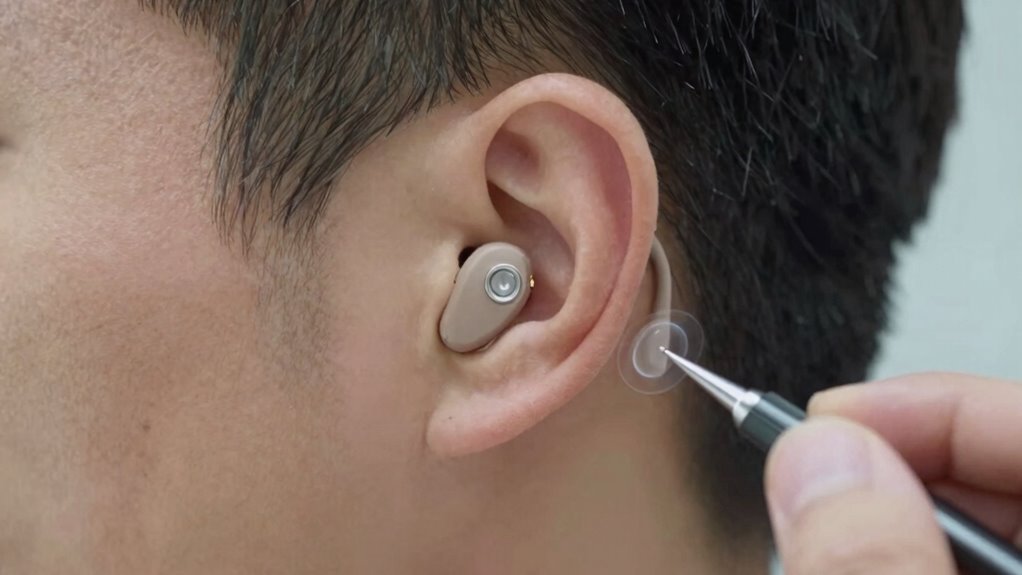
If your hearing aid is whistling or feeding back, start by ensuring it fits snugly but comfortably in your ear, and check for any wax or debris blocking the canal. Lower the volume and switch to suitable programs for your environment. Inspect the device for cracks or damage, and clean it regularly. Proper fit, maintenance, and adjustments often resolve feedback quickly. Want to learn more ways to fix and prevent whistling? Keep exploring for effective solutions.
Key Takeaways
- Ensure hearing aid fits snugly and comfortably to prevent sound escape and reduce whistling.
- Check for earwax or debris blocking the ear canal, which can cause feedback.
- Move to quieter environments and use noise reduction features to minimize background noise-induced whistling.
- Lower volume settings and select appropriate programs to prevent over-amplification and feedback.
- Regularly inspect and maintain devices, replacing damaged tubing or receivers to ensure proper seal and function.
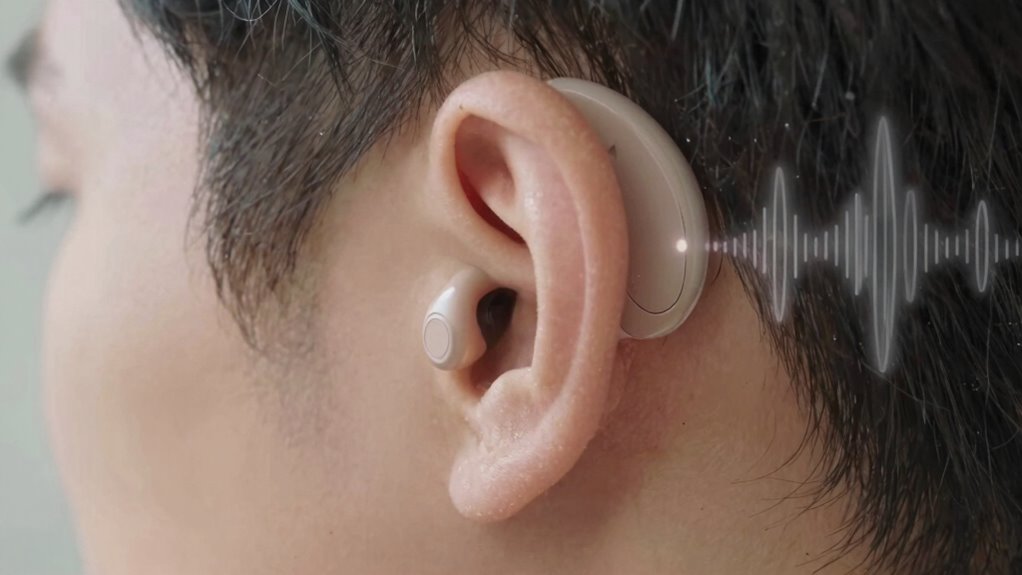
Hearing aid feedback can be a frustrating problem that disrupts your listening experience. That high-pitched whistling or squealing can suddenly appear, making it difficult to focus on conversations or enjoy your favorite sounds. One of the first things to check is your earmature adjustment. If your hearing aid isn’t sitting properly in your ear, it can cause the sound to escape and create feedback. Make sure your earmature fits snugly but comfortably; sometimes, a slight readjustment or a visit to your audiologist for a professional fitting can eliminate the whistling. Also, check for any wax buildup or debris in your ear canal, as this can interfere with the seal and lead to feedback issues. Proper ear canal health is essential for optimal hearing aid performance. Background noise often plays a significant role in feedback, especially if your hearing aid’s microphone picks up unwanted sounds. When you’re in a noisy environment, the device amplifies not just speech but also background noise, which can cause the hearing aid to whistle as it struggles to process all incoming sounds. Reducing background noise by moving to a quieter area or using noise reduction features on your hearing aid can help lessen feedback. Many modern devices come equipped with directional microphones that focus on speech in front of you and minimize sounds from behind, reducing the likelihood of feedback caused by ambient noise. Next, consider the volume settings on your hearing aid. If the volume is too high, it can lead to feedback because the device is amplifying sounds beyond its intended range. Lowering the volume slightly might resolve the issue. Additionally, ensure that your hearing aid program is correctly set for your environment; some devices have different settings for quiet versus noisy environments, and switching to an appropriate program can help prevent feedback. If feedback persists despite these adjustments, check the tubing and receiver for cracks or damage. Damaged components can cause sound to escape or enter where it shouldn’t, creating whistling sounds. Replacing worn tubing or the receiver can often fix the problem. Finally, always keep your hearing aid clean and free of moisture, as dirt and sweat can affect the device’s performance and lead to feedback. Regular maintenance, including gentle cleaning, ensures suitable operation and minimizes the chances of whistling interruptions. Following these steps provides a quick, effective way to troubleshoot common causes of hearing aid feedback, helping you enjoy clearer hearing without the annoyance of constant whistling.
Frequently Asked Questions
Can Feedback Occur With New Hearing Aids?
Yes, feedback can happen with new hearing aids. It often depends on the hearing aid design and your user habits. If the device isn’t fitted properly or if you wear it too loosely, whistling can occur. Additionally, certain habits like touching or adjusting the hearing aids frequently can cause feedback. To minimize this, guarantee proper fitting and follow your audiologist’s advice on how to wear and care for your new hearing aids.
Is Feedback Harmful to My Hearing?
You might worry that feedback harms your hearing, but it doesn’t cause further hearing loss or sound distortion. Feedback is just a loud whistling caused by sound escaping the hearing aid and looping back. While annoying, it’s not dangerous. To protect your hearing, make sure your hearing aids fit well and get them checked regularly. If feedback persists, consult your audiologist to prevent discomfort and optimize your hearing experience.
How Often Should I Check for Feedback?
You should check for feedback daily to maintain hearing comfort and guarantee your device functions properly. Regularly inspecting your hearing aids helps catch issues early, preventing discomfort and maintaining ideal device maintenance. If you notice whistling or unusual sounds, address them immediately to avoid further problems. Staying vigilant with routine checks keeps your hearing aids performing well and keeps your hearing experience comfortable and hassle-free.
Can I Fix Feedback Myself?
You can try some DIY solutions to reduce feedback, like cleaning your hearing aids or adjusting the fit slightly, but avoid pushing your luck. While small tweaks may help, persistent whistling usually calls for professional assistance to prevent damage and guarantee peak performance. Trust the experts when needed—they have the tools and expertise to fix tricky issues safely, giving you peace of mind and clear hearing.
Does Feedback Mean My Hearing Aid Is Faulty?
No, feedback doesn’t mean your hearing aid is faulty. It often results from improper device maintenance or a poor fit, which can cause whistling. Regular cleaning and ensuring the device fits snugly can prevent feedback and extend your hearing aid’s lifespan. If issues persist, consult your audiologist to check for potential problems, rather than assuming the device is defective, helping you get the most out of your hearing aid.
Conclusion
Think of hearing aid feedback like a stubborn echo—you can tame it with patience and the right adjustments. By following this quick checklist, you’re tuning your device like a skilled musician, silencing the unwanted whistling and restoring harmony to your hearing. Remember, a small tweak today can clear the noise of frustration tomorrow, turning your hearing aid into a trusted ally. Keep troubleshooting, and let your soundscape be as clear and vibrant as a sunrise after a storm.