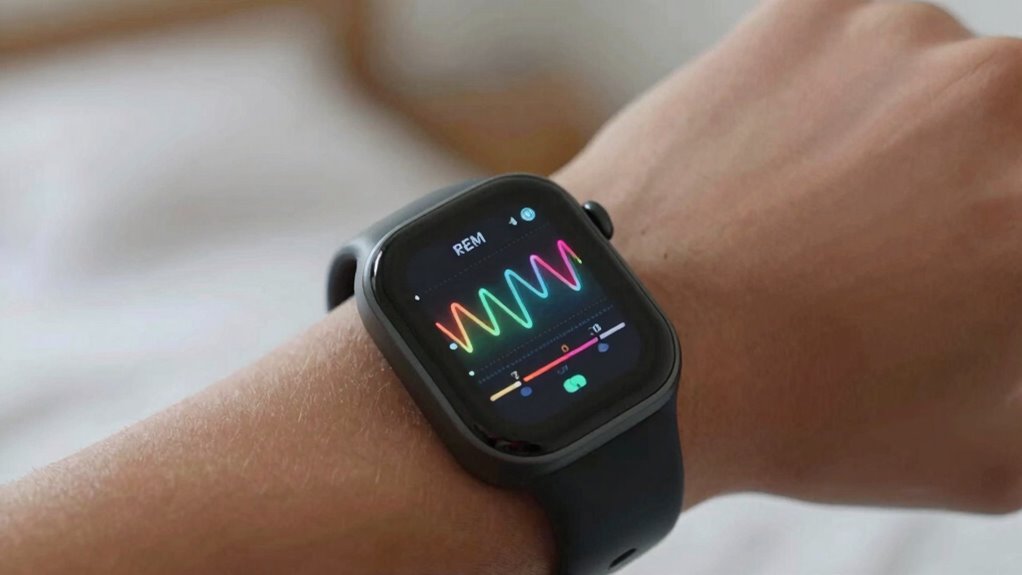

Sleep trackers estimate REM sleep by analyzing signals like your movement, heart rate, and heart rate variability while you sleep. These devices use algorithms to interpret these patterns and provide an overall picture of your sleep stages. Keep in mind, their estimates are approximate and serve more as trends than precise measurements. If you want to understand what these estimates truly reveal about your sleep, exploring further can offer clearer insights.
Open a free Amazon Business account
Business pricing, bulk buying and tax-exempt orders.
As an affiliate, we earn on qualifying purchases.
Key Takeaways
- REM estimates from sleep trackers are based on algorithms analyzing movement, heart rate, and breathing patterns, not direct measurement.
- These devices approximate REM sleep by interpreting physiological signals, which can vary in accuracy.
- Consistent tracking helps identify sleep patterns and potential issues, but REM duration estimates are not precise.
- HRV data can support REM detection, with higher HRV often indicating restful, REM-like states.
- Use sleep tracker data as trends and insights, not definitive clinical diagnostics of REM sleep.

Sleep trackers have become popular tools for understanding and improving your sleep habits. They give you insights into how well you’re sleeping and help identify patterns or issues you might not notice otherwise. When it comes to understanding what these devices tell you about your sleep, one key aspect is the sleep cycle. Your sleep cycle involves different stages—light sleep, deep sleep, and REM sleep—that repeat several times throughout the night. Sleep trackers analyze movement, heart rate, and sometimes breathing patterns to estimate which stage you’re in at any given moment. While these estimates aren’t perfect, they offer a useful overview of your sleep architecture, allowing you to see if you’re getting enough REM sleep, which is vital for memory and emotional health.
Sleep trackers reveal your sleep cycle stages, helping you understand and improve your sleep quality.
Another important metric these devices monitor is heart rate variability (HRV). HRV measures the variation in time between successive heartbeats, and it fluctuates based on your stress levels, activity, and sleep quality. When you’re in a restful state, HRV tends to be higher, indicating good recovery and relaxation. Conversely, lower HRV can signal stress or disrupted sleep. Sleep trackers leverage HRV to determine when you’re in different sleep stages, especially REM sleep, which is characterized by increased brain activity and vivid dreams. By observing changes in HRV overnight, the device can provide a more nuanced picture of your sleep quality, beyond just movement or duration.
It’s tempting to put too much stock into the specific numbers or estimates these devices produce, but it’s important to remember that they’re approximations. They use algorithms to interpret complex physiological signals and often compare your data to a built-in database of typical patterns. No device can perfectly detect each sleep stage, but they can highlight trends over time. For example, if your sleep tracker consistently shows low REM estimates or erratic HRV patterns, it might indicate stress, poor sleep hygiene, or underlying health issues. Recognizing these patterns empowers you to make adjustments, such as improving your bedtime routine, managing stress, or seeking medical advice if needed. Additionally, understanding the accuracy of sleep stage detection can help set realistic expectations for what your device can tell you.
In essence, sleep trackers provide valuable feedback on your sleep cycle and heart rate variability, helping you understand the quality of your sleep at a deeper level. While they shouldn’t replace professional medical assessments, they serve as useful tools for spotting patterns and making informed decisions about your sleep health. By paying attention to these metrics, you can better tailor your habits to support restorative sleep, ultimately enhancing your overall well-being.
best sleep tracker with REM detection
As an affiliate, we earn on qualifying purchases.
As an affiliate, we earn on qualifying purchases.
Frequently Asked Questions
How Accurate Are Sleep Tracker REM Estimates Compared to Polysomnography?
Your sleep tracker’s REM estimates are generally less accurate than polysomnography but can still give a useful overview of your sleep cycle. While they might not perfectly capture REM or sleep quality, they help you identify patterns and track changes over time. Keep in mind, trackers rely on movement and heart rate, so they’re less precise than clinical tests but still valuable for understanding your overall sleep health.
Can Sleep Trackers Differentiate Between Light and Deep Sleep Stages?
Sleep trackers with wearable sensors can generally distinguish between light and deep sleep stages, but their accuracy varies. They monitor your sleep cycle by detecting movement and heart rate changes, which helps estimate different stages. While they give useful insights, they aren’t as precise as clinical tools like polysomnography. So, you get a good idea of your sleep patterns, but don’t rely solely on them for detailed sleep analysis.
Do All Sleep Trackers Measure REM Sleep Equally Well?
Not all sleep trackers measure REM sleep equally well. Device calibration varies, and it impacts accuracy across different models. Additionally, user variability, like movement or sleep habits, can influence the results. Some trackers use advanced sensors, providing more reliable REM estimates, while others may struggle. To get the best results, choose a device with proven calibration and consider your individual sleep patterns.
How Do External Factors Influence REM Detection in Sleep Trackers?
External interference can markedly affect REM detection in sleep trackers, with studies showing that even minor external interference reduces accuracy by up to 20%. You should be mindful of device placement, as loose or poorly positioned devices are more prone to external interference. This can cause false readings or missed REM episodes. To improve accuracy, keep your device snug and avoid external disruptions like movement or noise during sleep.
What Should I Do if My Sleep Tracker Shows Inconsistent REM Data?
If your sleep tracker shows inconsistent REM data, start by reviewing your sleep habits and making adjustments for better consistency. Confirm your device is properly calibrated, as incorrect calibration can affect accuracy. Keep a regular sleep schedule, avoid alcohol and caffeine before bed, and wear the device snugly. Tracking your sleep patterns over time helps identify trends, and recalibrating your device can improve REM detection accuracy.
Conclusion
Think of sleep trackers as your personal night watch, quietly observing your rest and revealing insights in the shadows. While they provide valuable clues about your REM and sleep patterns, they aren’t crystal balls. Use them as guides, not gospel, to improve your sleep journey. Remember, a well-tuned watch helps you stay on course, but only you can navigate the true depths of restful nights. Trust the process and embrace the journey to better sleep.
Fall Picks
fall essentials
As an affiliate, we earn on qualifying purchases.