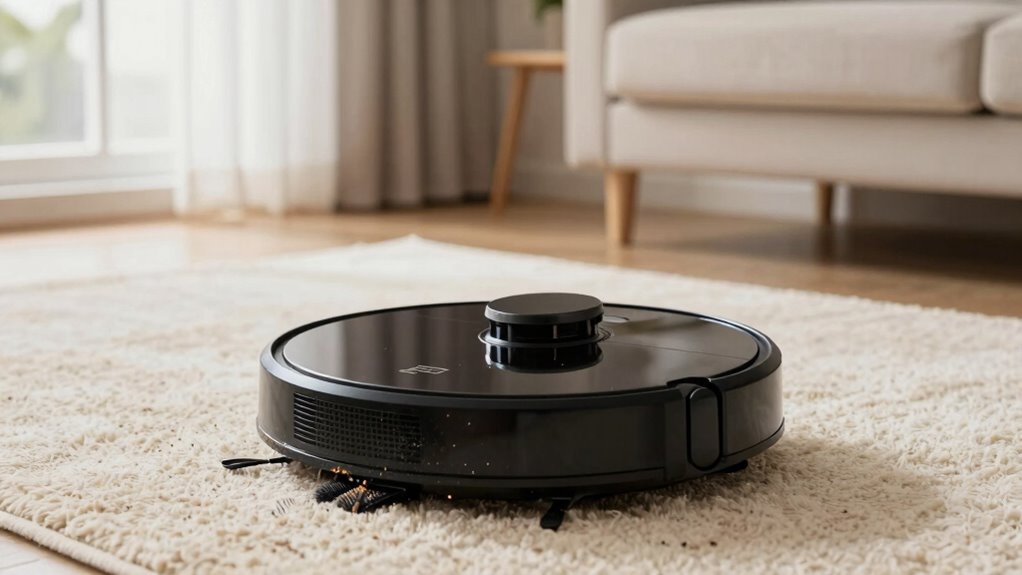

To prevent your robot vacuum from spreading dust, regularly clean or replace its filters and check for clogs in the brushes. A clean filter traps microscopic particles and keeps dust from recirculating. Make sure to remove hair and debris from the brushes every few weeks to maintain peak performance. Proper maintenance minimizes dust dispersal and keeps your home healthier. Keep going to discover more tips on maintaining your vacuum’s hygiene effectively.
Key Takeaways
- Regularly clean or replace filters to prevent dust recirculation and maintain suction power.
- Check and clear brushes of hair and debris every few weeks for optimal dirt removal.
- Power off and disinfect the vacuum components periodically to prevent dust buildup and microbial growth.
- Empty the dustbin frequently to avoid overfilling, which can cause dust to escape during cleaning.
- Follow manufacturer maintenance instructions to ensure the device functions hygienically and effectively.
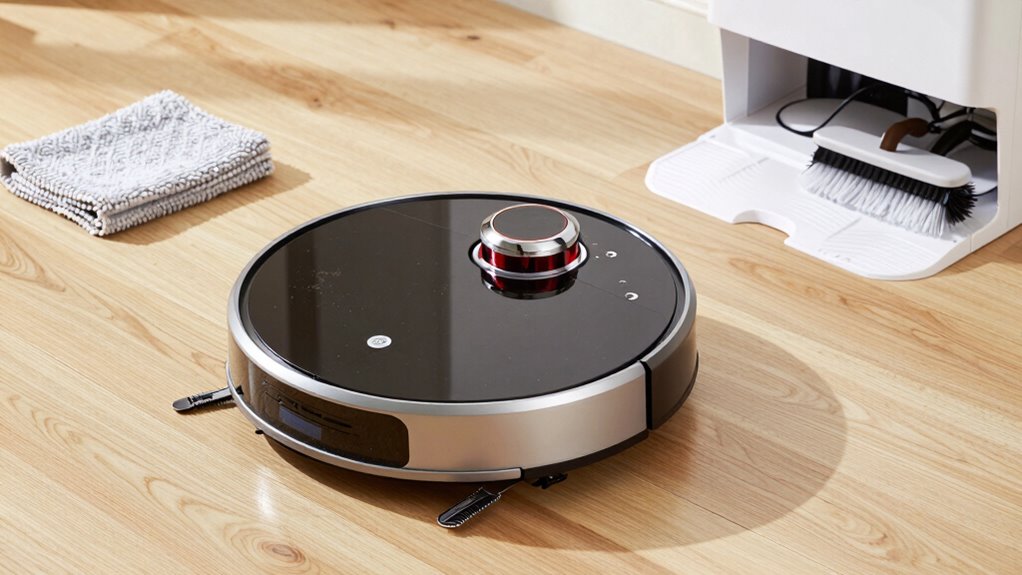
Have you ever considered how clean your robot vacuum really is after every use? It might seem spotless on the surface, but dirt, dust, and allergens can hide inside its components, especially if you’re not diligent about cleaning and maintenance. To prevent dust from spreading instead of containing it, regular filter maintenance should be a top priority. The filter acts as the vacuum’s first line of defense, trapping microscopic particles and preventing them from recirculating into the air. Over time, filters become clogged with debris, reducing suction and allowing dust to escape back into your home. Check your vacuum’s filter regularly—at least once a month—and replace or clean it according to the manufacturer’s instructions. A clean filter not only improves cleaning performance but also minimizes the risk of spreading dust when the vacuum is in operation.
Alongside filter maintenance, brush cleaning is equally vital. The brushes are the main tools that pick up dirt from your floors, and they tend to accumulate hair, fibers, and trapped debris. When brushes are tangled or clogged, they don’t rotate properly, which reduces their effectiveness and can cause dust to be dispersed rather than collected. To keep your robot vacuum functioning at its best, remove the brushes periodically—at least every couple of weeks—and clear out any hair or debris. Use a small tool or scissors to cut away tangled hair, and wipe the brushes with a damp cloth to remove stubborn dirt. This simple step ensures the brushes spin freely, improving suction and preventing dust from being released back into your environment. Additionally, filter maintenance is essential for ensuring the vacuum’s overall performance and air quality.
Neglecting these routine tasks can lead to a buildup of dirt inside the vacuum, which, when disturbed during cleaning, can cause dust and allergens to be expelled into the air instead of being trapped. Consistent filter maintenance and brush cleaning are easy yet effective ways to maintain your robot vacuum’s hygiene. They help guarantee your device isn’t just moving dust around but actually removing it from your home. Plus, a well-maintained vacuum works more efficiently, lasts longer, and reduces the risk of allergens circulating in your living space. Make these practices part of your cleaning routine, and you’ll enjoy a cleaner, healthier home environment. Regular attention to your robot vacuum’s filters and brushes is an investment in both your health and the device’s longevity, making sure it’s doing its job properly without spreading dust or allergens.
Top picks for "robot vacuum hygiene"
Open Amazon search results for this keyword.
As an affiliate, we earn on qualifying purchases.
Frequently Asked Questions
How Often Should I Replace the Robot Vacuum Filters?
You should replace your robot vacuum filters every 1 to 3 months, depending on usage. The filter lifespan varies based on how often you vacuum and the presence of allergies. Regular replacements help with allergen prevention by trapping dust and allergens effectively. Check your vacuum’s manual for specific recommendations, but staying proactive guarantees your device operates efficiently and maintains a healthier home environment.
Can Robot Vacuums Spread Allergens to Pets?
Robot vacuums can spread allergens to pets if filters aren’t maintained properly. Allergen transfer happens when dust and dander escape from dirty filters or brushes, exposing your pets to potential irritants. To protect your pet’s health, regularly clean filters, replace them as recommended, and keep the vacuum well-maintained. You’ll reduce allergen transfer, safeguard your pet’s health, and ensure your vacuum works efficiently.
Is It Safe to Use Cleaning Agents on Robot Vacuum Components?
It’s generally safe to use cleaning agents on robot vacuum components if you choose gentle, non-abrasive products. Always turn off and unplug your vacuum before cleaning, and avoid harsh chemicals that could damage sensitive parts. Check the manufacturer’s instructions for specific cleaning guidelines to guarantee component safety. Regularly cleaning your vacuum’s brushes and filters helps maintain peak performance without risking damage from inappropriate cleaning agents.
Do Robot Vacuums Sanitize Surfaces During Cleaning?
Robot vacuums don’t sanitize surfaces during cleaning. They focus on surface disinfection by removing dust and debris, but they lack the sterilization capabilities needed to kill germs. If you want proper robot vacuum sterilization, consider using models with UV sterilization features or supplement their cleaning with disinfectant wipes. Regularly emptying the bin and cleaning filters also helps maintain hygiene and prevents the spread of germs.
What’s the Best Storage Method for Robot Vacuum Accessories?
Think of your robot vacuum accessories like treasures that need safeguarding. To keep them pristine, use dedicated storage containers for accessory organization. Label each container clearly, and store small parts together in a drawer or box to prevent loss. This method keeps your accessories organized, clean, and easily accessible for the next cleaning session, ensuring they stay in top condition and ready to serve your cleaning needs efficiently.
Conclusion
So, next time your robot whirs to life, remember it’s not just a dust-busting hero but also a tiny germ factory. Without proper hygiene, it’s like inviting microscopic party crashers to your clean home. Think of it as giving your robot a germ-infested spa day—less spa, more germ fest. Keep it clean, and stop it from turning your spotless sanctuary into a sneeze-induced disaster zone. After all, who wants a vacuum that doubles as a petri dish?