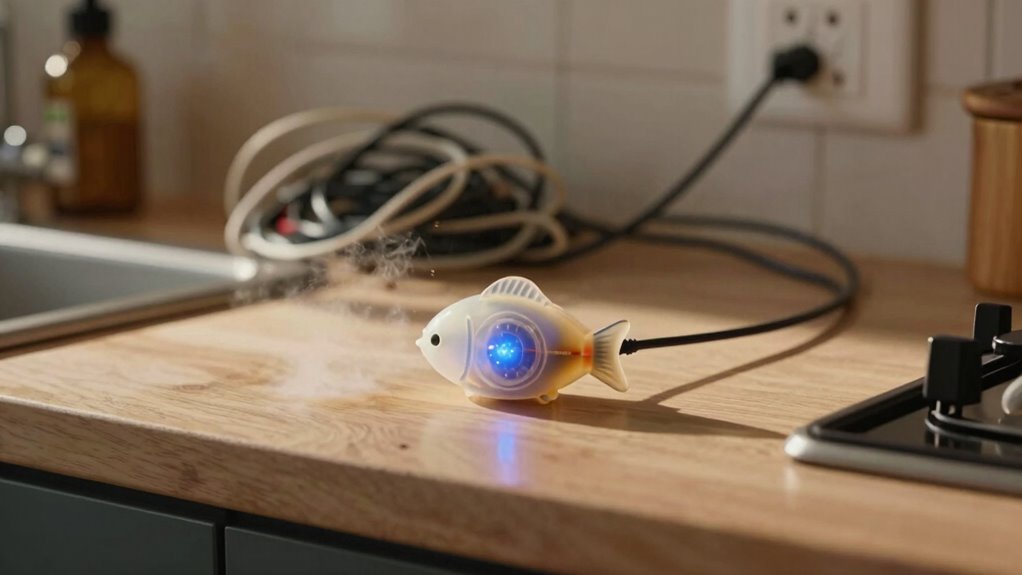

If you notice a fishy smell from an electrical outlet or appliance, treat it as a serious warning. Turn off the circuit at the breaker immediately to prevent fire or damage, and avoid using the affected outlet. Inspect for visible signs like charring or melting and call a licensed electrician to assess and repair the issue. Ignoring this smell can lead to dangerous hazards. Keep yourself safe by acting quickly—you’ll discover more safety tips if you continue.
Key Takeaways
- Recognize the fishy odor as a sign of potential electrical problems needing immediate attention.
- Turn off the affected circuit at the breaker box to prevent further hazards.
- Inspect nearby outlets or appliances for visible damage like discoloration or melting.
- Contact a licensed electrician for proper diagnosis and safe repairs.
- Avoid using the affected outlet or appliance until the issue is fully resolved.
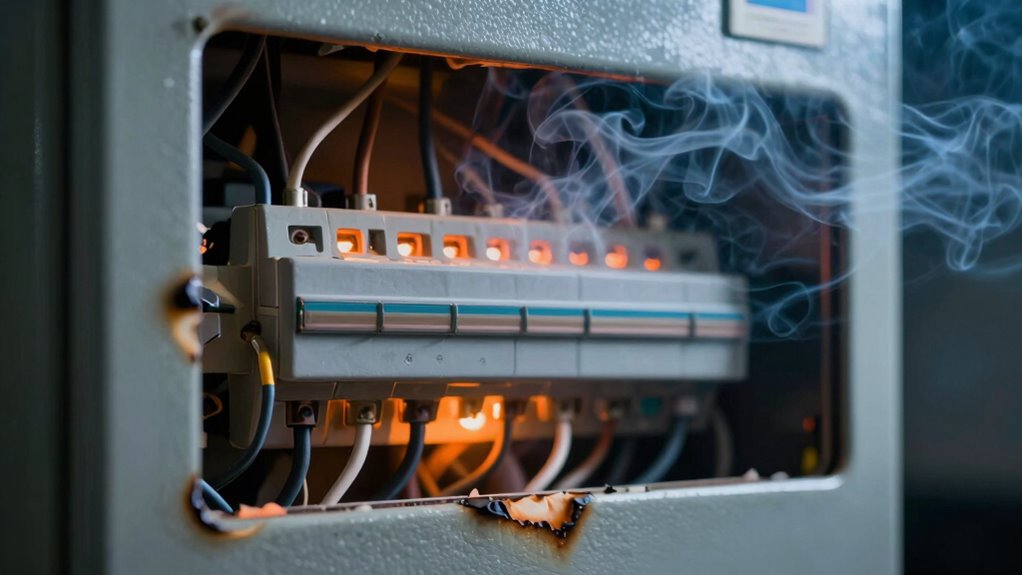
If you notice a strange fishy smell coming from your electrical appliances or outlets, it’s a clear warning sign that something may be wrong. That unpleasant odor often indicates an electrical problem, and ignoring it could lead to serious hazards like fires or appliance damage. Your immediate priority should be to prioritize circuit safety by acting quickly and carefully. Smell identification is vital here; recognizing that fishy scent as a potential electrical issue can prevent a disaster before it happens.
First, don’t dismiss the smell as merely a strange odor or a passing issue. Instead, treat it as a warning signal that needs your attention. Turn off the affected circuit at your breaker box to cut power to the outlet or appliance. This step minimizes the risk of electrical shorts, sparks, or fires that could ignite from damaged wiring or overheating components. When doing so, make sure you’re wearing rubber-soled shoes and using insulated tools to avoid accidental shocks.
Once the power is off, inspect the outlet, appliance, or wiring for visible signs of damage. Look for discoloration, melting, or charring—these are clear indicators of overheating or electrical failure. Be cautious, as the smell may linger even after turning off the circuit. If you’re unsure about what you’re seeing or smelling, it’s best to call a professional electrician. They have the expertise to diagnose the source of the smell accurately and guarantee proper circuit safety measures are taken.
Never try to repair or tamper with electrical wiring yourself unless you’re qualified. Attempting fixes without proper knowledge can escalate the problem, risking shocks or fires. A licensed electrician will perform thorough checks, identify hidden issues, and replace faulty wiring or components if necessary. Remember, the fishy smell isn’t just unpleasant—it’s a clear indicator that your electrical system might be compromised. Addressing it promptly can save you from more costly repairs and dangerous situations later on.
In the meantime, avoid using the affected outlets or appliances until a professional clears them. Ventilate the area to disperse any lingering fumes, but don’t rely solely on smell to gauge safety. Always prioritize circuit safety by seeking expert help when your senses detect something unusual. By acting swiftly and responsibly, you’re protecting your home and loved ones from potential electrical hazards. The key is to trust your nose as a warning tool and respond immediately, always erring on the side of caution when dealing with electrical issues. Additionally, familiarizing yourself with electrical safety measures can help prevent future incidents and ensure quicker responses when problems arise.

Sperry Instruments VD7504GFI DualCheck 2-in-1 Non-Contact Voltage Detector + GFCI Outlet Circuit Analyzer, 360° Visual & Audible Indicators, 50-1000V AC, 250 lb. Crush Rating
- Dual Functionality: Voltage detector and GFCI tester in one
- Durable Construction: Impact-resistant polycarbonate housing with rubber grips
- Precise Ground Testing: Advanced circuitry for accurate low resistance detection
As an affiliate, we earn on qualifying purchases.
As an affiliate, we earn on qualifying purchases.
Frequently Asked Questions
Can a Fishy Smell Indicate a Minor Electrical Issue?
A fishy smell can indicate a minor electrical issue, often related to faulty electrical wiring or an appliance malfunction. When you notice this odor, it’s vital to act quickly, as it could signal overheating or damaged wiring that might lead to a fire. Turn off the affected circuit or appliance immediately, ventilate the area, and contact a professional electrician to inspect and repair the problem safely.
How Quickly Should I Respond to a Fishy Electrical Odor?
You should respond immediately to a fishy electrical odor, as it’s a sign of potential circuit safety issues. Odor detection suggests there might be wiring problems or electrical component failure, which can lead to fire hazards. Turn off the power supply to the affected area and call a professional electrician to inspect and fix the problem. Acting quickly minimizes risks and ensures your electrical system remains safe.
Are Certain Appliances More Prone to Emitting This Smell?
Yes, certain appliances are more prone to emitting a fishy electrical odor, especially those with motor parts or complex wiring, like refrigerators, dishwashers, and dryers. Regular appliance maintenance helps prevent odor detection issues and catches problems early. If you notice a fishy smell, turn off the appliance immediately and inspect for signs of overheating or wiring problems, then call a professional to guarantee safety and proper repair.
Is It Safe to Ignore a Persistent Fishy Smell?
Ignoring a persistent fishy smell is like ignoring a silent alarm—it’s risky. This odor signals potential electrical safety hazards, such as overheating or wiring issues. Odor detection is your first warning sign, so don’t dismiss it. Instead, unplug appliances and call a professional. Taking action protects you from fire risks and electrical damage. Never underestimate the power of your senses; they’re your best defense in safeguarding your home.
Can a Fishy Smell Be Caused by Non-Electrical Sources?
Yes, a fishy smell can come from non-electrical sources like household contaminants. You might notice this odor from spoiled food, mold, or bacteria buildup in drains, trash, or damp areas. It’s important to identify and clean these sources promptly, as they can cause health issues. Ignoring these odors can lead to more serious problems, so take action to eliminate the smell and address the root cause.
Conclusion
If you notice that fishy smell coming from your electrical devices, don’t ignore it—think of it as a warning sign, like a fire alarm going off. Act quickly to unplug the device and inspect the issue. Just like a lighthouse guides ships away from danger, your instincts can steer you clear of electrical hazards. Stay alert, handle problems promptly, and keep your home safe from potential fires or shocks. Your caution can make all the difference.