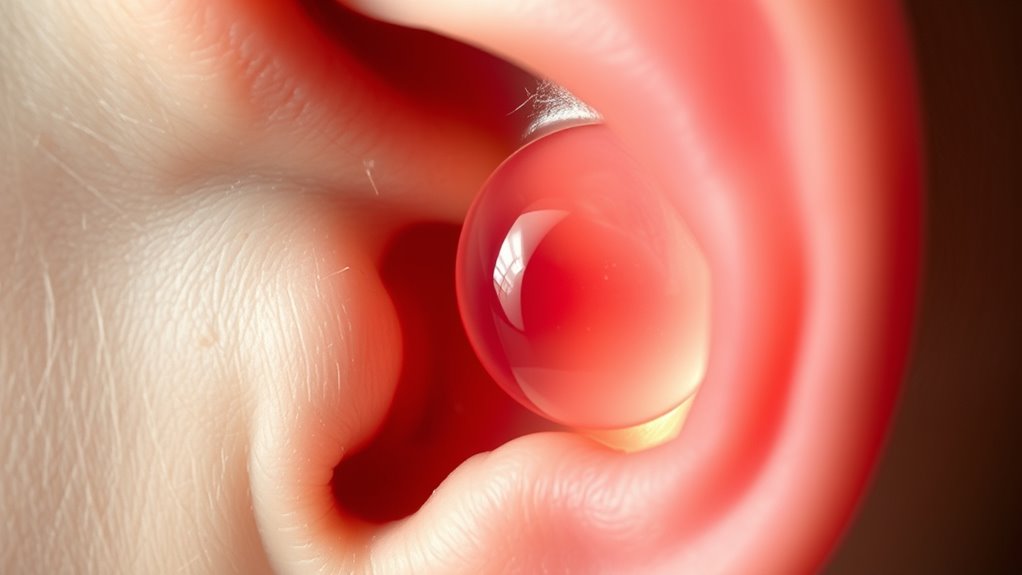
Otitis media with effusion, or “glue ear,” happens when fluid builds up in the middle ear because the Eustachian tube isn’t working properly. This often results from allergies, colds, or sinus infections, causing swelling that blocks fluid drainage. You might notice a feeling of fullness and muffled hearing, but usually no pain or infection symptoms. If you keep exploring, you’ll discover more about causes, treatment options, and how it affects hearing.
Key Takeaways
- Otitis media with effusion involves fluid buildup in the middle ear due to Eustachian tube dysfunction.
- It often causes a sensation of fullness and muffled hearing without pain or infection signs.
- Common causes include allergies, colds, sinus infections, and structural issues affecting the Eustachian tube.
- The condition may resolve spontaneously or require treatments like ventilation tubes or allergy management.
- Persistent or severe cases can impact hearing and may need medical intervention to prevent long-term effects.
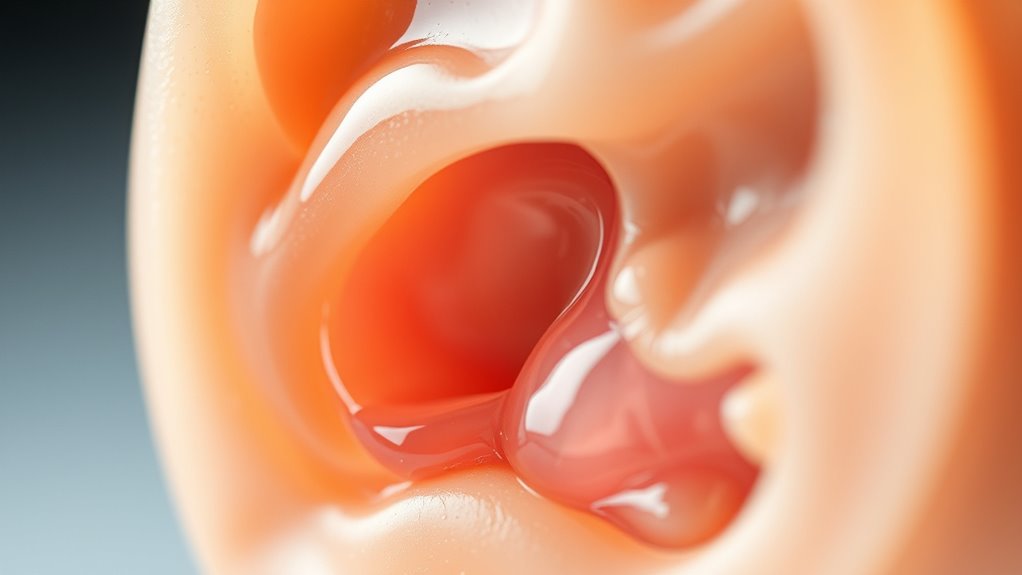
Have you ever experienced a feeling of fullness or muffled hearing in your ears without any pain? If so, you might be dealing with otitis media with effusion, often called “glue ear.” It’s a common condition that occurs when fluid builds up in the middle ear without signs of infection. This fluid, or effusion, causes the ear to feel blocked and can considerably affect hearing. Understanding what causes this buildup and exploring treatment options can help you manage or prevent discomfort.
The causes of effusion are varied but often relate to issues with the Eustachian tube, which connects your middle ear to the back of your nose and throat. When this tube doesn’t function properly, it can’t drain fluid effectively. Allergies, colds, sinus infections, or even changes in altitude can lead to inflammation and swelling of the Eustachian tube. This swelling traps fluid in the middle ear, leading to the characteristic muffled hearing. Sometimes, simply having a cold or respiratory infection can cause temporary effusion, but in other cases, it might persist longer, especially if allergies or sinus issues aren’t managed. Additionally, factors like enlarged adenoids or structural abnormalities can impair Eustachian tube function, making effusion more likely.
When it comes to treatment options, the approach depends on the severity and duration of the effusion. Many cases resolve on their own within a few weeks, so doctors often recommend watchful waiting initially. During this period, managing underlying allergies or colds can help reduce inflammation and promote drainage. If the fluid persists beyond three months or causes significant hearing difficulties, more active treatments might be necessary. These can include inserting small ventilation tubes into the eardrum to drain fluid and equalize pressure, which usually provides relief and prevents further complications. In some cases, addressing underlying allergies with medication or allergy shots can also help improve Eustachian tube function. Rarely, surgery to remove enlarged adenoids might be recommended if they’re contributing to chronic effusion.
Frequently Asked Questions
Can Children Outgrow Glue Ear Without Treatment?
Yes, children can outgrow glue ear without treatment, especially if it’s caused by ear infections that resolve on their own. During this time, their hearing development might be temporarily affected, but many kids recover fully as the fluid drains naturally. However, it’s important to monitor their hearing and speech development, because persistent glue ear can cause delays. Consulting a healthcare professional guarantees appropriate management and support for your child’s needs.
Are There Long-Term Hearing Issues From Glue Ear?
Yes, some children can experience long-term hearing issues from glue ear, especially if ear infections recur or persist. I’ve seen how ongoing fluid build-up can temporarily affect hearing development, but if left untreated, it might impact speech and language skills later on. It’s important to monitor your child’s hearing and consult a healthcare professional if ear infections are frequent, to prevent lasting effects on hearing development.
Is Glue Ear Contagious?
Honestly, glue ear itself isn’t contagious. It’s more like a stubborn houseguest—caused by viral infections or allergy triggers, which are contagious, but the ear condition isn’t. You won’t catch glue ear from someone else, but you might catch the cold or allergy that led to it. So, while you can’t pass on the glue ear directly, staying mindful of viral infections and allergies is still a good idea.
How Can I Prevent Recurring Glue Ear Episodes?
To prevent recurring glue ear episodes, I focus on keeping my Eustachian tube healthy and clear. I avoid ear infections by practicing good hygiene, such as washing hands frequently and avoiding smoke exposure. I also try to stay up-to-date with vaccinations and manage allergies that can cause Eustachian tube blockages. If I notice persistent issues, I see my doctor promptly to prevent repeated episodes and protect my hearing.
Are There Natural Remedies for Glue Ear?
I believe some natural remedies might help ease glue ear symptoms. For instance, warm compresses can promote drainage, and certain herbal teas may reduce inflammation. Alternative therapies like acupressure or gentle ear massage could also support fluid drainage. While these methods aren’t scientifically proven to cure glue ear, they might provide comfort alongside medical advice. Always consult a healthcare professional before trying any natural remedies or alternative therapies.
Conclusion
In my experience, otitis media with effusion, or ‘glue ear,’ can markedly impact daily life, especially in children. Did you know that approximately 80% of children will have at least one episode by age 3? That’s quite common, but understanding the condition can help us manage it better. If you or your child are experiencing persistent hearing issues, don’t hesitate to seek medical advice — early intervention can make a real difference.