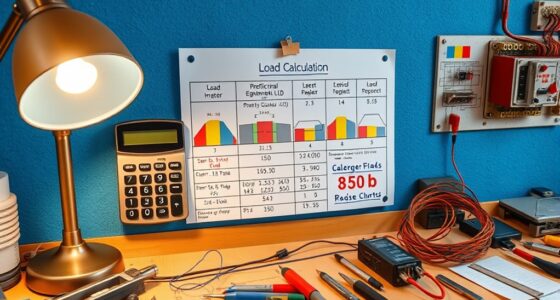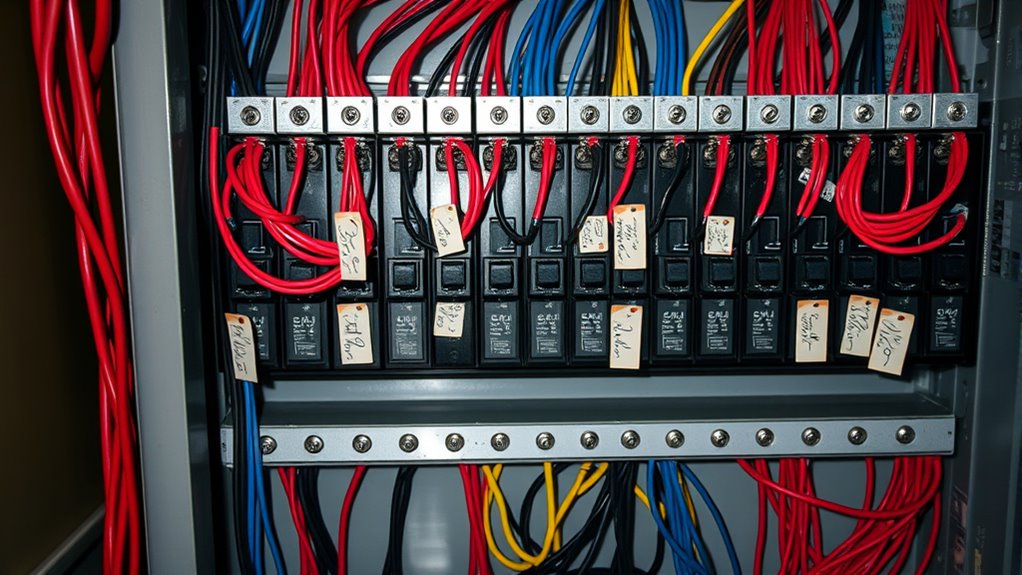

To prevent overloaded circuits, I check the breaker labels for their amperage ratings, usually marked in amps on each switch. I make sure the total load from connected devices doesn’t exceed that limit—usually 15 or 20 amps—and avoid plugging too many high-energy devices into one outlet. If you want to know how to keep your circuits safe and avoid tripping, keep reading for helpful tips and insights.
Key Takeaways
- Check breaker labels to identify their maximum current capacity, usually listed in amperes (e.g., 15A, 20A).
- Add the current draw of connected devices to ensure total load does not exceed the breaker’s rated amperage.
- Understand that exceeding the breaker’s capacity causes it to trip, protecting against overloads and hazards.
- Regularly review device loads and unplug excess devices if the breaker trips frequently.
- Consult a professional electrician for complex issues or frequent breaker trips to prevent electrical hazards.
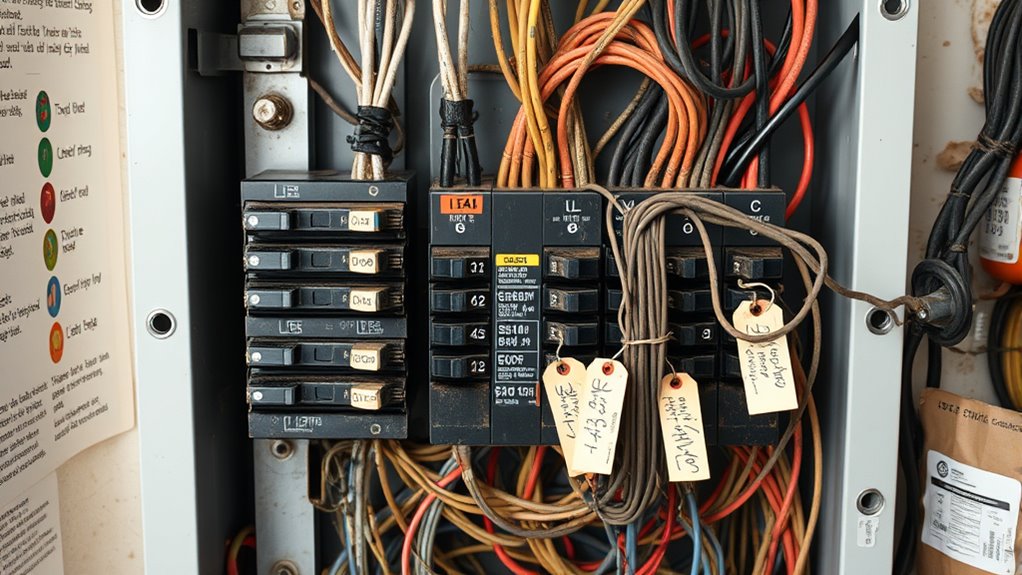
Have you ever wondered what happens when too many devices are plugged into a single outlet? It’s a common situation, but it can lead to serious problems like overloaded circuits. When a circuit becomes overloaded, it risks overheating and causing potential electrical fires. That’s why understanding circuit safety is so important. One key part of maintaining safety is knowing how to read breaker labels and loads properly. Breaker labels tell you the maximum current each circuit can handle, usually measured in amps. If you connect devices that draw more current than what the breaker is rated for, it trips, cutting off power to prevent damage. But if it keeps tripping, that’s a sign you need to do breaker troubleshooting to identify and fix the problem.
Breaker troubleshooting starts with reading the labels carefully. Many breakers have their amperage rating printed right on the switch or nearby. For example, a 15-amp breaker is designed to handle a maximum of 15 amps of current safely. If you’re plugging in multiple high-powered devices, like space heaters, computers, or kitchen appliances, you might unknowingly push the circuit beyond its limit. That’s when the breaker trips. Regularly checking these labels helps you avoid overloading circuits and keeps your home safe. When a breaker trips, it’s a built-in safety feature that prevents serious issues, but frequent trips indicate a problem. It could mean you’re overloading the circuit, or it could signal a fault in the breaker itself or wiring issues.
Troubleshooting involves more than just resetting the breaker. First, unplug some devices and reset the breaker to see if it stays on. If it trips again immediately, you might have a heavy load that’s too much for the circuit. Alternatively, there could be a short circuit or ground fault, which requires further inspection. Sometimes, breakers wear out over time and need replacing—they may trip even without an overload. In such cases, testing the breaker with a multimeter or consulting a professional is the safest approach. Always remember that circuit safety isn’t just about avoiding inconvenience; it’s about protecting your home and loved ones from potential hazards.
Understanding how to read breaker labels and loads empowers you to make smarter decisions about plugging in your devices. It helps you identify when you’re pushing your electrical system too far, and it guides you in troubleshooting trips safely and effectively. Being aware of breaker capacity and how it relates to your load can prevent costly repairs and dangerous situations. If you’re ever unsure, don’t hesitate to reach out to a qualified electrician. Proper breaker troubleshooting and awareness of circuit safety are essential skills that can save lives and prevent costly repairs down the road.

16 Sheets Breaker Panel Labels Electrical Box Sticker Numbers Breaker Panel Labels Electrical Sticker Number Catalog Load Center Adhesive Waterproof Reusable(Mix Colors)
Easy to use: the label can be cut into different sizes according to the needs, and can be…
As an affiliate, we earn on qualifying purchases.
As an affiliate, we earn on qualifying purchases.
Frequently Asked Questions
How Often Should Circuit Breakers Be Tested or Replaced?
I recommend testing your circuit breakers annually to verify they’re functioning correctly. The circuit breaker lifespan varies, but most last 10-15 years if used properly. If you notice frequent trips, corrosion, or damage, replace them sooner. Regular testing, especially if your home has older electrical systems, helps prevent overloads or failures. Always consult a professional if you’re unsure about testing or replacing your breakers to keep your electrical system safe.
Can Overloaded Circuits Cause Electrical Fires?
Overloaded circuits can definitely cause electrical fires because they create a fire hazard. When too many devices draw power through a single circuit, it overheats, leading to wiring damage. This damage increases the risk of sparks and igniting surrounding materials. To stay safe, always avoid overloading outlets or circuits and make sure your breaker labels and loads are correctly managed. Regular inspections help prevent potential fire hazards from overloads.
What Tools Are Best for Measuring Circuit Load?
The best tools for measuring circuit load are a multimeter and a clamp meter. I use multimeter testing to measure voltage and current directly, ensuring accurate readings. For load calculation, a clamp meter is great because it allows me to measure current without disconnecting wires. These tools help me assess if a circuit is overloaded and prevent potential hazards, making my electrical work safer and more precise.
Are There Safety Tips for Resetting a Tripped Breaker?
Ever wondered if resetting a tripped breaker is safe? Absolutely, but you need to follow breaker safety and reset precautions carefully. First, turn off all devices on that circuit to prevent surges. Then, firmly flip the breaker fully to OFF before switching it back ON. If it trips again, don’t force it—call a professional. Staying cautious guarantees your safety and prevents further electrical issues.
How Do I Identify Which Circuit Controls Specific Outlets?
To identify which circuit controls specific outlets, start by examining the breaker labeling; it usually indicates the areas or rooms each breaker serves. If labels aren’t clear, I recommend doing outlet identification by turning off breakers one at a time and testing the outlets with a circuit tester. This method helps you confidently match outlets to their respective breakers, ensuring safe and accurate control.

MakerHawk Electronic Load Tester – USB Load Tester 150W 200V 20A Resistor Adjustable Constant Current Battery Capacity Tester Module Intelligent Dischar
Prevent burning warning: when the input voltage battery and large power test, access must be beforeusing two current…
As an affiliate, we earn on qualifying purchases.
As an affiliate, we earn on qualifying purchases.
Conclusion
Understanding how to read breaker labels and loads is essential for safe wiring. Did you know that about 30% of home electrical fires start with overloaded circuits? By learning to spot the signs and properly manage your breakers, you can prevent potential hazards. It’s a small effort that can make a big difference—keeping your home safe and your mind at ease. So, take the time to stay informed; it’s worth it!

Klein Tools 80101 Circuit Breaker Finder Kit, GFCI Outlet and Receptacle Tester Kit, Multimeter, NCVT, Outlet Tester, Leads, 4-Piece
SMART BUY: A complete, high-performance kit that offers convenience and value
As an affiliate, we earn on qualifying purchases.
As an affiliate, we earn on qualifying purchases.
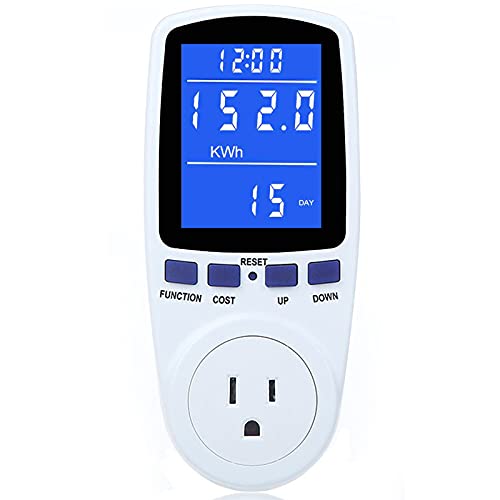
Upgraded Watt Power Meter Plug Home Electrical Usage Monitor Consumption, Energy Voltage Amps Kill Tester with Backlight, Overload Protection, 7 Modes Display
Various Monitoring Parameters: The power meter plug can monitor the power (W), energy (kWh), volts, amps, hertz, power…
As an affiliate, we earn on qualifying purchases.
As an affiliate, we earn on qualifying purchases.