To care for minor cuts, start by washing your hands and gently rinsing the wound with clean water to remove dirt. Apply gentle pressure with a clean cloth to stop bleeding, then use antiseptic to disinfect the area. Cover the cut with a sterile bandage and change it daily or if it gets dirty. Watch for signs of infection, and seek medical help if issues worsen. Keep reading to learn more about proper wound care steps.

Get oils, diffusers and self-care delivered free — and shop member deals
- Fast, free delivery on millions of items
- Access to Prime Big Deal Days deals on October 6–7
- Prime Video, Amazon Music and more included
Key Takeaways
- Clean the wound gently with water and mild soap, avoiding harsh chemicals.
- Apply gentle pressure with a sterile cloth to stop bleeding and elevate the injured area.
- Cover the wound with a sterile bandage and change dressings regularly to prevent infection.
- Watch for signs of infection like redness, swelling, pus, or increased pain.
- Seek medical help for deep, persistent bleeding, signs of infection, or wounds on the face or joints.
sterile adhesive bandages for minor cuts
As an affiliate, we earn on qualifying purchases.
As an affiliate, we earn on qualifying purchases.
Assessing the Severity of Your Cut
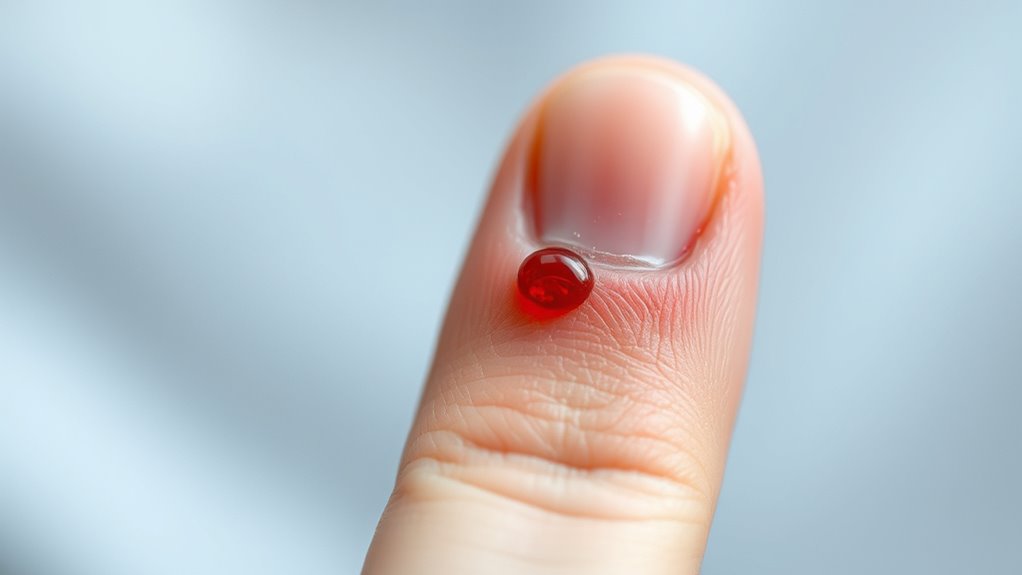
Have you ever wondered how to tell if a cut needs medical attention or can be treated at home? First, examine the size and depth of the wound. If it’s deep enough to see muscle, bone, or tendons, it likely requires professional care. Bleeding that doesn’t stop after 10 minutes of applying pressure is another sign you should seek medical help. Look for jagged edges or a gaping wound; these often need stitches. Also, consider the location—cuts on the face or over joints may need prompt attention for proper healing. Remember, if you notice signs of infection like redness, swelling, warmth, or pus, it’s time to get help. Trust your instincts—when in doubt, consult a healthcare professional. Proper wound care can help prevent complications and promote faster healing.
Cleaning the Wound Properly
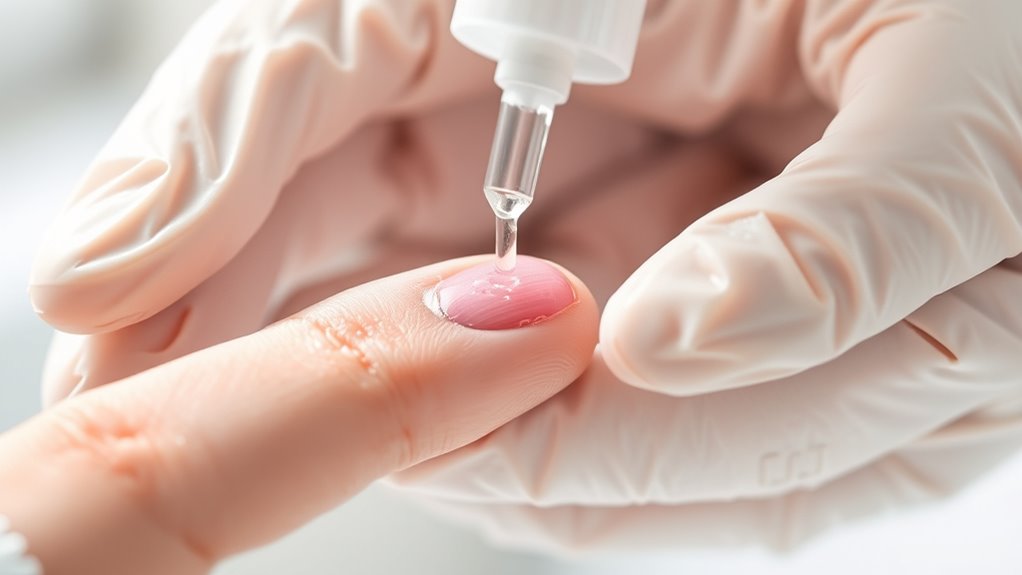
Once you’ve assessed that a wound can be safely cleaned at home, the next step is to properly clean it to prevent infection. Start by washing your hands thoroughly with soap and water, then put on clean gloves if available. Rinse the wound gently with clean, running water to remove dirt, debris, and bacteria. Avoid using harsh chemicals like hydrogen peroxide or iodine, as they can damage tissue. You can use a mild soap around the wound, but don’t get soap directly in it. Pat the area dry with a clean towel or gauze. If you see any dirt or debris that won’t come out easily, use sterilized tweezers to gently remove it. Proper cleaning helps ensure your wound heals smoothly and reduces the risk of infection. Additionally, utilizing natural language processing (NLP) technology can help monitor symptoms and provide guidance on wound care if needed.
Stopping the Bleeding
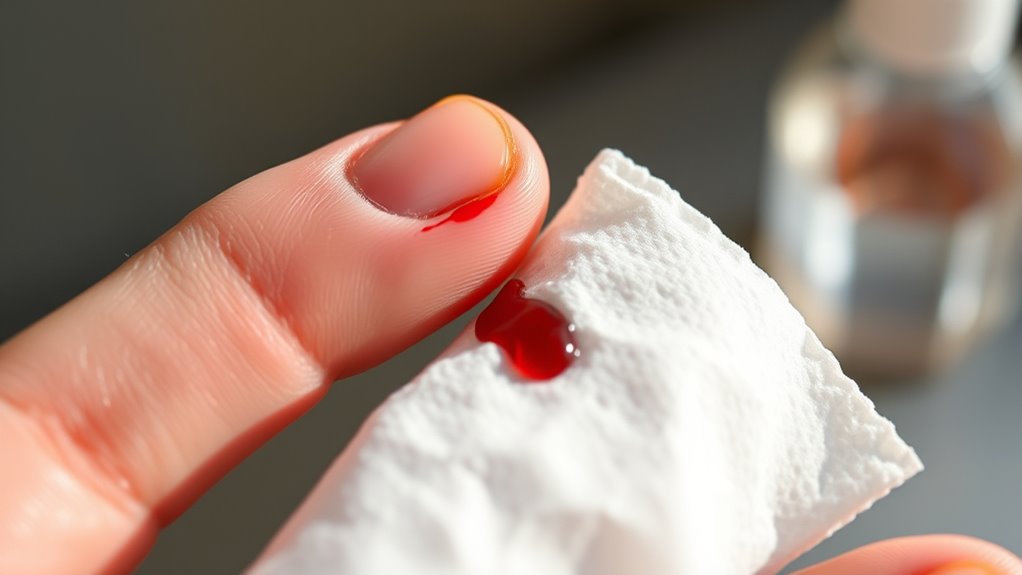
How can you effectively stop bleeding from a minor wound? First, apply gentle, steady pressure directly on the cut with a clean cloth or sterile bandage. Keep pressing for several minutes; don’t lift to check too often, as this can interrupt clot formation. Elevate the injured area above your heart level to reduce blood flow. If blood soaks through, add more cloth on top without removing the initial one. If bleeding persists after 10 minutes of pressure, consider seeking medical help. Avoid using a tourniquet unless bleeding is severe and uncontrollable. Remember, staying calm helps you apply consistent pressure. Once bleeding slows or stops, you can move on to further wound care steps. Using proper technique can help prevent infection and promote healing.
Applying an Antiseptic and Protecting the Cut

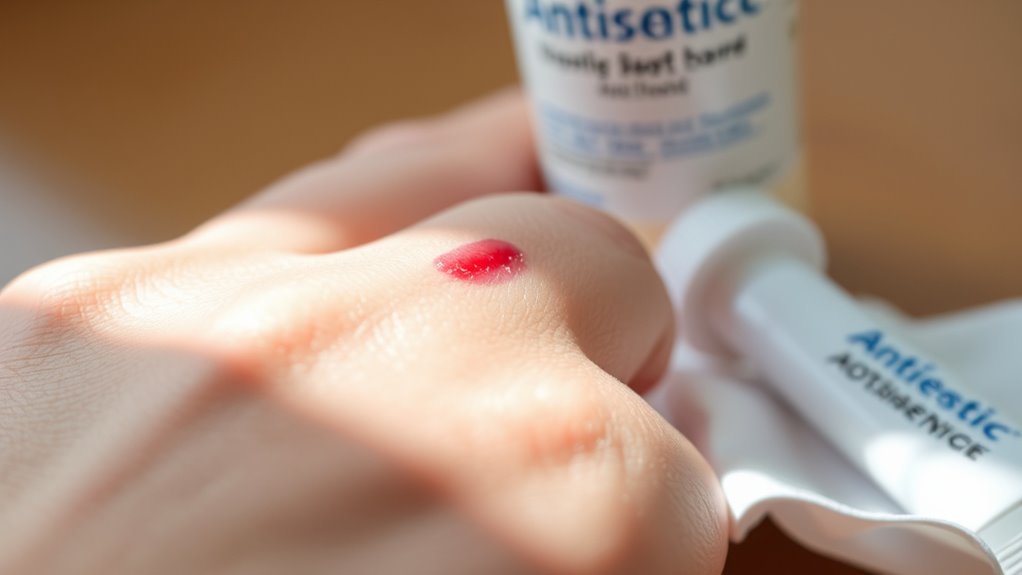
To prevent infection, you need to apply the antiseptic carefully, covering the entire area around the cut. Make sure to use a clean tool and follow the instructions for proper application. Once the antiseptic is in place, protect the wound with a sterile bandage to keep it safe from dirt and further injury. Additionally, choosing the right wound dressing can help promote faster healing and reduce the risk of complications.
Proper Antiseptic Application
Have you ever wondered if you’re applying antiseptics correctly to a wound? To do it right, start by washing your hands thoroughly. Use a clean cotton ball or gauze to apply the antiseptic, ensuring you cover the entire area around the cut. Gently dab, avoiding rubbing, which can irritate the skin. Be sure to use enough antiseptic to saturate the wound and surrounding tissue. Don’t forget to follow the instructions on the label for proper use. After applying, let the antiseptic sit for a few seconds to do its job. Once done, avoid touching the wound to keep it clean. Proper antiseptic application reduces infection risk and promotes healing, so take your time and be gentle. Incorporating antiseptic qualities can further support preventing infection and ensuring effective wound care.
Effective Cut Protection
Applying antiseptics correctly is essential to effectively protect your cut from infection. After cleaning the wound, gently apply a thin layer of antiseptic solution or ointment directly to the area. Make sure to cover the entire surface of the cut, but avoid overusing, which can cause irritation. Once the antiseptic is applied, cover the wound with a sterile bandage or dressing. This acts as a physical barrier, preventing dirt and bacteria from entering. Change the dressing regularly, especially if it becomes wet or dirty. Keeping the wound clean and protected reduces the risk of infection and promotes faster healing. Properly applying antiseptic and covering your cut helps ensure your minor injury stays clean, safe, and heals efficiently.
Choosing the Right Bandage or Dressing
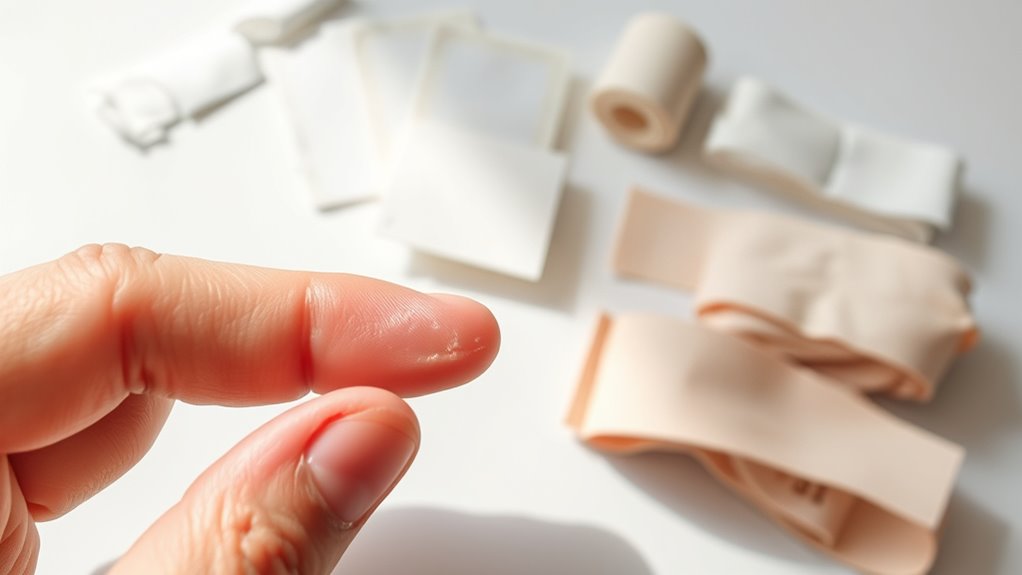
Choosing the right bandage or dressing is essential for promoting healing and preventing infection. Start by evaluating the size and location of your wound. For small cuts, a simple adhesive bandage usually suffices, providing a protective barrier against dirt and germs. If the cut is deeper or bleeding heavily, opt for a sterile gauze pad and secure it with medical tape or a larger bandage. Consider the wound’s exposure to moisture; if it’s in a place prone to getting wet, choose a waterproof dressing. Also, think about comfort and breathability—materials that allow air circulation help keep the area dry and promote faster healing. Proper choice ensures your wound stays clean and heals efficiently. Selecting appropriate materials that suit the wound’s characteristics can make a significant difference in the healing process.
Monitoring for Signs of Infection
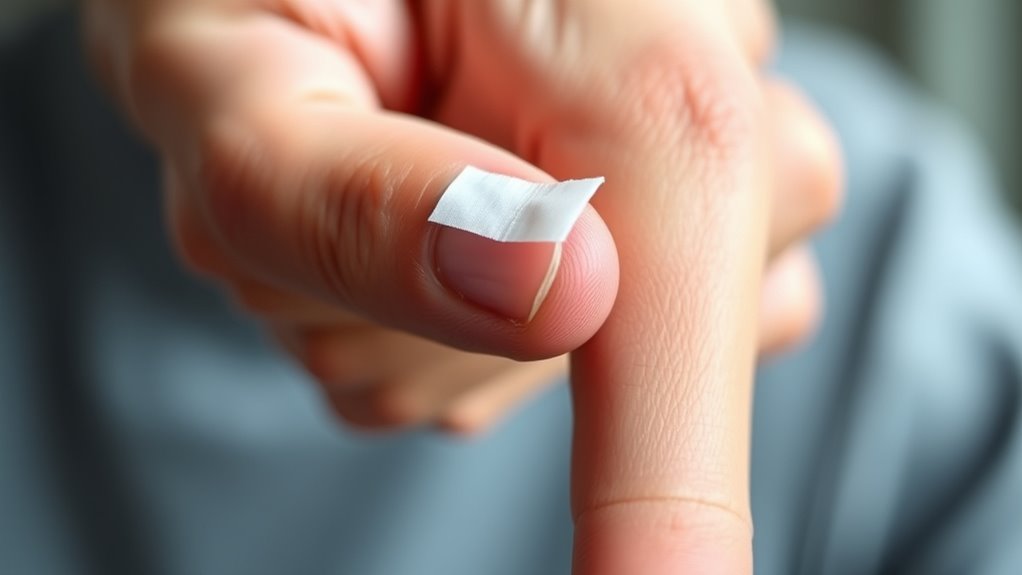
Keep a close eye on your wound for signs of infection, like increased redness or warmth around the area. Watch for any unusual discharge or foul smell that could indicate a problem. Also, note if you experience swelling or persistent pain, as these could be warning signs. If your wound is not healing properly, it may be necessary to seek medical advice to prevent complications, especially considering the importance of proper wound care and monitoring.
Watch for Increased Redness
When caring for a wound, it’s important to watch for increased redness around the area, as this can be a sign of infection. Redness that spreads or becomes more intense may indicate your body is fighting an infection. Keep an eye out for other signs, like swelling or warmth. If you notice the redness persists or worsens, don’t ignore it. Immediate action helps prevent complications. Here are some things to contemplate:
- Redness expanding beyond the wound edges
- Red streaks traveling away from the wound
- Redness that stays the same or worsens over time
- Redness accompanied by swelling
- Increased discomfort or pain
- Being aware of signs of infection can help you seek timely medical attention and promote proper healing.
Notice Unusual Discharge
Noticing unusual discharge from your wound is an important sign to watch for, as it can indicate an infection. Clear or slightly yellow fluid is normal, but thick, cloudy, or pus-like discharge suggests trouble. You might also notice a foul odor, which is a clear warning sign. Keep an eye on how much discharge you see and whether it’s increasing over time. If your wound produces greenish or foul-smelling fluid, or if the discharge is accompanied by redness or warmth around the area, seek medical advice promptly. Don’t ignore these signs, as early detection helps prevent complications. Regularly clean your wound and change dressings as instructed. Proper wound care and monitoring support healing can make a big difference in preventing infection and promoting healing.
Observe Swelling or Pain
Monitoring swelling and pain around your wound is essential because these symptoms can signal an infection. Keep an eye out for increased redness, warmth, or tenderness, as well as pain that worsens instead of improves. If you notice any of these signs, it’s a good idea to take action quickly. When using a home care approach, understanding contrast ratio can help you evaluate how well your wound healing environment supports recovery by ensuring proper lighting and visibility. Here are some things to watch for:
- Sudden or worsening pain
- Swelling that grows or doesn’t go down
- Red streaks spreading from the wound
- Excessive or foul-smelling discharge
- Increased warmth around the area
Being attentive helps catch infections early, so you can seek treatment if needed. Don’t ignore persistent or worsening symptoms—they’re your body’s way of signaling trouble. Staying vigilant helps ensure your wound heals smoothly and reduces the risk of complications.
When and How to Change Dressings
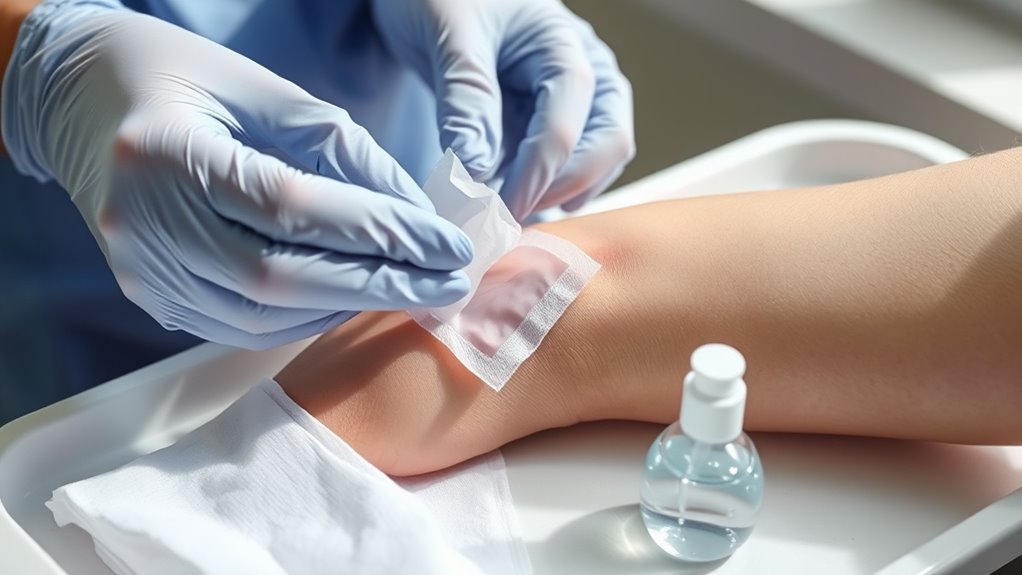
Knowing the right time to change a dressing is essential for proper wound healing and infection prevention. Usually, you should change the dressing once a day or whenever it becomes wet, dirty, or loose. Check the wound for signs of infection, like increased redness, swelling, or foul odor. Before changing, wash your hands thoroughly with soap and water. Gently remove the old dressing, taking care not to disturb the healing tissue. Clean the wound with mild soap and water or a saline solution, then pat it dry with a clean cloth. Apply a fresh, sterile dressing, making sure it covers the wound completely. Avoid touching the healing surface directly. Keep the wound protected and clean to promote faster healing.
Recognizing When Medical Attention Is Needed
It’s important to seek medical attention promptly if you notice signs that the wound isn’t healing properly or shows signs of infection. These signs include increased redness, swelling, or warmth around the area. You should also see a doctor if the wound is deep, won’t stop bleeding, or if you notice pus or foul odor. Additionally, watch for fever or chills, which can indicate a serious infection. Don’t ignore worsening pain or if the wound begins to open or look worse over time. Prompt medical care prevents complications and promotes healing.
Seek medical care if signs of infection or poor healing appear, such as increased redness, swelling, or pus.
- Excessive bleeding that won’t stop
- Increasing pain or swelling
- Pus or foul smell
- Fever or chills
- Wound looks worse or keeps opening
Promoting Healing and Preventing Scars
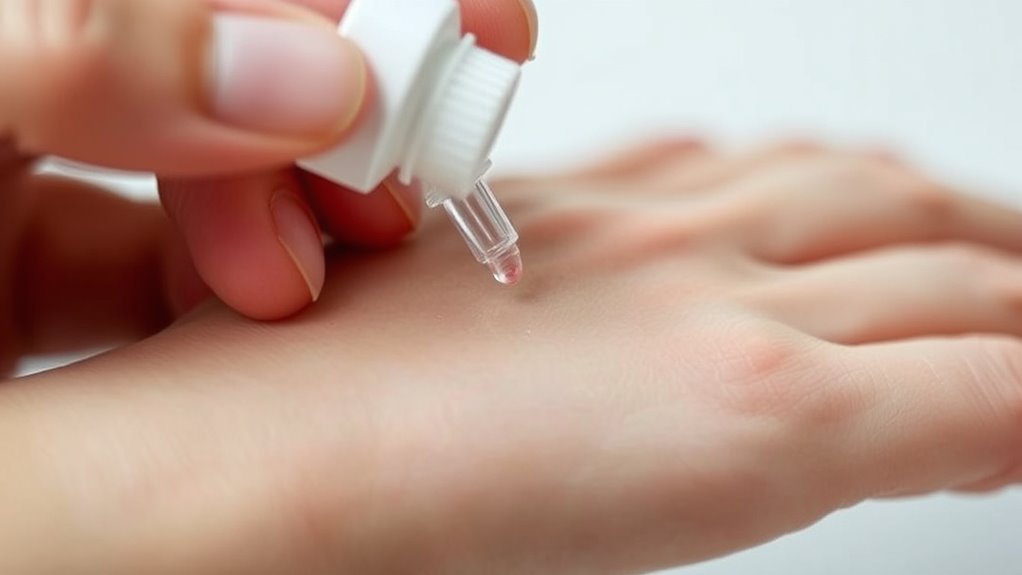
To promote healing and minimize scars, you should keep the wound clean and moist, as this creates an ideal environment for tissue repair. Gently wash the area with mild soap and water, then apply a thin layer of antibiotic ointment to prevent infection. Cover the wound with a sterile bandage, changing it daily or if it becomes wet or dirty. Avoid picking at scabs, as this can slow healing and increase scarring. Keep the wound protected from sun exposure, as UV rays can darken scars. Staying hydrated and eating a balanced diet rich in vitamins C and E supports skin regeneration. If you notice signs of infection or the wound isn’t healing, seek medical advice promptly. Following these steps helps your skin recover smoothly and reduces the likelihood of prominent scars.
Frequently Asked Questions
How Long Does It Typically Take for a Minor Cut to Heal?
A minor cut usually heals within a few days to two weeks, depending on its depth and location. You can speed up healing by keeping the wound clean, applying antibiotic ointment, and covering it with a bandage. Avoid picking at scabs or exposing the cut to dirt and bacteria. If you notice increased redness, swelling, or pus, seek medical help, as these could indicate infection.
Can I Use Home Remedies for Wound Healing?
You can try some home remedies to support wound healing, but always prioritize proper care. Keep the wound clean, apply honey or aloe vera for their natural antibacterial properties, and use turmeric paste for its healing benefits. However, if the wound shows signs of infection or doesn’t heal within a few days, see a healthcare professional. Home remedies can help, but they shouldn’t replace medical treatment when needed.
When Should I Consider Stitches for a Small Cut?
Ever wonder if a small cut needs stitches? You should contemplate them if the wound is deep, longer than half an inch, or if it won’t stop bleeding after applying pressure for a few minutes. If the edges of the cut are jagged or gaping open, stitches help close it properly and prevent infection. When in doubt, it’s safest to consult a healthcare professional to ensure proper healing.
Are There Specific Signs I Should Watch for After Treating a Cut?
After treating a cut, you should watch for signs of infection or complications. Look for increased redness, swelling, warmth, or pus around the wound. If the area becomes more painful or if you notice red streaks spreading from the cut, seek medical help. Also, watch for fever or chills, which can indicate an infection. If any of these signs appear, contact a healthcare professional promptly.
How Can I Minimize Scarring From Minor Cuts?
In an age before modern medicine, folks still wanted smooth skin, so they took extra care. To minimize scarring, keep the wound clean and moisturized, and avoid picking at it. Use silicone gel or sheets once it’s closed. Protect it from the sun, as UV rays can darken scars. Stay patient—good healing takes time, and proper care helps your skin look its best, just like a well-preserved vintage relic.
Conclusion
Taking good care of your minor cuts helps them heal faster and reduces infection risk. You might think it’s just a small scrape, but proper cleaning, dressing, and monitoring make all the difference. Picture your wound like a tiny garden—if you water and tend to it, it’ll flourish without scars. So, stay attentive, follow these steps, and your skin will thank you for your care!
Halloween Picks
halloween
As an affiliate, we earn on qualifying purchases.