

I understand how confusing it can be to distinguish between a yeast infection and BV because both cause discomfort but have different causes and symptoms. Yeast infections often lead to thick, white discharge and intense itching, while BV causes a fishy odor and thin, grayish discharge. A key difference is that BV typically raises vaginal pH above 4.5. If you want to learn more about how to tell them apart and get proper testing, keep going.
Key Takeaways
- BV usually raises vaginal pH above 4.5, while yeast infections typically do not alter pH significantly.
- BV often causes a fishy odor and grayish discharge; yeast infections cause thick, white, cottage cheese-like discharge.
- Antibiotic use can disrupt vaginal bacteria, increasing risk for both BV and yeast overgrowth.
- Proper diagnosis involves testing vaginal pH and microscopic examination to distinguish between BV and yeast infections.
- Consulting a healthcare provider is essential for accurate testing and tailored treatment for either condition.
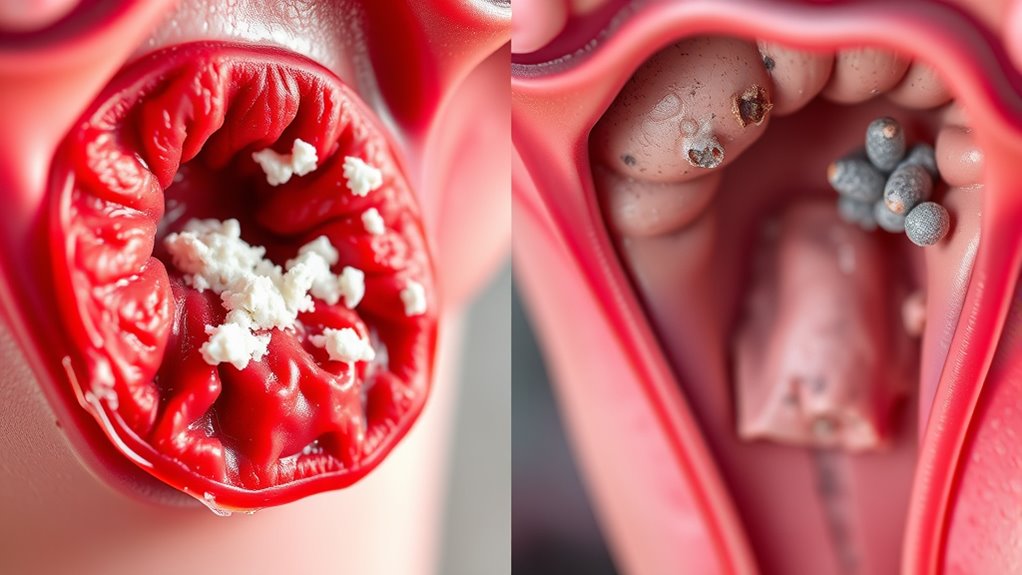
When experiencing unusual vaginal symptoms, it’s common to wonder whether you’re dealing with a yeast infection or bacterial vaginosis (BV). These conditions can cause similar discomforts, but understanding the differences can help you seek the right treatment. One key factor in distinguishing them is vaginal pH. Normally, your vaginal pH stays around 3.8 to 4.5, maintaining a healthy balance of bacteria and yeast. A yeast infection usually doesn’t alter this pH much, keeping it within the normal range. However, BV often causes an increase in vaginal pH above 4.5, which indicates a shift in the bacterial environment. This shift happens because the healthy bacteria, mainly lactobacilli, are reduced, allowing other bacteria to overgrow. Knowing your vaginal pH can be a helpful clue, but it’s not a definitive test on its own.
Many women don’t realize how antibiotics can influence vaginal health. Antibiotics are designed to kill bacteria, but they don’t always discriminate between harmful and beneficial bacteria. When you take antibiotics, they can disrupt the natural balance of bacteria in your vagina, decreasing lactobacilli levels. This reduction can create a perfect environment for overgrowth of yeast or harmful bacteria, potentially leading to either a yeast infection or BV. For instance, if antibiotics wipe out the bacteria that keep yeast in check, you might develop a yeast infection afterward. Conversely, if antibiotics disturb the bacterial balance, BV can develop, characterized by an overgrowth of anaerobic bacteria. It’s important to take into account antibiotic effects if you notice symptoms after completing a course of antibiotics.
Symptoms like itching, burning, unusual discharge, or a foul odor can point to either condition, but the context around antibiotic use and changes in discharge can provide additional clues. BV often presents with a thin, grayish or white discharge with a fishy smell, especially after sex. Yeast infections typically cause thick, white, cottage cheese-like discharge, along with intense itching and redness. However, the definitive way to tell them apart is through testing, such as pH measurement or microscopic examination. If you suspect either condition, it’s best to consult a healthcare provider who can perform the appropriate tests and recommend effective treatment. Recognizing the role of vaginal pH, as well as the impact of antibiotics on vaginal flora, can guide you in understanding what’s happening and seeking prompt relief.
Frequently Asked Questions
Can Yeast Infections and BV Occur Simultaneously?
Yes, yeast infections and BV can occur simultaneously, which often causes symptom overlap and diagnostic challenges. I’ve experienced this firsthand, making it tricky to identify the root cause of discomfort. Because their symptoms are similar, I recommend seeing a healthcare professional for proper testing. Accurate diagnosis guarantees you get the right treatment and relief, especially when both infections are present at once.
Are There Natural Remedies to Distinguish Between Them?
There aren’t any foolproof natural remedies to reliably distinguish between a yeast infection and BV. Herbal remedies like tea tree oil or garlic may help soothe symptoms but won’t determine the cause. Dietary adjustments, such as reducing sugar and processed foods, can support overall vaginal health. Still, I recommend seeing a healthcare professional for accurate diagnosis, as proper treatment depends on identifying whether it’s a yeast infection or BV.
How Long Does Each Condition Typically Last Without Treatment?
Imagine a storm brewing inside you; without treatment, yeast infections can last about a week, with symptoms lingering like dark clouds. BV, however, might persist for up to 10 days or more, often causing persistent discomfort. The duration differences hinge on symptom persistence: yeast infections tend to resolve faster, while BV can drag on, making it essential to seek treatment to clear the skies and restore your comfort.
Can These Infections Affect Pregnancy Outcomes?
Yes, these infections can affect pregnancy outcomes. If untreated, yeast infections or BV may lead to pregnancy complications like preterm labor or low birth weight. They can also impact fetal health by increasing the risk of infections during delivery. That’s why it’s vital to seek treatment promptly. Regular prenatal checkups help guarantee these infections are managed effectively, protecting both your health and your baby’s well-being.
Are There Specific Foods That Trigger Each Condition?
I’ve seen cases where diet triggers, like sugary foods, worsen yeast infections because they feed the fungi. For BV, food sensitivities to processed or spicy foods can upset the vaginal balance. Avoiding common triggers, such as refined carbs or alcohol, helps manage symptoms. Each person’s response varies, but paying attention to how your body reacts to certain foods can be key in preventing flare-ups of both yeast infections and BV.
Conclusion
Knowing the difference between a yeast infection and BV is like having a map in unfamiliar territory. Each has its own signs and causes, but both can cloud your comfort if left unchecked. Don’t ignore the signals your body sends—think of them as lighthouse beacons guiding you to health. When in doubt, consult your healthcare provider. Clear understanding is the key to steering through these tricky waters and getting back to feeling your best, bright and free.