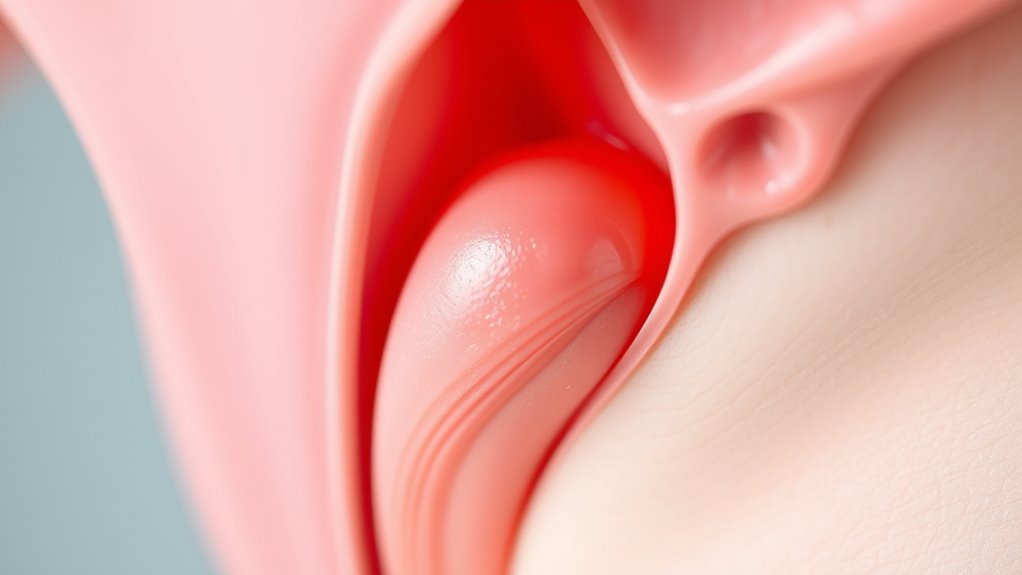

If you’re experiencing pain during intimacy due to vulvodynia or vestibulodynia, you’re not alone. These conditions cause persistent vulvar pain without clear causes and are often worsened by hormonal fluctuations, stress, or emotional factors. The pain can create a cycle of discomfort and anxiety that affects your emotional well-being. Understanding how physical and psychological factors interact is key to managing the pain, and you’ll find more helpful insights if you keep exploring.
Key Takeaways
- Vulvodynia and vestibulodynia cause persistent vulvar pain, often making sexual activity uncomfortable or painful.
- Hormonal fluctuations can worsen symptoms, especially during menstrual cycles, pregnancy, or menopause.
- Psychological factors like anxiety and emotional distress can amplify pain perception and impact intimacy.
- The pain is linked to increased nerve sensitivity and tissue hypersensitivity in the vulvar area.
- Effective management involves addressing both physical symptoms and emotional well-being through comprehensive care.

Vulvodynia and vestibulodynia are two related conditions that cause persistent or recurring pain in the vulvar area, often without an obvious cause. When I first learned about these conditions, I was overwhelmed by how complex and misunderstood they are. One aspect that stands out is how hormonal influences can play a significant role. Fluctuations in hormones, especially estrogen, can affect the sensitivity of the vulvar tissue. Many women notice that their pain worsens during certain times in their menstrual cycle, pregnancy, or menopause. Hormonal changes can alter blood flow, tissue elasticity, and nerve sensitivity, making the area more prone to pain. It’s not just about the physical changes; these fluctuations can also impact mood and emotional well-being, adding another layer of psychological effects. Living with chronic pain like this can cause feelings of frustration, depression, and anxiety, which often get worse when hormonal shifts occur. It’s a cycle that’s hard to break because the hormonal influences are so intertwined with emotional health.
The psychological effects of vulvodynia and vestibulodynia are profound. When pain is persistent and unpredictable, it can lead to a sense of helplessness. I’ve seen this in myself and others—fear of pain during intimacy, worry about what might trigger discomfort, and the emotional toll of feeling misunderstood or dismissed by healthcare providers. These feelings can create a negative feedback loop, heightening pain perception and increasing stress. Anxiety about intimacy, for instance, often causes muscle tightness and heightened sensitivity, which worsens the pain. It’s a vicious cycle because the psychological effects don’t just stem from the pain; they also influence how the pain is experienced. Stress and emotional distress can amplify nerve sensitivity, making the pain seem even worse. That’s why addressing psychological health is vital in managing these conditions. Therapeutic approaches like counseling or support groups can help women cope emotionally, reduce anxiety, and improve their overall quality of life. Recognizing the interplay between hormonal influences and psychological effects is essential in understanding and treating vulvodynia and vestibulodynia effectively. It’s not just about physical symptoms; it’s about treating the whole person—mind and body—to find relief and regain control over your life.
Frequently Asked Questions
Can Vulvodynia Be Cured Completely?
No, vulvodynia can’t be completely cured, but many find effective relief through vulvodynia treatment. I focus on managing chronic pain with a combination of therapies like medications, physical therapy, and lifestyle changes. While the condition might persist, dedicated chronic pain management can markedly improve your quality of life. Remember, everyone’s experience is different, so working closely with your healthcare provider is key to finding what works best for you.
Are There Effective Home Remedies for Vestibulodynia?
Yes, there are some natural remedies and lifestyle adjustments that might help manage vestibulodynia. I recommend trying gentle, soothing natural remedies like warm sitz baths, aloe vera gel, and avoiding irritants such as harsh soaps. Incorporate lifestyle adjustments like wearing loose clothing and practicing stress reduction techniques. While these won’t cure it, they can ease discomfort and improve your quality of life. Always consult your healthcare provider for personalized advice.
How Does Vulvodynia Affect Mental Health Long-Term?
I’ve found that vulvodynia can deeply impact mental health over time, often causing feelings of frustration and isolation. It challenges my emotional resilience, making daily life harder. That’s why seeking mental health support is essential; it helps me cope and maintain perspective. Long-term, addressing both physical pain and emotional health ensures I stay resilient and don’t let vulvodynia define my well-being.
Is Vulvodynia Linked to Other Chronic Pain Conditions?
Yes, vulvodynia is often linked to other chronic pain conditions like fibromyalgia and irritable bowel syndrome. I’ve found that these comorbid conditions can make managing vulvodynia more challenging because they create a cycle of chronic pain. Recognizing these connections is vital, as it helps tailor a thorough treatment plan. If you’re experiencing multiple pain issues, talking to your healthcare provider about this overlap can be really beneficial.
Can Sexual Activity Improve or Worsen Symptoms?
Sexual activity can both improve and worsen symptoms, depending on the individual and how it’s approached. For some, gentle, mindful sexual activity helps with symptom management by promoting blood flow and reducing tension. Others might experience increased discomfort if they push through pain. It is crucial to listen to your body, communicate with your partner, and adapt your activities to support healing and comfort.
Conclusion
Living with vulvodynia felt like walking through a fog I couldn’t lift, unsure of when relief would come. But understanding these conditions is like finding a lighthouse in that fog—suddenly, there’s hope and direction. Did you know that many women find relief through proper diagnosis and treatment? If you’re experiencing pain, remember, you’re not alone. Just like I did, you can navigate this journey with the right support and knowledge leading the way.