When choosing intimate hygiene products, I avoid ingredients like harsh soaps, artificial fragrances, and unnecessary chemicals. These can throw off my natural pH, cause irritation, or lead to infections. I look mainly for fragrance-free, pH-balanced options with gentle, natural ingredients that support my body’s defenses. If you want to stay comfortable and healthy, it’s important to skip the harmful additives. Keep going to discover which ingredients are best for your intimate care.
Key Takeaways
- Avoid products with harsh chemicals like sodium lauryl sulfate, which can irritate sensitive skin.
- Steer clear of artificial fragrances and synthetic perfumes that may cause allergic reactions.
- Refrain from using alkaline-based soaps that disrupt the natural pH balance of the intimate area.
- Exclude ingredients like parabens and triclosan, which can upset natural flora and cause irritation.
- Be cautious of essential oils and preservatives that might trigger sensitivities or irritation.
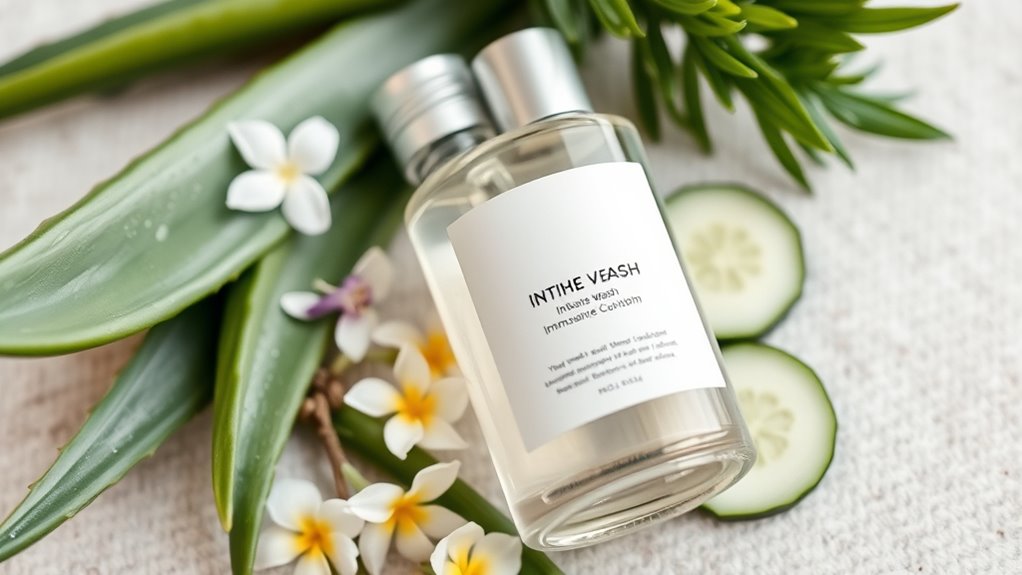
Have you ever wondered what the best intimate hygiene products are for maintaining freshness and comfort? If so, you’re not alone. Many of us want to keep that delicate area clean without disrupting its natural balance. One of the most important factors to contemplate is pH balance. Our intimate area has a naturally acidic pH, usually around 3.8 to 4.5, which helps fend off bacteria and infections. When products are too alkaline, they can throw off this balance, leading to irritation, odor, or even infections like bacterial vaginosis. That’s why I always look for products that respect my body’s natural pH. Many mainstream soaps and washes contain harsh chemicals or are formulated with a neutral or alkaline pH, which can upset this delicate equilibrium. Choosing a product specifically designed for intimate hygiene, with a pH close to your body’s natural level, is key to maintaining comfort and health.
Another thing I’ve learned is to be mindful of fragrance sensitivity. Many products boast pleasant scents, but these fragrances can be a double-edged sword. They often contain synthetic perfumes or essential oils that can irritate sensitive skin and mucous membranes. If you’re prone to itching, burning, or discomfort, it’s wise to opt for fragrance-free or hypoallergenic options. I’ve found that unscented products tend to be gentler and less likely to cause a reaction, especially in such a sensitive area. Even natural fragrances, which seem harmless, can sometimes trigger irritation if you have fragrance sensitivity. It’s better to prioritize products with minimal ingredients and avoid unnecessary additives.
Additionally, selecting products with appropriate ingredients that support the natural flora of your intimate area can help prevent irritation and infections. Using the wrong products can do more harm than good, disrupting your natural defenses and making you uncomfortable. I’ve made mistakes in the past by using body washes or soaps that weren’t meant for intimate use, only to regret it later. Now, I stick to gentle, pH-balanced, fragrance-free options that are specifically formulated for intimate hygiene. These products help me feel fresh and clean without risking irritation or imbalance. Remember, your body’s natural defenses are there for a reason. Respecting that by choosing the right products isn’t just about comfort; it’s about protecting your overall health. So, always read labels carefully, avoid harsh ingredients, and prioritize pH balance and fragrance sensitivity to keep your intimate area healthy and happy.
Frequently Asked Questions
Are There Natural Alternatives to Chemical-Based Intimate Hygiene Products?
Yes, I prefer natural alternatives like herbal remedies and organic options for intimate hygiene. I find that using gentle, plant-based ingredients helps maintain freshness without harsh chemicals. For example, I opt for products with natural pH-balancing agents or simply rinse with warm water and mild, organic soap. These options keep me feeling clean and confident while avoiding potential irritants found in chemical-based products.
How Do Synthetic Fragrances Affect Intimate Health?
Synthetic fragrances can seriously affect your intimate health by causing fragrance sensitivity, leading to irritation and discomfort. They also pose a risk of hormonal disruption, which can disturb your body’s natural balance. I avoid products with artificial scents because I’ve experienced irritation and want to protect my hormones. Choosing fragrance-free or naturally scented options helps me maintain better intimate health and reduce the risk of adverse reactions.
Can Certain Ingredients Cause Allergic Reactions or Irritation?
Absolutely, certain ingredients can cause allergic reactions or irritation. Allergenic ingredients like artificial fragrances, parabens, or certain preservatives trigger sensitivities in some people. Irritant compounds such as alcohol or strong surfactants can also damage delicate skin, leading to redness, itching, or discomfort. It’s important to check labels carefully and choose products free from these irritants to protect your intimate health and avoid unnecessary reactions.
What Labels Should I Look for to Identify Harmful Ingredients?
Ever wonder what labels reveal about your intimate products? I always check ingredient labels carefully, watching for harmful chemicals like parabens, phthalates, and synthetic fragrances. These sneaky additives can cause irritation or allergic reactions. If you see unfamiliar or long chemical names, it’s a sign to steer clear. Trust me, reading labels helps you avoid potential irritants and keeps your delicate area happy and healthy.
Do Ph Levels in Products Impact Vaginal Health?
Yes, pH levels in products do impact vaginal health. I always check for products that support the natural pH balance, which is slightly acidic—around 3.8 to 4.5—because maintaining vaginal acidity helps prevent infections and discomfort. Using products with pH levels that match your body’s natural vaginal acidity helps keep your environment healthy, balanced, and less prone to irritation or bacterial overgrowth.
Conclusion
When choosing intimate hygiene products, it’s essential to know what to steer clear of, so you don’t fall into a trap. Reading labels and understanding ingredients can save you from potential irritation or imbalance. Remember, what you put on your skin matters—your body isn’t a dumping ground. Stay informed and don’t be afraid to ask questions. After all, better safe than sorry, because your comfort and health should always come first.