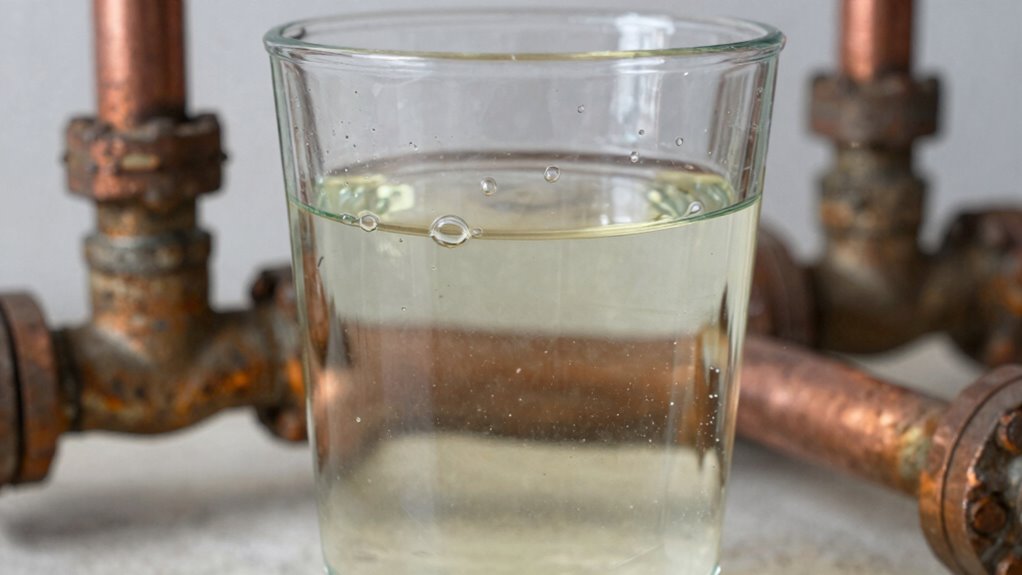

If your water smells like rotten eggs, it’s likely caused by hydrogen sulfide gas from natural underground sulfur bacteria or plumbing issues in your home. Sulfur bacteria thrive without oxygen, producing the smell when they break down organic matter, often in well water. Plumbing problems, such as corroded pipes, can also release sulfur smells. To identify the source and eliminate the odor, understanding the differences helps you decide on the best treatment options — discover more about what to do next.
Key Takeaways
- Rotten egg smell often indicates hydrogen sulfide gas from sulfur bacteria in well water or plumbing issues.
- Natural underground sulfur reactions can produce odors, requiring water testing to confirm bacteria presence.
- Installing aeration or chlorination systems effectively removes hydrogen sulfide from well water.
- Corroded or old plumbing, especially galvanized pipes, can cause sulfur odors inside the home.
- Diagnosing whether the odor originates from the well or plumbing guides targeted treatment solutions.

If your water suddenly smells like rotten eggs, it’s a sign that something’s wrong with your water supply. This pungent odor often indicates the presence of hydrogen sulfide gas, a common issue in well water systems. When you’re relying on well water, you’re responsible for maintaining its quality, and that includes addressing odors promptly. The smell usually results from natural processes underground, where sulfur bacteria break down organic matter, releasing hydrogen sulfide. Alternatively, it could stem from plumbing problems within your home’s water system. Understanding whether the sulfur smell originates from your well or your plumbing can help you determine the right solution.
If you have a well water system, the sulfur odor is frequently caused by bacteria that thrive in the absence of oxygen, producing hydrogen sulfide as a byproduct. In this case, water treatment becomes essential. Installing a chlorination system or aeration unit can effectively remove the odor-causing gases. These systems work by either killing bacteria that produce hydrogen sulfide or by oxidizing the sulfides so they can be filtered out. Regular well maintenance, such as shock chlorination, can also keep bacterial populations in check. It’s important to have your water tested to identify the presence of sulfur bacteria before investing in treatment systems. Proper water treatment not only eliminates the smell but also ensures your water is safe to drink, preventing potential health issues related to bacterial contamination.
On the other hand, if the rotten egg smell is coming from your home’s plumbing rather than the well itself, the cause might be different. Corroded pipes, especially those made of galvanized steel, can release sulfur compounds into your water. Sometimes, new plumbing installations or repairs introduce materials that react with water, creating odors. In these cases, replacing old pipes or installing a whole-house filtration system can help eliminate the smell. Additionally, running your water for a few minutes can sometimes clear out residual gases trapped in plumbing fixtures. If the odor persists, it’s wise to consult a plumber who can diagnose whether the issue lies within your plumbing system or if further water treatment is needed. Recognizing the source of the odor is key to applying the most effective solution.
Ultimately, whether the sulfur smell stems from well water or your plumbing, addressing it requires a targeted approach. Proper water treatment is essential when dealing with well water, as it ensures bacteria are controlled and gases are removed. Regular testing and maintenance will keep your water smelling fresh and safe. If you’re experiencing these odors, don’t ignore them—taking swift action will help you enjoy clean, odor-free water and peace of mind.
Frequently Asked Questions
Can Sulfur Bacteria Cause Health Problems?
Sulfur bacteria can cause health problems if your water has bacterial contamination, especially with high levels of bacterial growth. These bacteria produce hydrogen sulfide gas, which causes the rotten egg smell, and can lead to stomach issues, diarrhea, or other gastrointestinal symptoms if ingested. To stay safe, get your water tested regularly to detect bacterial contamination early. If contamination is found, treatment options like chlorination can eliminate the bacteria and guarantee your water is safe to drink.
How Long Does Rotten Egg Smell Last in Water?
Imagine boiling a pot of water and suddenly smelling that rotten egg odor—that’s how long the smell can linger. Typically, the odor duration ranges from a few hours to several days, depending on the cause. If sulfur bacteria or plumbing issues are involved, the smell might persist until you treat the source. The smell persistence varies, but addressing it quickly prevents it from becoming a long-term problem.
Are There Safe Home Treatments for Sulfur Odor?
Yes, you can use safe home treatments for sulfur odor. Installing a home filtration system designed to remove sulfur compounds effectively tackles the smell. Chemical treatments like adding hydrogen peroxide or chlorination can also help, but guarantee you follow manufacturer instructions carefully. Regular maintenance of your water system and using specialized filters considerably reduce the rotten egg smell, providing clean, fresh water without harmful chemicals.
When Should I Call a Professional Plumber?
Like calling a knight to slay a dragon, you should call a professional plumber when your well water’s sulfur smell persists despite home treatments. If water testing reveals high sulfur levels or if the smell worsens, it’s time to seek expert help. A plumber can diagnose whether the issue stems from your plumbing or well system, ensuring safe, odor-free water and peace of mind. Don’t delay if problems escalate.
Does Water Softening Eliminate Sulfur Smells?
Water softening alone doesn’t eliminate sulfur smells because it mainly targets minerals like calcium and magnesium. For odor removal, you need specific water treatment solutions such as activated carbon filters or aeration systems. These methods effectively remove sulfur compounds, improving your water’s smell. So, if you’re dealing with rotten egg odors, consider installing an appropriate odor removal system alongside your water softener for all-encompassing water treatment.
Conclusion
So, next time your water smells like rotten eggs, don’t be surprised if it’s just sulfur or plumbing doing its best impression of a bad joke. Ironically, what’s supposed to quench your thirst might actually be testing your patience. Instead of ignoring the smell, take action—after all, you wouldn’t want to drink a comedy show in liquid form. Sometimes, the worst odors turn out to be the funniest, or at least the most inconvenient.