
Range hoods help keep your kitchen safe and comfortable by venting smoke, odors, and grease. The key factors are CFM, which measures airflow, proper ducting to guarantee efficient venting, and makeup air to replace lost air. Higher CFM suits heavy cooking, while good ductwork prevents backpressure and noise. Managing these basics ensures ideal performance and safety. Explore these aspects further to choose the best ventilation system for your needs.
Key Takeaways
- CFM measures the range hood’s airflow capacity; higher CFM handles stronger fumes better.
- Proper ducting (preferably 6-inch diameter) ensures efficient venting and reduces backpressure.
- Good duct design minimizes bends and leaks, maintaining airflow and reducing noise.
- Makeup air systems compensate for air lost during exhaust, maintaining balanced ventilation.
- Balancing CFM, ducting, and makeup air ensures effective, safe, and quiet kitchen ventilation.
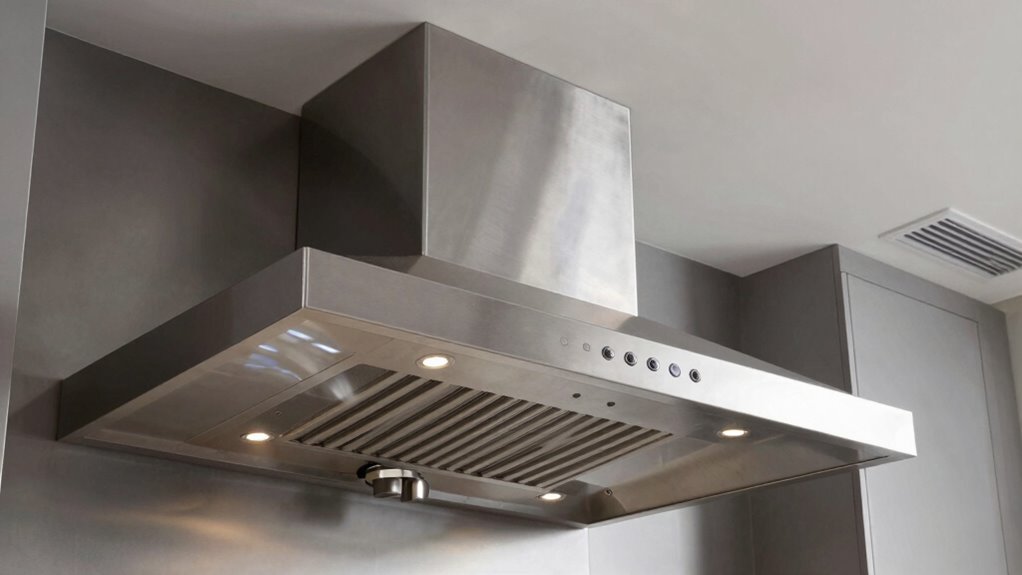
Have you ever wondered what makes a range hood an indispensable part of your kitchen? It’s not just about keeping your space looking tidy; it’s about safety, air quality, and comfort. A key factor is how well it adheres to ventilation standards designed to remove smoke, grease, and odors efficiently. Ventilation standards set by building codes and industry guidelines guarantee your range hood performs at its best while maintaining a safe environment. When choosing a range hood, you want to pay attention to its airflow capacity, measured in cubic feet per minute (CFM). This rating indicates how much air the hood can move to clear out contaminants effectively. A higher CFM means better ventilation, especially if you cook often or on a high-powered stove. But don’t assume that more CFM is always better; it’s essential to match your hood’s capacity to your cooking habits to avoid over-ventilation or noise issues.
Choosing the right range hood involves balancing airflow capacity (CFM) with your cooking needs for safety and efficiency.
Noise levels are another pivotal aspect to consider. You might think that a powerful range hood will automatically be loud, but modern models are designed to balance performance with comfort. Noise levels are usually measured in sones, and quieter models operate at lower sone ratings, making your cooking experience more pleasant. If you’re sensitive to noise, look for a hood with a low sone rating, especially since the noise can become intrusive if the fan runs at high speeds for extended periods. A well-designed range hood will have sound-dampening features to keep noise levels manageable without sacrificing airflow. Additionally, proper installation ensures optimal performance and minimizes unwanted noise or airflow restrictions.
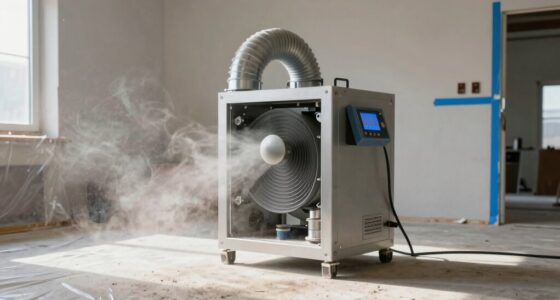
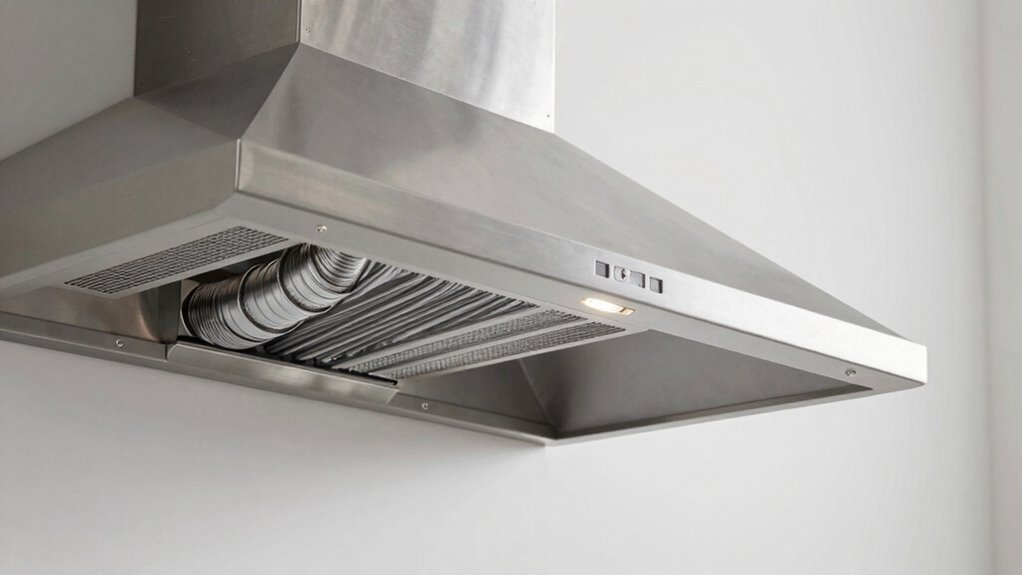
Ducting also plays a crucial role in maintaining proper ventilation. Proper ducting ensures that the air is efficiently vented outside, preventing recirculation of fumes and odors. It’s important to use the right size and type of duct, typically 6 inches in diameter, to keep airflow smooth and minimize noise. Poor ductwork can cause backpressure, reducing the hood’s effectiveness and increasing noise levels. Also, if ducting isn’t properly sealed or if there are bends and obstructions, airflow drops, and your ventilation standards are compromised. In some cases, you might need to consider makeup air systems to replace the air exhausted from your kitchen, preventing negative pressure that could draw in unconditioned air or pollutants from other parts of your home.
In essence, selecting a range hood that meets ventilation standards, keeps noise levels manageable, and is properly ducted is essential for a safe, comfortable, and efficient kitchen. It’s not just about looks or power; it’s about creating a space where you can cook confidently without worrying about fumes, odors, or disruptive noise.
Frequently Asked Questions
How Often Should I Clean My Range Hood Filters?
You should clean your range hood filters at least once every one to three months, depending on how often you cook and the type of filters you have. Regular filter cleaning is essential for proper maintenance and maximum performance. Keep an eye on grease buildup and odors, and adjust your maintenance schedule accordingly. By staying consistent with filter cleaning, you’ll ensure your range hood functions efficiently and stays in great shape.
Can I Install a Range Hood Myself?
You can definitely install a range hood yourself, turning a challenging task into a rewarding DIY project. Start with clear installation tips, like measuring carefully and securing ductwork properly. Remember, DIY safety is key—wear protective gear and follow the manufacturer’s instructions closely. With patience and attention to detail, you’ll transform your kitchen’s air quality and gain a sense of accomplishment, all while avoiding costly professional installation.
What Is the Best Noise Level for a Quiet Operation?
For quiet operation, look for range hoods with noise levels around 40 to 50 decibels. This range provides effective ventilation without loud, distracting sounds. When choosing a range hood, prioritize models that specify low noise levels, especially if your kitchen is open or you enjoy a peaceful cooking environment. You’ll find that a quieter hood makes cooking and conversation more enjoyable, without sacrificing performance.
How Do I Choose the Right Duct Material?
When selecting duct material, choose options like galvanized steel or aluminum for durability and ease of installation. Consider installation factors such as duct size, bends, and accessibility to minimize airflow restrictions and noise. Avoid flexible plastic ducts, as they can trap grease and reduce efficiency. Prioritize a smooth interior surface to improve airflow and make cleaning easier. Proper duct material selection and installation considerations make certain your range hood performs efficiently and lasts longer.
Are There Eco-Friendly or Energy-Efficient Range Hoods Available?
You’ll find plenty of eco-friendly and energy-efficient range hoods that fit your needs. Many feature energy-efficient designs that reduce power consumption without sacrificing performance. Look for models made with eco-friendly materials, like recycled metals or sustainable composites, which lessen environmental impact. These hoods not only save energy but also help you cut costs on your utility bills. So, choosing an eco-conscious range hood means smarter, greener cooking every day.
Conclusion
Now that you understand CFM, ducting, and makeup air, you can choose a range hood that clears your kitchen’s air, balances your ventilation, and enhances your cooking experience. Think of it as creating a clean, fresh atmosphere, a silent guardian, a confident protector. With the right range hood, you’ll breathe easier, cook smarter, and enjoy your space more—because good ventilation isn’t just a choice, it’s a foundation for a healthier, happier home.