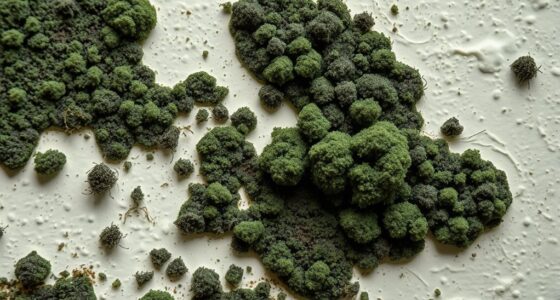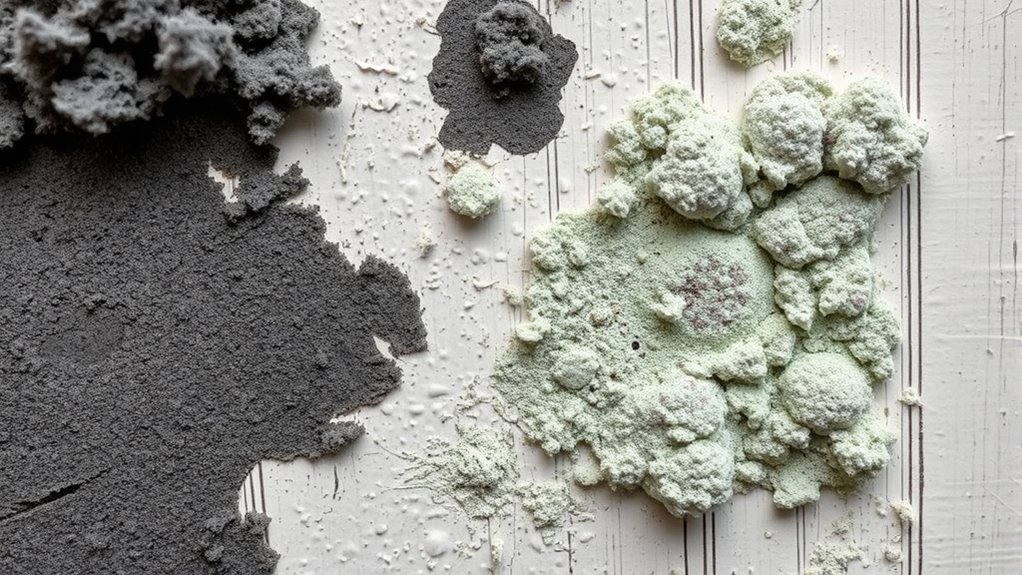

I understand that distinguishing mold from mildew is key for proper cleaning and safety. Mold looks invasive and can penetrate surfaces, posing serious health risks like allergies and respiratory issues, while mildew appears as a surface-only, powdery or fluffy white or gray coating. Mildew is easier to clean, often with water and vinegar, but mold may need stronger solutions like bleach. By staying informed about their signs and removal methods, you’ll be better equipped to keep your home safe—if you keep exploring, you’ll find more useful tips.
Key Takeaways
- Mold is invasive, penetrates surfaces, and often appears as fuzzy or colored growth; mildew stays on surfaces as a white or gray powdery film.
- Mold releases spores into the air, posing respiratory health risks; mildew generally causes allergic reactions and surface staining.
- Mildew is easier to clean with water and vinegar, while mold may require stronger agents like bleach or professional removal.
- Both thrive in moist environments, but proper ventilation, moisture control, and regular cleaning prevent their growth.
- Recognizing differences in appearance and growth patterns aids in selecting appropriate removal and prevention strategies.

When it comes to household mold and mildew, many people confuse the two or think they’re the same thing. But understanding their differences is essential for maintaining good air quality and effective household cleaning. Mold is a type of fungus that grows in damp, warm environments and can appear in a variety of colors and textures. Mildew, on the other hand, is a specific form of mold that usually looks like a thin, powdery or fluffy white or gray coating. While both thrive in moisture, mold tends to be more invasive and can penetrate surfaces, whereas mildew generally stays on the surface. Recognizing these differences helps in choosing the right cleaning approach and understanding potential health risks.
Mold is often more dangerous because it releases spores into the air, which can negatively impact indoor air quality. When spores become airborne, they’re inhaled or ingested, leading to respiratory issues, allergies, or even worsening asthma symptoms. Mildew, though less invasive, can still cause allergic reactions and respiratory problems if not addressed promptly. The key to maintaining healthy air quality in your home is regular household cleaning, especially in areas prone to moisture, such as bathrooms, kitchens, and basements. Using mold-inhibiting cleaners can prevent its growth, and scrubbing affected surfaces thoroughly is crucial to remove both mold and mildew. For mildew, a simple mixture of water and vinegar or a commercial mildew cleaner usually does the trick. For mold, tougher solutions like bleach or specialized fungicides may be necessary, but always ensure proper ventilation during cleaning to avoid inhaling harmful fumes.
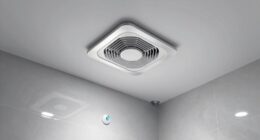
Identifying mold versus mildew is vital because their removal methods differ slightly. Mildew tends to be easier to clean off surfaces, while mold requires a more aggressive approach and sometimes professional intervention if it has penetrated deep into materials. Regular household cleaning not only keeps these issues at bay but also considerably improves your indoor air quality. When you clean, focus on moisture-prone areas, keep them dry, and make sure proper ventilation to discourage mold and mildew growth. Remember, mold and mildew thrive in damp environments, so controlling humidity levels is equally important. Using exhaust fans, dehumidifiers, and fixing leaks can go a long way in preventing future problems. Staying vigilant about household cleaning practices and understanding the differences between mold and mildew empowers you to keep your home healthier and safer for everyone living there. Additionally, being aware of high-performance projectors can help if you’re setting up a dedicated space for cleaning or organizing your home to reduce moisture buildup.
Frequently Asked Questions
Can Mold and Mildew Grow Outdoors?
Yes, mold and mildew can grow outdoors. I’ve seen outdoor growth thrive in shady, damp areas where environmental factors like moisture, humidity, and poor airflow create the perfect conditions. They often form on surfaces like wood, mulch, or leaves. To prevent it, I recommend keeping outdoor spaces dry and well-ventilated. Regular cleaning and removing decaying organic matter help control outdoor mold and mildew growth effectively.
Are There Eco-Friendly Removal Options?
Yes, there are eco-friendly solutions for mold and mildew removal. I prefer natural removal methods like vinegar, baking soda, or hydrogen peroxide, which are effective and safe for the environment. These options avoid harsh chemicals, making them healthier for you and your household. Using natural removal not only helps protect the planet but also keeps your home safe from potentially harmful residues, ensuring a cleaner, greener approach to tackling mold and mildew.
How Long Does It Take to Remove Mold?
You might think mold removal takes forever, but it really depends. Generally, the mold removal timeline can range from a few hours for small spots to several days for extensive infestations. The mildew eradication process is quicker, often just a day or two. Factors like the extent of growth and cleaning methods influence the timeline. I recommend acting fast to prevent health risks and make certain of effective removal.
Do All Molds Cause Health Problems?
Not all molds cause health problems, but some can trigger health effects, especially in those with mold sensitivity. I’ve seen how certain molds lead to allergies, respiratory issues, or asthma flare-ups. If you’re sensitive or have a weakened immune system, even small mold exposures might cause symptoms. It’s always best to identify and remove mold promptly to protect your health, especially if you notice any allergic reactions or breathing problems.
Can I Remove Mold Myself Safely?
You can definitely remove mold yourself, but always prioritize DIY safety. Wear gloves, goggles, and a mask to protect yourself from spores, and guarantee good ventilation. Use mold-resistant cleaners and fix leaks promptly to prevent further growth. Remember, mold prevention starts with controlling moisture and humidity. If the infestation is extensive or deeply embedded, it’s safer to call professionals. Stay cautious, and don’t take risks with your health.
Conclusion
So, after learning the differences between mold and mildew, I realize how easy it is to mistake them—until you spot the color, smell, or texture. Both can hide in plain sight, quietly affecting our health and homes. It’s almost like they’re playing a game of hide-and-seek, right? But now, armed with knowledge, I know I can act quickly. Because in this quiet battle, awareness is my best weapon to keep my space safe and healthy.