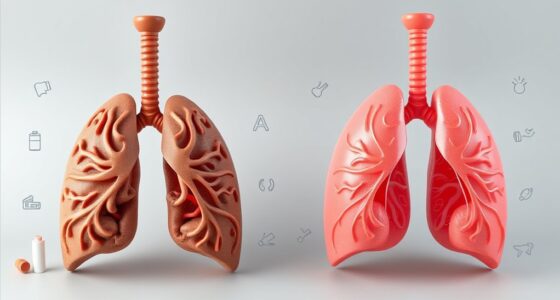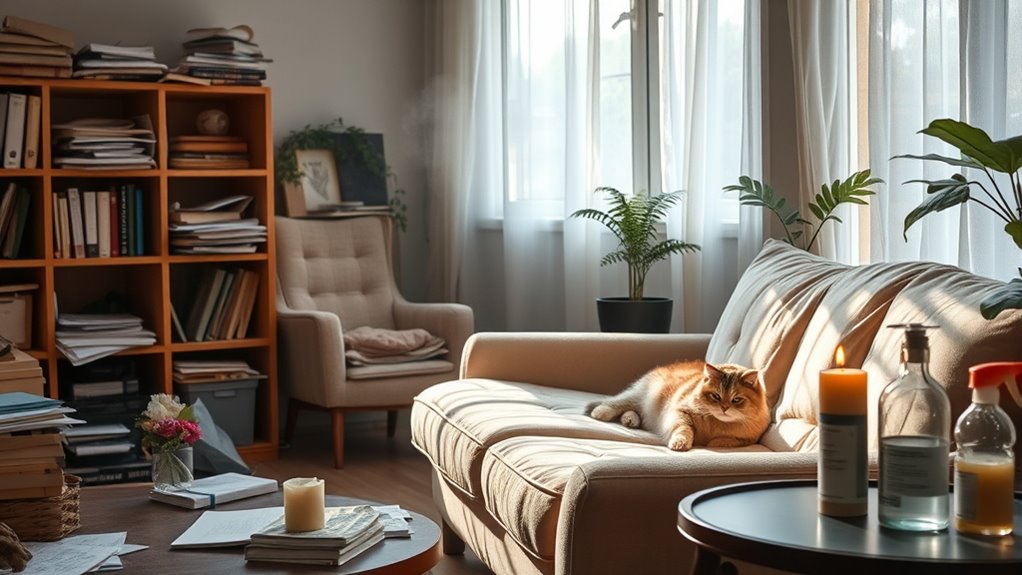

Indoor asthma triggers include dust mites, pet dander, mold, and airborne pollutants. I use an air purifier to reduce allergens, wash bedding weekly in hot water, and keep humidity low to prevent mold and dust mites. Regular cleaning and good ventilation also help me control indoor triggers. Small steps make a big difference, and if you stay tuned, you’ll discover more effective ways to breathe easier at home.
Key Takeaways
- Common indoor asthma triggers include dust mites, pet dander, mold, pollen, and tobacco smoke.
- Using air purifiers with HEPA filters reduces airborne allergens effectively.
- Regular cleaning, dusting, and washing bedding help minimize dust mite and mold exposure.
- Controlling indoor humidity levels prevents mold growth and dust mite proliferation.
- Proper ventilation and allergen-proof covers further decrease indoor trigger levels.
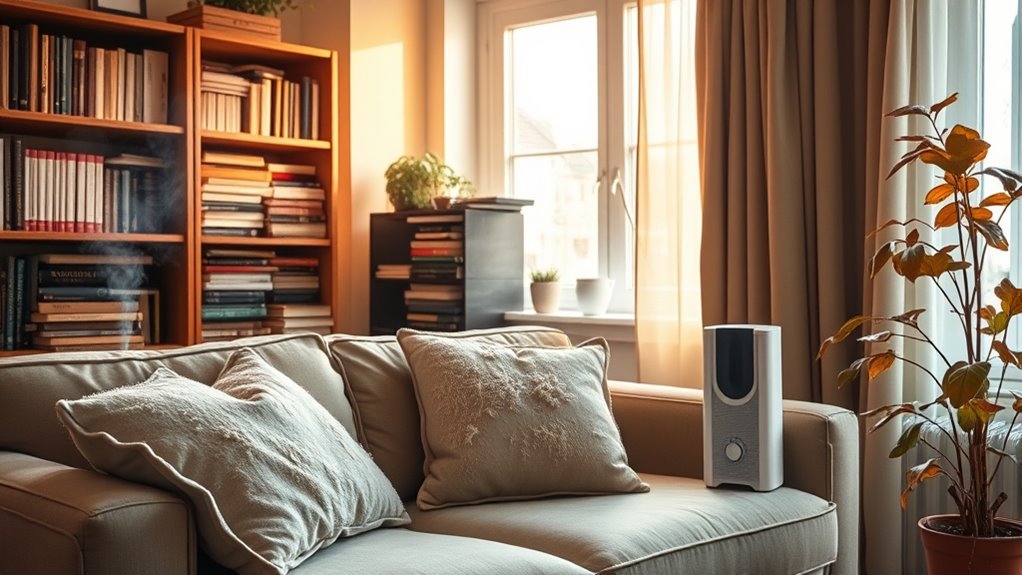
For many people with asthma, indoor environments can be filled with hidden triggers that worsen symptoms without warning. I’ve learned that identifying and managing these triggers is essential to maintaining better control over asthma. One of the simple yet powerful tools I’ve found is an air purifier. The benefits of using an air purifier go beyond just freshening the air; they actively reduce airborne allergens like dust, pollen, pet dander, and mold spores that can set off asthma attacks. When I turn on my air purifier, I notice a noteworthy decrease in respiratory irritants floating around my home. It’s especially helpful during allergy seasons or when I’ve had visitors with pets, as it keeps the air cleaner and less likely to trigger asthma symptoms.
Another major indoor trigger I’ve tackled is bedding allergens. Dust mites, mold, and pet dander can accumulate in my bedding, making it a hidden source of allergens that I’d otherwise overlook. Bedding allergen control has become a top priority for me, so I wash my sheets weekly in hot water, which kills dust mites and removes other allergens. I also use allergen-proof covers on my pillows and mattresses, which create a barrier that prevents dust mites from colonizing these areas. These small steps have made a noticeable difference in reducing nighttime asthma symptoms and improving my overall comfort while sleeping.
Beyond these measures, I’ve also learned that regular cleaning plays a critical role. Vacuuming with a HEPA filter, dusting surfaces frequently, and keeping humidity levels low help keep indoor allergens at bay. The goal is to minimize the triggers that lurk in everyday items and environments. I’ve found that managing bedding allergens combined with the use of an air purifier creates a synergistic effect, considerably lowering my exposure to asthma triggers indoors. Additionally, maintaining proper air quality through ventilation or air filtration systems further enhances my control over indoor triggers.
It’s important to remember that controlling indoor triggers isn’t just about reacting to symptoms but proactively reducing exposure. Small changes, like maintaining clean bedding and using an air purifier, have empowered me to breathe easier and reduce the frequency of asthma flare-ups. Whether it’s a matter of improving air quality or controlling allergens in my bedding, these steps are simple yet effective. They remind me that a healthier indoor environment is within my control, and taking these actions makes a real difference in managing asthma day to day.
Frequently Asked Questions
Can Indoor Plants Worsen Asthma Symptoms?
Indoor plants can worsen asthma symptoms if you’re sensitive to indoor plant allergens or plant mold spores. I’ve noticed that mold spores on soil or decaying leaves often trigger my asthma. If you have allergies or asthma, it’s best to monitor your response to indoor plants carefully. Choosing low-allergen plants, keeping them clean, and ensuring proper ventilation can help reduce the risk of your symptoms worsening.
Are Air Purifiers Effective Against Indoor Asthma Triggers?
Yes, air purifier effectiveness can substantially improve indoor air quality and help reduce asthma triggers. I’ve seen firsthand how a good purifier filters out dust, pet dander, and pollen, making breathing easier. While they’re not a cure-all, using an air purifier consistently can create a healthier environment and lessen asthma symptoms. It’s important to choose one with a HEPA filter for the best results.
How Often Should I Clean My Bedding to Reduce Triggers?
Did you know that dust mites can live in bedding and cause asthma symptoms? I recommend washing your bedding at least once a week to reduce triggers. Regular washing removes dust mites, their droppings, and allergens, making your sleep environment safer. I personally keep to this schedule, and it helps lessen my asthma flare-ups. Consistent washing is key to maintaining a healthier, allergen-free bed.
Do Household Cleaning Products Impact Asthma Indoors?
Yes, household cleaning products can impact asthma indoors, especially if you have chemical sensitivities. Cleaning chemicals often contain strong fumes and irritants that can trigger asthma symptoms. I recommend choosing natural or fragrance-free cleaning products whenever possible. Ventilate your space well during and after cleaning to reduce exposure. Being mindful of the chemicals you use helps create a safer environment and minimizes asthma flare-ups.
Can Pet Dander Be Completely Eliminated From Indoor Air?
You can’t always eliminate pet dander completely, but with consistent pet dander removal, you can substantially reduce indoor allergens. As the saying goes, “A little caution goes a long way.” Regular vacuuming with HEPA filters, frequent washing of pet bedding, and allergy testing help manage symptoms. While total removal may be tough, these steps make a noticeable difference in improving indoor air quality and asthma control.
Conclusion
Think of indoor asthma triggers as sneaky shadows lurking around your home. By understanding and controlling these common culprits—like dust, mold, and pet dander—you can clear the way for breath to flow freely. It’s like turning on the lights in a dark room, exposing what’s hidden and making the space safer. With a little effort, you can transform your home into a sanctuary where asthma takes a backseat, and you breathe easier every day.