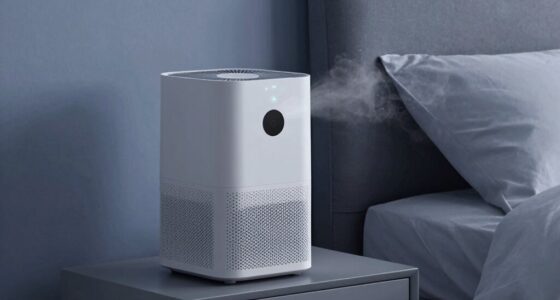
When comparing HEPA to “HEPA-like” filters, you should focus on certification. True HEPA filters meet strict standards, capturing at least 99.97% of particles as small as 0.3 microns, ensuring better air quality. “HEPA-like” filters often lack verification, offering uncertain and usually lower performance. Choosing uncertified filters can mean wasting money on products that don’t effectively clean your air. If you keep going, you’ll learn how to spot the differences and make smarter choices.
Key Takeaways
- True HEPA filters are certified to remove ≥99.97% of 0.3-micron particles, ensuring reliable performance.
- “HEPA-like” filters often lack certification, making their effectiveness uncertain and potentially inferior.
- Manufacturers may use “HEPA-like” labels to appear comparable, but without validation, performance is questionable.
- Investing in certified HEPA filters provides better long-term air quality and health benefits.
- Cheaper “HEPA-like” filters can underperform and need frequent replacement, ultimately wasting money.

When choosing an air purifier, understanding the difference between HEPA and HEPA-like filters is essential. Many consumers mistakenly believe that “HEPA-like” labels guarantee the same level of filtration as true HEPA filters, but that’s not the case. A true HEPA filter comes with HEPA certification, meaning it has been rigorously tested and meets industry standards to capture at least 99.97% of particles as small as 0.3 microns. This certification is your best indicator of air purifier efficiency because it confirms the filter’s ability to trap allergens, dust, pet dander, and even some bacteria and viruses effectively. On the other hand, HEPA-like filters, sometimes called “HEPA-type” or “HEPA-style,” are typically synthetic or less dense filters that mimic the look but not the performance of genuine HEPA filters. They might claim to filter out pollutants, but without proper certification, their actual efficiency remains questionable.
Many manufacturers use the term “HEPA-like” to make their products seem comparable to true HEPA filters, but you should be cautious. These filters often have lower particle removal rates, which means they might not improve air quality as much as you expect. They could be cheaper initially, but in the long run, they may not provide the same health benefits or air quality improvements. If you’re concerned about allergies, asthma, or other respiratory issues, you need to prioritize air purifier efficiency, which hinges on using a filter with proper HEPA certification. Additionally, be aware that filter performance can vary significantly depending on the quality and certification status, impacting the overall effectiveness of your air purifier.
It’s tempting to opt for a less expensive, HEPA-like filter, especially when shopping on a budget, but that’s a mistake if you want real results. Cheaper filters often have a shorter lifespan and may not capture as many airborne particles, leading to less effective air purification. Over time, these filters can give a false sense of security, as they may look similar to true HEPA filters but perform poorly. Ultimately, investing in an air purifier with a certified HEPA filter ensures you get the filtration performance promised, making your money well spent on better health outcomes.
Frequently Asked Questions
Are HEPA-Like Filters as Effective as True HEPA Filters?
HEPA-like filters aren’t as effective as true HEPA filters. They may improve air purification, but their filter efficiency is often lower, meaning they can’t trap tiny particles like allergens, dust, or bacteria as effectively. If you want cleaner air, especially for allergy or asthma relief, investing in a genuine HEPA filter guarantees you get maximum filtration performance, providing the best protection for your health.
How Can I Identify Genuine HEPA Filters From Fake Ones?
You can identify genuine HEPA filters by checking their filter certification, which should meet strict standards like EN1822 or HEPA certification. Always buy from reputable manufacturers known for quality and transparency. Avoid cheap or unverified options, and examine product labels carefully for certification marks. Trustworthy brands provide detailed specifications, ensuring you’re getting an authentic HEPA filter that effectively traps tiny particles and improves air quality.
Do HEPA-Like Filters Last as Long as True HEPA Filters?
HEPA-like filters usually don’t last as long as true HEPA filters because they have different filter media and lower efficiency. You’ll find that their filter lifespan is shorter, meaning you’ll need more frequent replacements. Additionally, maintenance requirements tend to be higher with HEPA-like filters, as they may clog or degrade faster, reducing their effectiveness over time. To save money and ensure air quality, opt for genuine HEPA filters with proven longevity.
Are Hepa-Like Filters Suitable for Allergy Sufferers?
If you suffer from allergies, HEPA-like filters might seem tempting, but they often fall short in allergen removal. For example, a person with severe pollen allergies found that HEPA-like filters didn’t improve their air quality as much as true HEPA filters, leaving allergens in the air. For ideal allergen removal, you need a filter that guarantees high-efficiency particulate air filtration, ensuring cleaner air and better relief for allergy sufferers.
What Are the Cost Differences Between HEPA and HEPA-Like Filters?
You’ll find that HEPA filters typically cost more than HEPA-like filters because of higher filter manufacturing costs. Retail pricing strategies also play a role, with HEPA filters priced to reflect their strict standards and certification. HEPA-like filters, being cheaper to produce, often have lower retail prices, but they may not perform as well. So, expect to pay more upfront for genuine HEPA filters, especially if you prioritize air quality.
Conclusion
Don’t fall for the label trap like Sarah did, thinking a “HEPA-like” filter would protect her family. It’s like mistaking a toy car for a real one—you might think you’re getting the real deal, but you’re not. Studies show that genuine HEPA filters remove 99.97% of particles, while “HEPA-like” ones often fall short. So, save your money and breathe easier—trust the labels, not the hype.