If your house has too much dust, your lungs are constantly exposed to irritants and allergens that can cause inflammation and breathing problems. Dust contains tiny particles like dirt, pollen, pet dander, and bacteria that settle in your lungs, triggering coughs, wheezing, and shortness of breath. Over time, this exposure can weaken your respiratory defenses and lead to chronic issues. Keep going to discover how you can better protect your lungs from dust buildup.

Get oils, diffusers and self-care delivered free with Prime
- Fast, free delivery on millions of items
- Prime Video, Amazon Music and more included
- Member-only deals all year
Key Takeaways
- Dust particles can penetrate deep into the lungs, causing inflammation and respiratory irritation.
- Excess dust triggers symptoms like coughing, wheezing, and shortness of breath, especially in allergy or asthma sufferers.
- Prolonged exposure weakens lung defenses, increasing vulnerability to infections and respiratory illnesses.
- Continuous dust inhalation may lead to chronic coughing and a feeling of chest tightness.
- Over time, persistent dust exposure can impair overall lung function and long-term respiratory health.
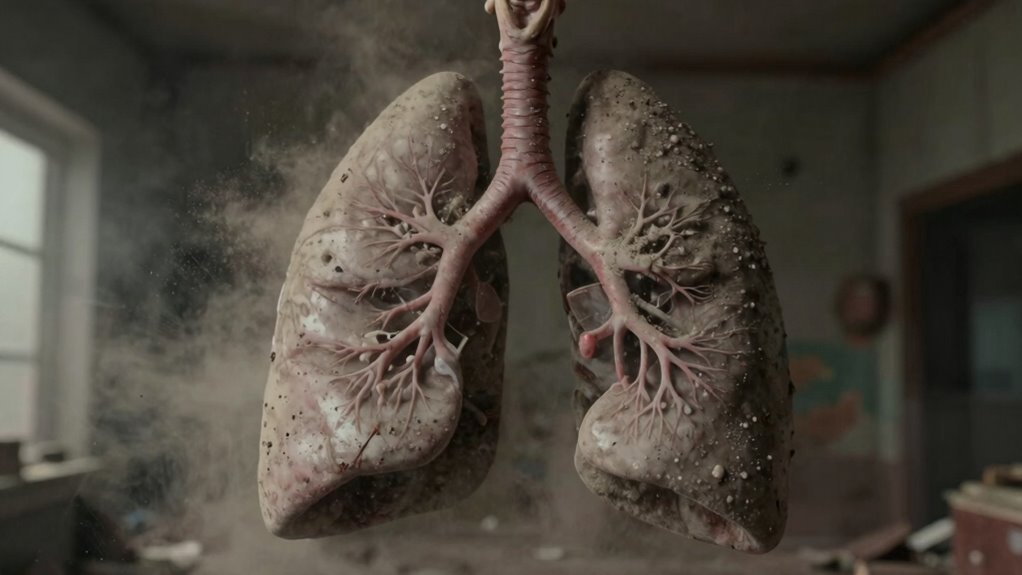
Have you ever wondered how the dust in your home affects your lungs? Dust accumulation might seem harmless at first, but it can considerably impact the air quality you breathe every day. When dust builds up, tiny particles become suspended in the air, making it harder for your lungs to filter out pollutants. This constant presence of dust worsens indoor air quality, especially if you don’t clean regularly or if your home isn’t well-ventilated. As dust particles linger, they can irritate your respiratory system, leading to discomfort and potential health issues over time.
Dust in your home can harm your lungs and worsen indoor air quality over time.
When dust gathers in your home, it often contains more than just dirt. It can include pet dander, pollen, mold spores, and even bacteria—all of which add to the complexity of dust accumulation. These particles are small enough to be inhaled deeply into your lungs, where they can cause inflammation and irritation. If you have allergies or asthma, these particles can trigger symptoms like coughing, wheezing, or shortness of breath. Even if you don’t have pre-existing conditions, prolonged exposure to dusty environments can weaken your respiratory defenses, making you more susceptible to infections and respiratory illnesses. Regular cleaning routines can help minimize indoor air pollution and protect your respiratory health. Additionally, understanding biodiversity and its importance can motivate you to maintain a healthier environment both inside and outside your home.
The more dust accumulates, the more it affects your air quality. Dust particles can settle on surfaces but are constantly disturbed by movement, airflow, or cleaning activities, sending them airborne again. This cycle keeps your lungs exposed to these tiny irritants repeatedly. Without proper cleaning and air filtration, dust levels can rise quickly, creating a persistent dusty environment that challenges your respiratory health. Over time, this can lead to chronic coughing or a feeling of tightness in your chest, especially if you’re exposed to dust for extended periods. Incorporating air purification devices can effectively reduce the amount of airborne dust and allergens, making your indoor environment safer. Implementing air quality monitoring can also help you keep track of dust levels and make adjustments accordingly.
To combat this, you need to be proactive about reducing dust accumulation. Regular dusting, vacuuming with a HEPA filter, and maintaining good ventilation help keep airborne particles at bay. Using air purifiers can also markedly improve indoor air quality by trapping dust and other allergens before they reach your lungs. Remember, the goal isn’t just about cleanliness; it’s about creating a healthier living space where your lungs aren’t constantly battling dust particles that could compromise your respiratory well-being. Keeping dust levels low helps protect your lungs and ensures you breathe easier every day.
HEPA air purifier for dust removal
As an affiliate, we earn on qualifying purchases.
As an affiliate, we earn on qualifying purchases.
Frequently Asked Questions
Can Dust Allergies Develop Even Without Symptoms Initially?
Yes, dust allergies can develop even without initial symptoms. You might experience allergy development gradually, with no obvious signs at first. Over time, your immune system may become sensitized, leading to symptom onset such as sneezing, congestion, or itchy eyes. It’s important to monitor your reactions, especially if you spend a lot of time in dusty environments, so you can take steps to reduce exposure and prevent allergy symptoms from worsening.
How Quickly Can Dust Accumulation Harm Lung Health?
Dust accumulation can harm your lungs within weeks, especially if it causes airway inflammation. As dust builds up, your risk of respiratory infections increases because your immune defenses weaken. Studies show that even moderate dust exposure can lead to breathing issues in just a few months. If you ignore dust buildup, it can cause chronic lung problems over time, making it important to keep your environment clean and well-ventilated.
Are There Specific Types of Dust More Harmful to Lungs?
Certain Types of Dust, like pet dander, mold spores, and pollen, are more harmful to your lungs because they contain allergens or irritants. Dust particle size matters too; smaller particles, under 10 micrometers, can penetrate deep into your lungs, increasing health risks. Breathing in these tiny, harmful dust particles can trigger asthma, allergies, or respiratory issues, especially if exposure is prolonged or frequent.
Does Ventilation Reduce Lung Risks From Household Dust?
Ventilation acts like a gust of fresh air, clearing out the shadows of dust that lurk in your home. By improving airflow, ventilation systems and air filtration reduce dust accumulation, lowering lung risks. They act as guardians, preventing dust particles from settling and becoming harmful. So, yes, proper ventilation keeps your lungs safer by continuously exchanging stale, dust-laden air for cleaner, healthier air, giving you peace of mind.
Can Dust Mites Worsen Lung Conditions in Dust-Heavy Homes?
Dust mites can worsen lung conditions in dust-heavy homes because they trigger allergic sensitization and reduce dust mite resistance over time. If you’re sensitive or have asthma, exposure increases inflammation and breathing difficulties. Regular cleaning, using allergen-proof covers, and maintaining low humidity help minimize dust mite presence, protecting your lungs. Staying proactive reduces the risk of exacerbating existing lung issues caused by dust mite allergens.
Conclusion
Living in a dusty house means your lungs work harder, your breathing becomes shallow, and your health risks increase. Dust particles settle deep into your airways, causing irritation, inflammation, and potential long-term damage. You struggle to breathe freely, to breathe deeply, to breathe comfortably. So, keep your environment clean, reduce dust, and protect your lungs. Breathe easier, feel better, stay healthier—because a dust-free home is a breath of fresh air for your lungs.
Halloween Picks
halloween
As an affiliate, we earn on qualifying purchases.