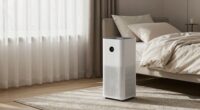
If you’re dealing with a cold basement, a desiccant dehumidifier is your best choice because it works efficiently at low temperatures without relying on refrigeration. Compressor models often struggle in cold environments, wasting energy and cycling on and off more often. Desiccant units also run quieter and consume less power in chilly conditions. Keep exploring to discover how each type performs and find the perfect dehumidifier for your space.
Key Takeaways
- Desiccant dehumidifiers perform better in cold basements due to minimal temperature dependence.
- Compressor dehumidifiers struggle at low temperatures, reducing efficiency and increasing energy use.
- Desiccant units operate quietly, making them suitable for noise-sensitive basement environments.
- Compressor models are more energy-efficient in warm, humid conditions but less effective in cold spaces.
- Choosing between them depends on basement temperature; desiccant units are ideal for colder conditions.
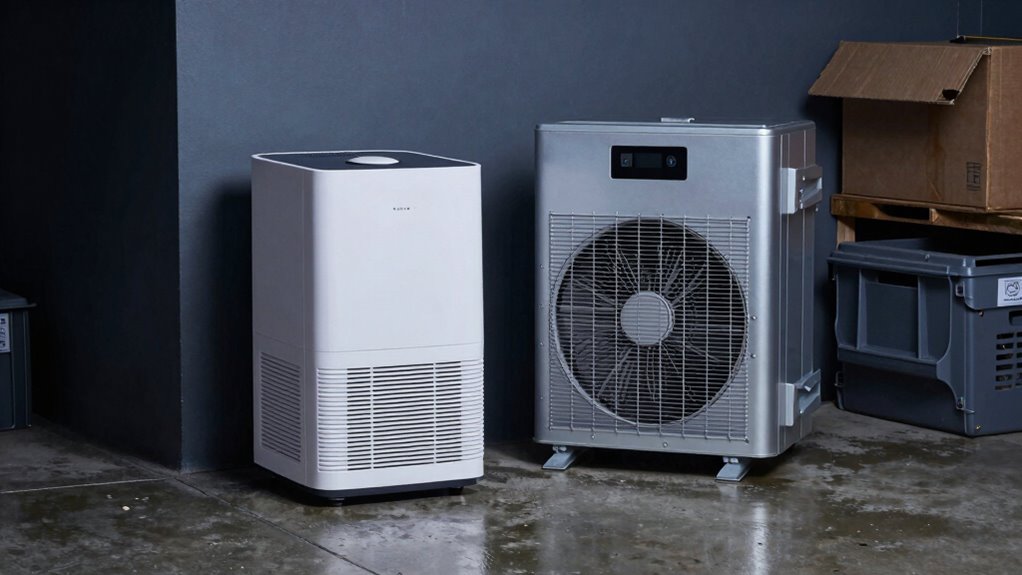
When choosing a dehumidifier, understanding the differences between desiccant and compressor models is essential. Both types serve the purpose of reducing humidity, but they do so using different mechanisms, which impacts energy efficiency and noise levels—two critical factors, especially when dealing with cold basements. If you’re looking to keep your basement dry without running up your energy bills or disturbing your household’s peace, knowing these distinctions helps you make an informed decision.
Desiccant dehumidifiers work by absorbing moisture from the air using a desiccant material, usually silica gel or a similar substance. This process is less dependent on temperature, making desiccant models particularly effective in colder environments. They tend to operate quietly because they lack a compressor, which is a significant advantage if noise levels matter to you. Since they don’t rely on refrigeration cycles, desiccant units often consume less energy at low temperatures, providing better energy efficiency in cold basements. However, they can sometimes be less efficient in very humid conditions or larger spaces, which might lead to increased operating time and, consequently, slightly higher energy use over extended periods.
Desiccant dehumidifiers excel in cold environments, operating quietly and consuming less energy at low temperatures.
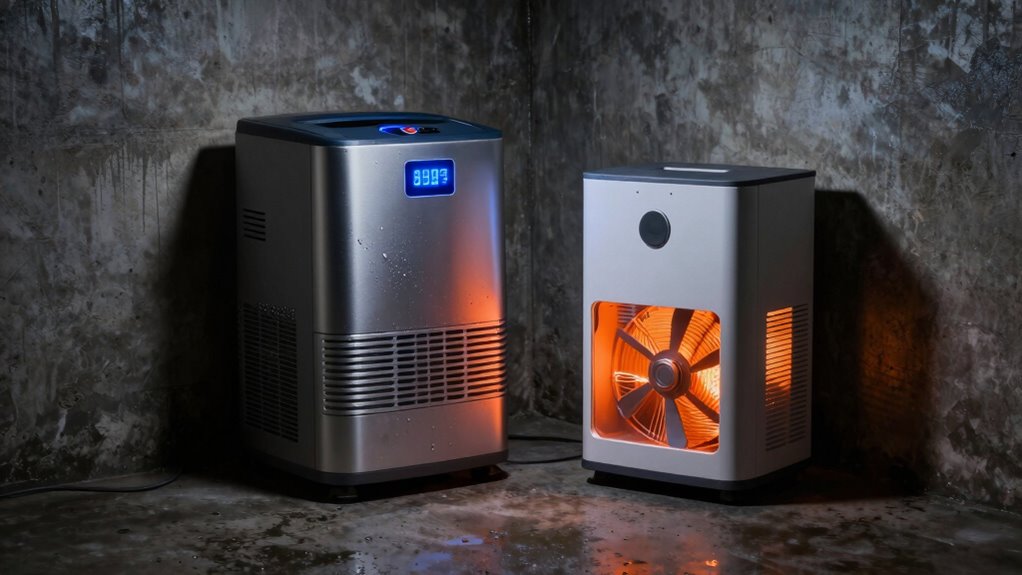
Compressor dehumidifiers, on the other hand, function similarly to refrigerators. They use a compressor to cool the air, condensing moisture onto a coil, which then drips into a collection tank or drains away. These models tend to be more energy efficient in warmer, more humid environments, where their refrigeration cycle can operate at its best. But in cold basements, their efficiency drops because the compressor struggles to operate effectively at low temperatures, often causing them to cycle on and off more frequently. This can lead to higher energy consumption in colder settings. Additionally, compressor models generate more noise due to their mechanical parts and the compressor’s operation, which might be a concern if your basement is near living areas or if noise levels are a priority.
Choosing between these two depends on your specific needs. If your basement is cold and you’re concerned about energy efficiency and noise, a desiccant dehumidifier is likely the better choice. It will operate quietly and maintain efficiency at low temperatures. Conversely, if your basement isn’t too cold and you want a more energy-efficient option for humid conditions, a compressor model could work well, though you should be prepared for increased noise. Ultimately, understanding how each type performs regarding energy efficiency and noise levels helps you select a dehumidifier that keeps your basement dry without disrupting your comfort or raising your utility bills. Additionally, temperature dependence plays a crucial role in choosing the right type for your basement environment.
Frequently Asked Questions
Which Dehumidifier Type Is More Energy-Efficient in Cold Environments?
In cold environments, desiccant dehumidifiers are more energy-efficient because they consume less energy while maintaining effective humidity levels. They perform better at lower temperatures, ensuring consistent moisture removal without overloading. Compressor dehumidifiers, on the other hand, struggle with temperature performance in cold spaces, leading to higher energy consumption and less efficiency. So, if you’re dealing with a chilly basement, a desiccant dehumidifier is your best choice.
Are Desiccant Dehumidifiers Quieter Than Compressor Models?
Did you know desiccant dehumidifiers are generally 50% quieter than compressor models? You’ll notice markedly lower noise levels and better operational quietness with desiccant units, making them ideal for bedrooms or quiet spaces. Their near-silent operation ensures you won’t be disturbed, especially in cold environments where compressor noise can be more prominent. So, if quietness matters most, desiccant dehumidifiers are the smarter choice.
How Often Do Desiccant Dehumidifiers Require Replacement or Maintenance?
You’ll need to replace the filter every 6 to 12 months, depending on usage and air quality. Desiccant dehumidifiers generally don’t require frequent desiccant recharging; most models are sealed units that don’t need this. Keep an eye on the air filter and clean or replace it regularly to maintain efficiency. Routine maintenance ensures your dehumidifier runs smoothly and effectively, especially in colder spaces like a basement.
Can Both Dehumidifier Types Operate Effectively in Unheated Basements?
Yes, both dehumidifier types can effectively operate in unheated basements, but their performance depends on humidity levels and moisture removal needs. Desiccant dehumidifiers work well in low temperatures, removing moisture efficiently even when it’s cold. Compressor units may struggle if the basement gets too cold, reducing moisture removal. For unheated spaces, desiccants are often better suited, ensuring consistent humidity control and effective moisture removal regardless of temperature.
What Are the Initial Costs Differences Between Desiccant and Compressor Units?
You might be surprised, but the initial cost varies markedly. Desiccant dehumidifiers often have a higher purchase price upfront, making them seem expensive initially. However, compressor units usually cost less initially, but their ongoing energy expenses can add up. So, if you’re budgeting carefully, you’ll want to weigh the purchase price against long-term savings. Either way, understanding these costs helps you choose the best fit for your cold basement.
Conclusion
In the end, choosing between desiccant and compressor dehumidifiers depends on your specific needs. Both have their strengths, but remember, you can’t have your cake and eat it too. If you need something effective in colder basements, a desiccant unit might be your best bet. On the other hand, for larger spaces or warmer environments, a compressor model could serve you better. Know your situation, weigh the options, and pick what’s right for you.