
Ventilation is your best bet for tackling cooking fumes because it actively removes particles and gases from the air, reducing indoor pollution effectively. Unlike air fresheners or sprays that only mask odors temporarily, ventilation systems like range hoods and exhaust fans suck up fumes at the source. By continuously clearing the air, ventilation improves your home’s air quality and keeps surfaces cleaner. Keep going to discover more about how layered solutions can keep your indoor environment healthier.
Key Takeaways
- Ventilation actively removes cooking fumes, gases, and particles, improving indoor air quality more effectively than masking odors.
- Masking products only hide smells temporarily and do not eliminate airborne pollutants that can harm health.
- Proper ventilation with range hoods and exhaust fans reduces pollutant concentration at the source, preventing buildup.
- Combining ventilation with air filtration and odor absorption offers a comprehensive approach to indoor air cleanliness.
- Relying solely on masking fails to address the root cause of indoor air pollution caused by cooking fumes.

Cooking fumes are an often-overlooked source of indoor air pollution that can impact your health and home environment. When you cook, especially with high heat or strong-smelling ingredients, you release tiny particles, gases, and odors into the air. These pollutants can linger, settling on surfaces or circulating in the air, which may cause respiratory issues, allergies, or simply create an unpleasant environment. To effectively manage these fumes, you need more than just masking odors with sprays or relying on passive ventilation. Instead, investing in good air filtration systems can make a real difference. Air filtration units with HEPA filters are designed to trap airborne particles, including those microscopic cooking fumes that traditional fans might miss. This process helps clear out pollutants, improving the overall air quality in your kitchen and living spaces.
Odor absorption is another key element in controlling cooking fumes. While air filtration tackles airborne particles, odor absorption involves using materials that trap or neutralize smells directly, preventing them from spreading throughout your home. Activated carbon filters, for example, are highly effective at absorbing strong odors from cooking. They work by attracting molecules that cause unpleasant smells, thus removing them from the air rather than just covering them up. Combining air filtration with odor absorption creates a comprehensive approach—filters trap particles, and odor absorbers neutralize lingering smells. This synergy ensures your home stays fresh and free from the persistent odors that cooking fumes often leave behind. Additionally, smart ventilation systems**** equipped with sensors can automatically adjust airflow based on the levels of pollutants detected, providing an efficient and proactive solution.
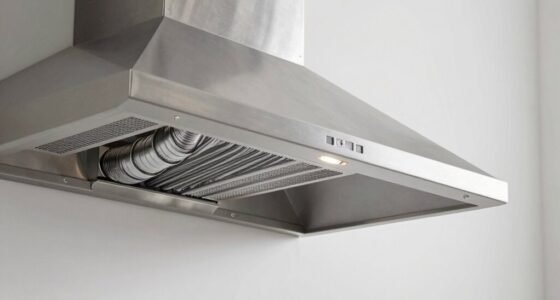
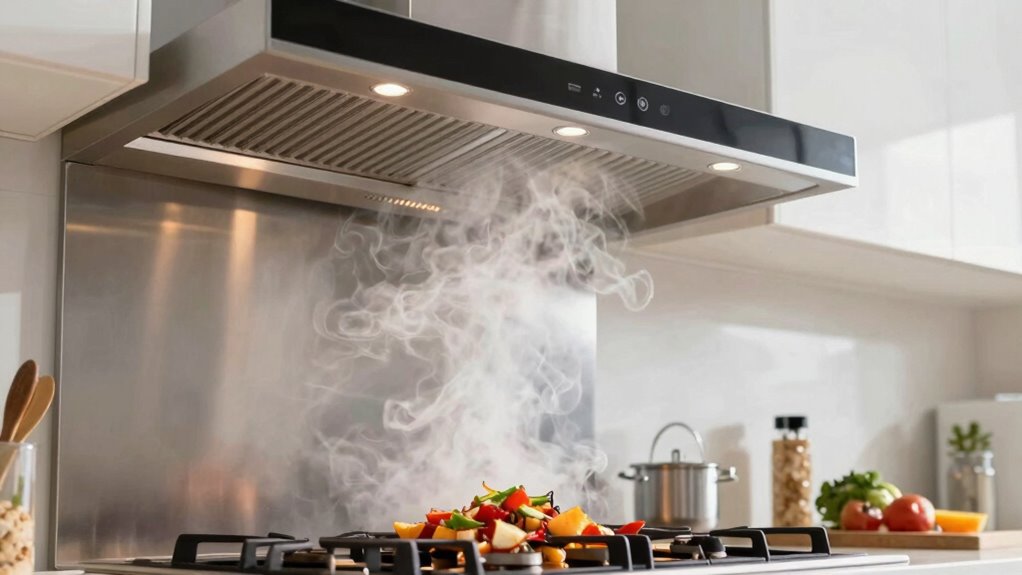
However, relying solely on masking odors with air fresheners or sprays isn’t enough. These products only hide smells temporarily and don’t address the root cause of pollution. Ventilation systems, especially range hoods with powerful exhaust fans, are designed to actively remove fumes at the source. Proper ventilation can substantially reduce the concentration of airborne pollutants, making your kitchen safer and more comfortable. When you combine ventilation with air filtration and odor absorption, you create a layered defense against indoor air pollution caused by cooking fumes. This approach not only improves air quality but also extends the lifespan of your home’s surfaces and appliances by reducing residue buildup.
Frequently Asked Questions
How Often Should Kitchen Ventilation Systems Be Inspected?
You should inspect your kitchen ventilation systems at least once a year to meet ventilation standards. Regular inspections help guarantee filters, ducts, and exhaust fans are functioning properly, reducing the risk of buildup and odors. If you cook frequently or notice reduced airflow, consider more frequent checks. Staying on top of inspection frequency keeps your system efficient and maintains a healthier, odor-free environment.
Are There Health Risks From Prolonged Exposure to Cooking Fumes?
Ever wonder if those cooking fumes could harm your health? Prolonged exposure to cooking fumes can negatively impact your indoor air quality and cause respiratory issues. Without proper fume filtration, you risk inhaling harmful particles and odors that linger. To protect yourself, guarantee your ventilation system is effective, and regularly improve indoor air quality. Don’t ignore these risks—good ventilation keeps your air clean and safe.
Can Natural Ventilation Effectively Remove All Types of Cooking Odors?
Natural ventilation can improve air quality and help with odor control, but it may not eliminate all types of cooking odors effectively. Flavors from frying or strong spices can linger despite open windows or vents. To truly guarantee fresh air, you should combine natural ventilation with other methods like range hoods or air purifiers. This way, you create a healthier environment and better odor management in your kitchen.
Do Certain Cooking Methods Produce More Harmful Fumes?
Did you know that grilling can produce up to 10 times more harmful fumes than steaming? Certain cooking methods, like frying or grilling, generate more cooking smoke and release fumes with complex compositions, including carcinogens and irritants. These methods create higher concentrations of harmful particles, so you should prioritize proper ventilation. Relying solely on masking odors won’t protect you from the health risks posed by these more dangerous fumes.
What Maintenance Is Required for Effective Kitchen Exhaust Hoods?
To keep your kitchen exhaust hood effective, you need to regularly replace filters and schedule duct cleaning. Check filters monthly and replace them when dirty to maintain airflow and filtration efficiency. Duct cleaning should be done at least once a year to prevent grease buildup and ensure proper ventilation. Proper maintenance reduces fire risk, improves air quality, and keeps your kitchen safe and odor-free.
Conclusion
Remember, proper ventilation is your best defense against cooking fumes. Masking odors might hide the smell temporarily, but it doesn’t eliminate harmful particles. Did you know indoor air can be up to five times more polluted than outdoor air? Investing in good ventilation not only keeps your kitchen fresh but also protects your health. So, next time you cook, make sure to turn on that vent hood or open a window—you’ll breathe easier and stay healthier.