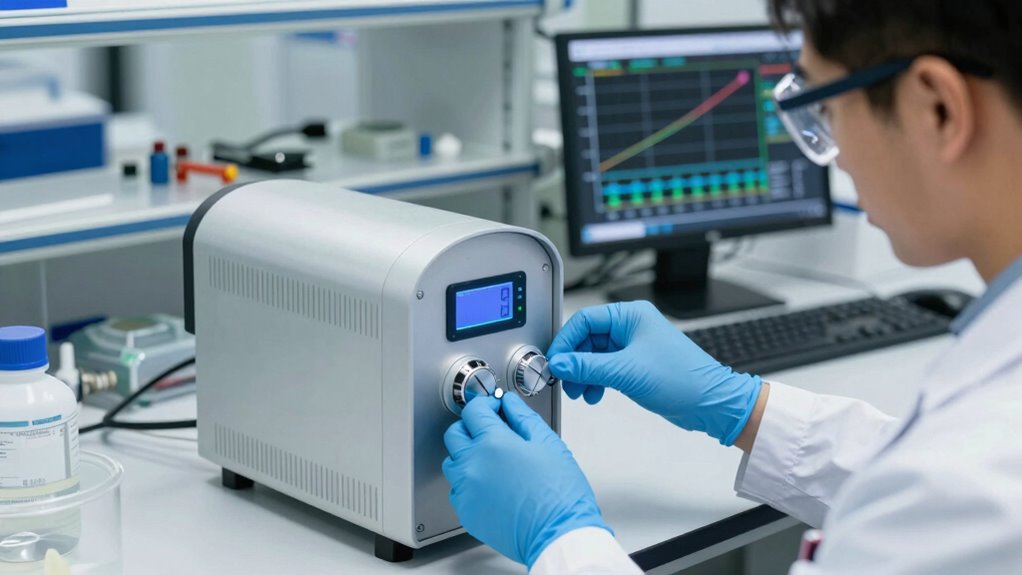
If your air monitor’s results seem inconsistent or unreliable, it’s time to check your calibration. Regular calibration ensures your device provides accurate data and detects sensor drift early. Factors like harsh environments or heavy use can cause readings to lie over time. Following the manufacturer’s recommended schedule and using certified standards keep your monitor trustworthy. Keep an eye on your device’s performance—continuing to read on can reveal how to maintain ideal accuracy.
Key Takeaways
- Regular calibration prevents sensor drift that causes inaccurate air quality readings.
- Follow manufacturer guidelines to determine calibration frequency based on usage and environment.
- Use certified calibration gases to verify and adjust monitor accuracy promptly.
- Inconsistent or suspect readings indicate the need for immediate calibration or maintenance.
- Ignoring calibration schedules risks sensor degradation, leading to unreliable data and unsafe conditions.

Proper calibration is essential to guarantee air monitors provide accurate readings. If your device isn’t properly calibrated, you risk receiving false data that can lead to unsafe conditions or misguided decisions. To maintain reliable sensor accuracy, you need to understand the importance of calibration frequency. Regular calibration ensures that your air monitor continues to perform at its best, catching drift or sensor degradation before it causes incorrect readings. The question isn’t just how often to calibrate, but also when to do it based on usage, environment, and manufacturer recommendations. Ignoring calibration schedules can compromise the integrity of your measurements, especially in sensitive environments like industrial settings, laboratories, or areas with strict safety standards.
When considering calibration frequency, you should think about how often the device is used and the conditions it’s exposed to. For instance, if your air monitor operates in a dusty or corrosive environment, you might need to calibrate it more frequently than in a clean, controlled setting. The manufacturer’s guidelines serve as a good starting point, but real-world conditions often demand more attention. You should regularly check the sensor accuracy by comparing the monitor’s readings with a known reference or standard. This practice helps identify when calibration is overdue before inaccurate data impacts your work. Over time, sensors tend to drift, meaning their readings become less precise, so sticking to a consistent calibration schedule is crucial. Sensor drift can significantly affect your device’s performance if left unaddressed.
Calibration isn’t just about setting the device back to a baseline; it’s about maintaining confidence in your readings. If your air monitor’s sensor accuracy declines, you might think the air is safe when it isn’t or vice versa, which can have serious consequences. Periodic calibration also helps detect sensor aging or damage early, saving you from costly repairs or replacements down the line. Many professionals set reminders or keep a calibration log to ensure they don’t forget routine checks. Using certified calibration gases or standards will produce the most reliable results, giving you peace of mind that your device’s readings are trustworthy.
Frequently Asked Questions
How Often Should I Calibrate My Air Monitor for Accuracy?
You should calibrate your air monitor regularly, ideally following the manufacturer’s recommended calibration intervals, which are often weekly or monthly. Incorporate this into your maintenance schedule to guarantee accuracy. Factors like environmental conditions and usage frequency may require more frequent calibrations. By sticking to a consistent calibration routine, you ensure your readings remain reliable, giving you confidence in your air quality assessments and helping you respond promptly to any issues.
What Are Common Signs Indicating My Air Monitor Needs Calibration?
Like a ship losing its bearings, your air monitor might show signs of sensor drift or inconsistent readings, signaling it needs calibration. If readings suddenly jump or fluctuate without cause, or if they don’t match known environmental conditions, it’s time to check and recalibrate. Don’t ignore these clues; regular calibration guarantees your monitor provides accurate data, much like a compass guiding you through uncharted waters.
Can I Calibrate My Air Monitor Myself or Do I Need a Professional?
You can perform DIY calibration if your air monitor is straightforward and comes with clear instructions, but for more complex devices or if you’re unsure, seek professional assistance. Proper calibration guarantees accurate readings, so don’t hesitate to get expert help when needed. Always follow manufacturer guidelines for calibration procedures to maintain reliability and safety. When in doubt, consulting a professional helps prevent errors and guarantees your monitor’s accuracy.
What Calibration Gases Are Recommended for Different Air Monitor Models?
Did you know that using the correct calibration gases can improve your monitor’s accuracy by up to 95%? For different air monitor models, calibration gas types vary, typically including span and zero gases. Always choose calibration gas concentrations specified by your device’s manufacturer. For example, some devices need span gases at 100 ppm, while others require different levels. Using recommended calibration gases guarantees precise readings and reliable air quality measurements.
How Does Environmental Temperature Affect Air Monitor Calibration?
Temperature fluctuations can profoundly impact your air monitor calibration, causing calibration drift over time. When the environment gets warmer or cooler, sensor responses may become less accurate, leading to unreliable readings. To maintain precise measurements, you should regularly check your monitor’s calibration, especially during temperature changes, and re-calibrate if necessary. This proactive approach ensures your readings stay accurate despite environmental temperature variations.
Conclusion
Remember, calibrating your air monitors is like tuning a finely crafted instrument; if you ignore it, the harmony of safety can quickly fall out of tune. Regular calibration keeps your readings truthful, acting as a lighthouse guiding you through the fog of uncertainty. Don’t let unnoticed errors cloud your judgment—keep your monitors calibrated and your environment safe. After all, a well-maintained monitor is your best shield against unseen dangers lurking in the air.