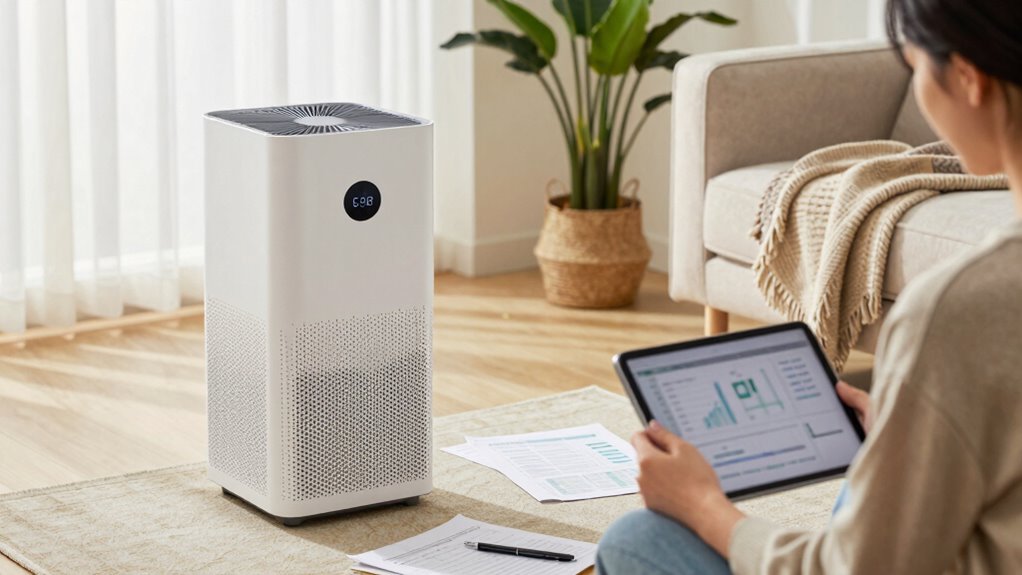
Before buying an air purifier, it’s essential to understand CADR, which shows how effectively a device cleans the air in a specific room size. A high CADR means faster and more thorough purification, but it must be balanced with good filter efficiency to trap tiny particles like dust or pollen. Without this knowledge, you risk choosing a model that doesn’t meet your needs. Keep exploring to learn how to pick the right purifier for your space.
Key Takeaways
- Understand that CADR measures how quickly and effectively an air purifier cleans a room’s air.
- Recognize that high CADR alone doesn’t guarantee good filtration; filter efficiency also matters.
- Balance CADR with filter performance to ensure small particle removal and fast air cleaning.
- Consider noise levels alongside CADR for comfort during use.
- Make informed choices by prioritizing models with both high CADR and effective filters suited to your room size.
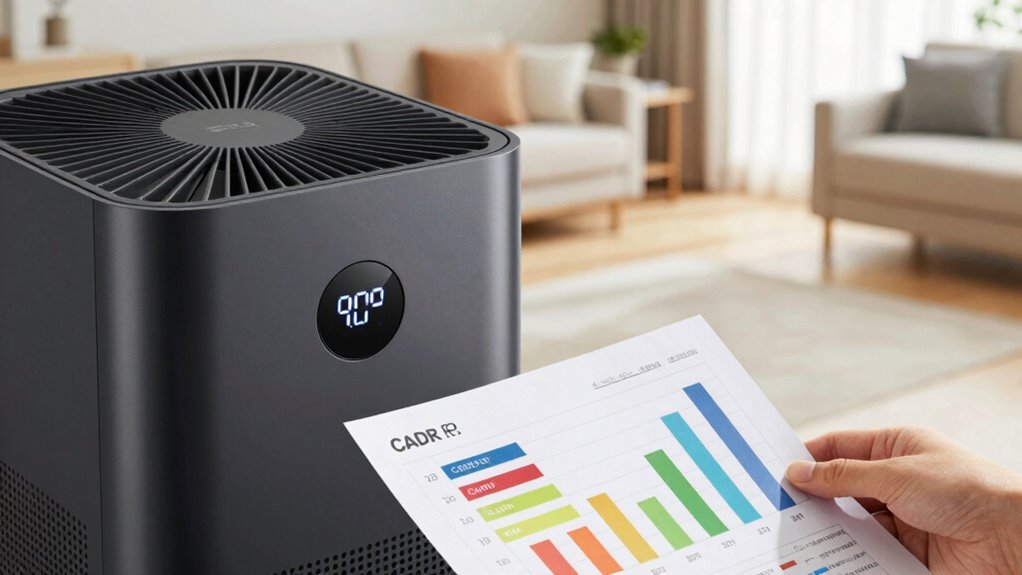
If you’re choosing an air purifier, understanding its Clean Air Delivery Rate (CADR) is vital. CADR measures how effectively an air purifier can clean the air in a specific room size, so it’s an indispensable factor in your decision. But to truly grasp what CADR tells you, you need to consider other aspects like filter efficiency and noise levels. Filter efficiency determines how well the device captures tiny particles, including dust, pollen, smoke, and pet dander. A high filter efficiency means the purifier can trap even the smallest pollutants, leading to cleaner air. When comparing models, look for units with filters that have high efficiency ratings, especially if you’re dealing with allergies or asthma. The CADR score will often reflect this, showing how quickly and thoroughly the purifier can deliver cleaner air in a given environment.
Additionally, understanding how filter efficiency and noise levels interact with CADR helps you make smarter choices. For example, a purifier with a high CADR but poor filter efficiency may not remove smaller particles effectively, defeating the purpose of buying one in the first place. Conversely, a device with excellent filter efficiency but a low CADR might not clean the air quickly enough for your needs. Striking a balance between these factors ensures you’re investing in a purifier that performs well without unnecessary compromises.
Frequently Asked Questions
How Does CADR Compare to Other Air Purifier Ratings?
Back in the day, CADR was like the secret handshake among air purifier enthusiasts. It directly compares how well an air purifier improves air quality by measuring filter efficiency and airflow. Unlike other ratings, CADR gives you a clear, standardized way to see how quickly pollutants are removed. So, when choosing a purifier, focus on CADR to guarantee you get the best performance for your space and air quality needs.
Is a Higher CADR Always Better for My Needs?
A higher CADR usually means better air purifier efficiency for removing pollutants quickly, but it isn’t always better for your needs. Consider pollutant specificity—you want an air purifier designed for the particular pollutants in your environment. If you have allergies, look for models that target allergens specifically. Balance CADR with your space size and specific air quality concerns to find the most effective option for your needs.
Can CADR Be Misleading for Certain Pollutants?
Think of CADR as a map, but not every path leads to the same destination. It can be misleading because pollutant specificity matters—some pollutants, like VOCs or pet dander, aren’t always accurately captured by standard measurements. Measurement variability adds to the confusion, making higher CADR ratings seem better but not necessarily effective for every pollutant. You need to choose an air purifier tailored to the specific pollutants in your environment.
How Does Room Size Affect CADR Requirements?
Your room size directly impacts the CADR requirements, as larger rooms need a higher CADR to maintain air quality. You should consider air exchange rates, which determine how often the air in your space refreshes. A small room may need a lower CADR, while bigger rooms require purifiers with higher CADR ratings to effectively filter pollutants and guarantee proper air exchange. Always match your purifier’s CADR to your room size for ideal results.
Are There Limitations to Using CADR as a Sole Buying Criterion?
Think of CADR as a speedometer measuring airflow efficiency, but it’s not your only guide. While it shows how quickly air is cleaned, it doesn’t tell you about pollutant specificity—how well the purifier targets specific contaminants. Relying solely on CADR can be like judging a car only by its top speed; you might overlook whether it handles rough terrain or fits your needs, so consider other factors too.
Conclusion
Before rushing to buy an air purifier, take a moment to understand its CADR. Think of it as peering through a window to see the true clarity beyond the glass. When you grasp what the numbers signify, you’ll make a choice that gently clears the air, rather than just masking the haze. Patience now guarantees you’ll breathe easier later—like a calm breeze after a storm, offering a softer, more confident step forward.