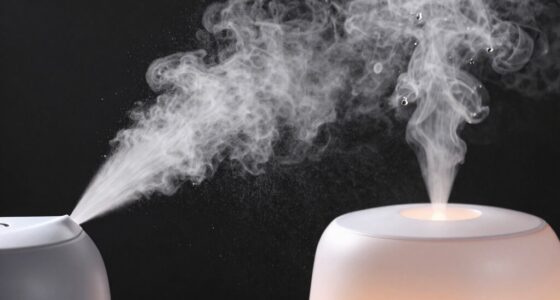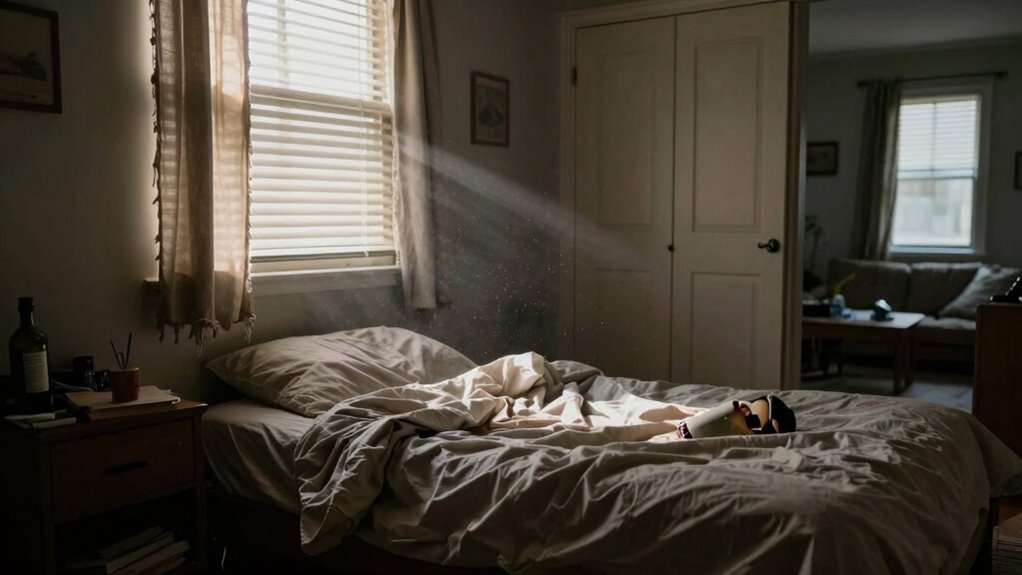

Bedrooms tend to have worse air quality because they trap more allergens like dust mites, pet dander, and mold spores, which build up in the confined space. Poor ventilation from smaller windows, closed doors, and recirculating HVAC systems also make it harder for fresh air to circulate. Textiles like bedding and curtains trap pollutants and release particles into the air when disturbed. Continuing will reveal simple ways to improve your bedroom’s air for a healthier space.

Get oils, diffusers and self-care delivered free with Prime
- Fast, free delivery on millions of items
- Prime Video, Amazon Music and more included
- Member-only deals all year
Key Takeaways
- Bedrooms trap more airborne allergens like dust mites, pet dander, and mold spores, increasing their concentration.
- Limited natural ventilation in bedrooms causes stale air and pollutant buildup.
- Closed doors and small windows reduce airflow, preventing fresh air exchange.
- Textiles such as bedding and carpets release trapped allergens when disturbed.
- HVAC systems can recirculate indoor pollutants if filters are inadequate or poorly maintained.
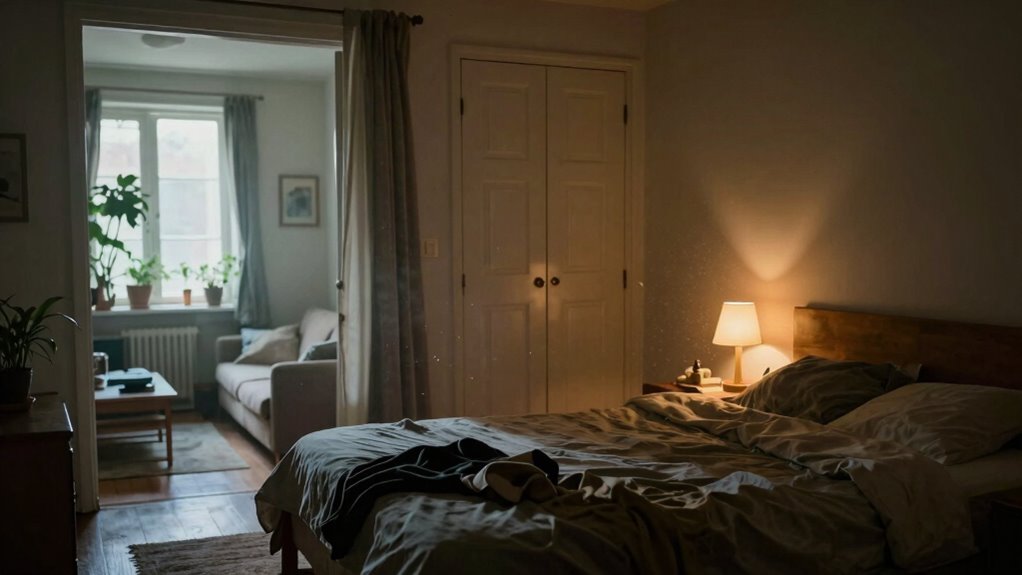
Have you ever wondered why your bedroom sometimes smells stuffy or feels less fresh than your living room? It’s a common experience, and the answer often lies in how air circulates and what’s floating around in it. Bedrooms tend to trap more airborne allergens, like dust mites, pet dander, and mold spores, which can quickly build up in the confined space. These airborne allergens aren’t just unpleasant; they can also cause allergic reactions or respiratory issues, making the air feel even more heavy and stagnant. Your bedroom’s smaller size and the privacy it offers mean it doesn’t get as much fresh air exchange as your living room, amplifying the impact of these airborne particles.
Bedrooms trap more airborne allergens, making the air feel heavy and less fresh.
Ventilation challenges play a considerable role here. Unlike living rooms, which usually have larger windows, better airflow, or even HVAC systems designed for more frequent air turnover, bedrooms often lack consistent ventilation. You might keep your door closed to maintain privacy or keep the room dark for sleep, but this reduces the natural airflow that would otherwise help clear out stale air. Without proper ventilation, airborne allergens and indoor pollutants linger longer, creating a stuffy atmosphere. The lack of fresh air exchange means the air becomes saturated with indoor pollutants, dust, and moisture. Over time, this buildup can make the room smell stale and contribute to feeling less fresh, even if you’ve recently cleaned or aired out the space. Additionally, air exchange is crucial for maintaining healthy indoor air quality, especially in smaller or enclosed spaces. Improving ventilation methods can significantly reduce indoor pollutant levels and refresh the air more effectively. Proper ventilation not only helps eliminate existing pollutants but also prevents their buildup from occurring in the first place.
Another factor is that bedrooms are typically used during the night, when windows are closed, and heating or air conditioning systems might be running for extended periods. These systems, if not equipped with good filters or if poorly maintained, can recirculate airborne allergens and dust, further degrading the air quality. Plus, the cozy nature of bedrooms often means more textiles—think bedding, curtains, and carpets—that trap dust and allergens. These materials can release particles back into the air, especially when disturbed, compounding the problem. Additionally, poor air circulation can exacerbate the buildup of pollutants, making the environment feel more oppressive. Regular cleaning of textiles and air filtration devices can help reduce this buildup and improve overall air quality. Using air purifiers with HEPA filters is especially effective at capturing tiny airborne particles that traditional cleaning may miss.
All these elements work together to create an environment where the air feels less fresh and more contaminated than in the more open, ventilated spaces of your home. In essence, the combination of airborne allergens and ventilation challenges makes bedrooms more prone to poor air quality. Without proper airflow, these allergens and pollutants settle and accumulate, leading to that heavy, stale feeling. Improving ventilation—by opening windows, upgrading your HVAC filters, or using air purifiers—can considerably help, making your bedroom feel fresher and healthier. Recognizing these factors is the first step toward creating a better indoor environment for restful sleep and overall well-being.
As an affiliate, we earn on qualifying purchases.
Frequently Asked Questions
How Does Sleep Affect Indoor Air Quality in Bedrooms?
When you sleep, your body’s natural sleep hygiene habits can influence indoor air quality. During the night, pollutants like dust mites, pet dander, and VOCs from bedding and mattresses accumulate, leading to higher levels of nighttime pollutants. Poor ventilation while sleeping traps these pollutants, making the air worse. To improve air quality, consider regular cleaning, using air purifiers, and ensuring proper ventilation, especially during sleep hours.
Are Certain Bedroom Materials More Likely to Emit Indoor Pollutants?
Certain bedroom materials are like silent polluters, quietly releasing emissions that degrade indoor air quality. Synthetic rugs, pressed wood furniture, and flame-retardant textiles are common pollutant sources, often emitting volatile organic compounds (VOCs). These materials tend to outgas over time, contributing to poor air. To breathe easier, choose natural or low-emission options and guarantee proper ventilation, reducing the risk of pollutant buildup from these sneaky sources.
Can Plants Improve Air Quality Specifically in Bedrooms?
Yes, plants can improve air quality in your bedroom. Certain plant types, like snake plants, peace lilies, and pothos, are known for their air purification abilities. They absorb common indoor pollutants and increase oxygen levels, making your bedroom healthier and more invigorating. Just make certain you choose non-toxic options if pets are around, and avoid overwatering to prevent mold growth. Incorporating these plants can make a noticeable difference in your sleep environment.
How Often Should I Ventilate My Bedroom for Better Air?
You should ventilate your bedroom at least once or twice daily to maintain ideal air freshness. For better air quality, aim for about 10-15 minutes of cross-ventilation each session. During warmer months, keep windows open longer if possible, especially in the morning or evening. Regular ventilation helps remove indoor pollutants and moisture, ensuring your bedroom stays fresh and healthy, promoting better sleep and overall well-being.
Do Household Products Contribute More to Bedroom Air Pollution?
Yes, household products can dramatically worsen your bedroom air, releasing chemical emissions that seem to fill the space with toxic fog. These products also contribute to severe allergen buildup, turning your peaceful sanctuary into a sneezing, itchy nightmare. Every spray, candle, or cleaner adds to the pollution, making your bedroom a hotspot for unhealthy air. Ventilating regularly helps, but reducing use of such products is your best defense against this indoor air crisis.
Conclusion
So, next time you notice your bedroom feels stuffy or stuffy, remember it’s like a closet holding in more than just clothes. Poor ventilation, allergens, and chemicals build up quietly, making the air worse than in your lively living room. Keep your bedroom fresh by opening windows, cleaning regularly, and avoiding harsh chemicals. Think of it as giving your space a gust of fresh air—because, just like plants need sunlight, your room needs good airflow to breathe easy.
Halloween Picks
halloween
As an affiliate, we earn on qualifying purchases.