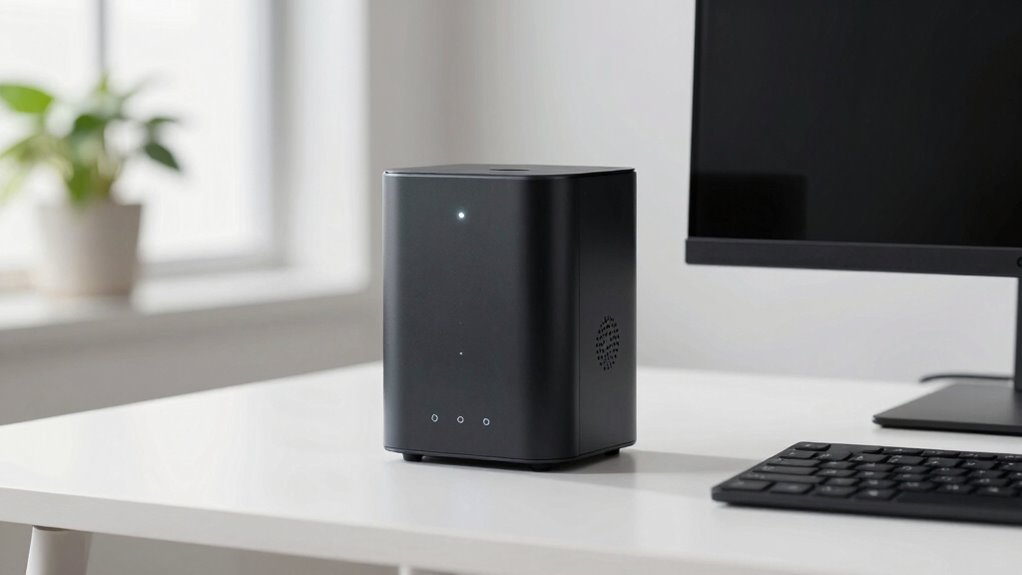

Air quality sensors detect key pollutants in indoor environments. PM monitors measure tiny particles like dust, smoke, and allergens that can cause health issues. VOC sensors identify volatile organic compounds emitted from household products, fumes, and materials, which can affect your health and comfort. CO2 monitors track carbon dioxide levels, indicating how well your space is ventilated. Understanding what these sensors detect helps you maintain a healthier indoor air quality—continue to explore how calibration keeps their data accurate and trustworthy.
Key Takeaways
- PM monitors detect tiny particles like dust, allergens, and combustion-related particles that can harm respiratory health.
- VOC sensors identify volatile organic compounds emitted from household products, paints, and building materials.
- CO2 sensors measure indoor carbon dioxide levels, indicating ventilation effectiveness and air freshness.
- Accurate sensors require regular calibration to ensure reliable detection of pollutants and avoid false readings.
- These monitors collectively help assess indoor air quality and guide actions to improve health and comfort.

Air quality sensors play a crucial role in monitoring the pollutants and particulate matter in the environment around you. When it comes to indoor pollution, these sensors become even more essential because indoor air can often contain higher concentrations of harmful substances than outdoor air. Common sources include cooking fumes, cleaning products, tobacco smoke, and even building materials. To guarantee that the data you receive is accurate and reliable, sensor calibration is critical. Proper calibration adjusts the sensor’s readings to match known standards, helping you avoid false alarms or missed hazards. Without regular calibration, sensors may drift over time, providing skewed data that can mislead you about your indoor air quality.
Understanding how sensors detect pollutants like volatile organic compounds (VOCs), particulate matter (PM), and carbon dioxide (CO2) is key to appreciating their importance. VOC sensors measure compounds emitted from various household products and building materials, which can cause headaches, respiratory issues, or long-term health problems. PM sensors detect tiny particles suspended in the air, often from combustion, dust, or allergens, which can penetrate deep into your lungs. CO2 sensors monitor levels of carbon dioxide, a natural byproduct of respiration, but also an indicator of ventilation efficiency. Elevated CO2 levels can lead to fatigue, decreased concentration, and discomfort, especially in enclosed spaces.
You might not realize that the accuracy of these sensors depends heavily on proper maintenance and calibration. Indoor pollution levels fluctuate throughout the day, influenced by activities, occupancy, and ventilation. When your sensors aren’t calibrated correctly, they can either underestimate or overestimate pollutant levels, leading you to ignore real problems or be unnecessarily alarmed. Regular calibration routines, often provided or recommended by manufacturers, ensure your sensors stay in sync with actual pollutant concentrations. Additionally, sensor technology continues to evolve, offering more precise and reliable detection methods that enhance indoor air quality management. This process might involve comparing sensor readings against known calibration gases or standards and making adjustments accordingly. By doing so, you maintain confidence in your device’s ability to alert you to harmful air quality levels.
In practice, sensor calibration is a straightforward yet essential step for reliable indoor air quality monitoring. It ensures your sensors deliver precise data, empowering you to make informed decisions about ventilation, cleaning, and overall air management. Whether you’re concerned about VOCs from new furniture, PM from outdoor infiltration, or CO2 buildup in a crowded room, calibrated sensors give you a clear picture of your environment. This accuracy helps you take timely actions, like increasing ventilation or using air purifiers, to improve indoor air quality and protect your health. Ultimately, maintaining well-calibrated sensors is the foundation of effective indoor air quality management, giving you peace of mind in your living or working spaces.
Frequently Asked Questions
How Accurate Are Air Quality Sensors in Different Environments?
You’ll find that air quality sensors vary in accuracy depending on environmental variability. Sensor precision can decline in extreme conditions or highly variable spaces, making readings less reliable. In stable environments, they tend to be more precise, but in dynamic settings, fluctuations can affect their performance. Regular calibration and choosing high-quality sensors help improve accuracy, ensuring you get trustworthy data regardless of environmental changes.
What Is the Ideal Placement for Air Quality Monitors?
They say, “Location is everything,” and it’s true for air quality monitors. To find the ideal positioning, place sensors at breathing height, away from vents, windows, or sources of pollution. Keep them central in the space to get accurate readings. Proper sensor placement ensures you’re capturing the true air quality, helping you make better decisions for a healthier environment.
How Often Should Sensors Be Calibrated for Reliable Readings?
You should calibrate your sensors regularly to guarantee accurate readings. Typically, sensor maintenance involves calibration every 6 to 12 months, but it varies based on usage and environment. For reliable data, check manufacturer recommendations and consider more frequent calibration if your sensors detect fluctuations or drift. Keeping up with calibration frequency helps maintain sensor accuracy, ensuring your air quality monitoring remains trustworthy and effective over time.
Can Sensors Detect All Types of Airborne Pollutants?
Think of sensors as your vigilant guardians, but even they have their limits. They can’t catch every airborne pollutant lurking in the shadows. Due to sensor limitations, pollutant coverage isn’t universal—some chemicals or particles slip through unnoticed. While they excel at detecting common pollutants like PM, VOCs, and CO2, they might miss elusive or less common contaminants. So, rely on them as your first line of defense, but stay cautious of their blind spots.
Are There Any Health Risks Associated With Sensor Emissions?
Sensor emissions generally pose minimal health risks if you consider sensor material safety and emission mitigation. Manufacturers design sensors with safe materials and implement emission controls to prevent harmful releases. However, prolonged exposure to poorly manufactured sensors or those lacking proper emission mitigation might cause minor health concerns. To stay safe, choose sensors from reputable brands, ensure proper installation, and regularly maintain your devices to minimize any potential risks.
Conclusion
Just like a vigilant guardian watching over your space, air quality sensors keep you aware of what lurks unseen. They detect PM, VOCs, and CO₂, guiding you to breathe easier. Think of them as your modern-day sentinels, echoing the wisdom of ancient watchmen—ever alert, ever present. With these monitors, you hold the power to create a safer, healthier environment, turning the tide against invisible threats and embracing cleaner air, today and tomorrow.