Activated carbon filters effectively trap organic chemicals, odors, and gases, making your air and water cleaner. They are excellent at reducing VOCs, cooking smells, pet odors, and chlorine taste. However, they can’t remove heavy metals like lead, biological contaminants such as bacteria, or dissolved inorganic substances like nitrates and fluoride. To get a full picture of their capabilities and limitations, keep exploring what these filters can and can’t do.
Key Takeaways
- Activated carbon filters effectively remove VOCs, odors, chlorine, and organic chemicals from air and water.
- They cannot eliminate heavy metals, bacteria, viruses, or dissolved inorganic contaminants like nitrates and fluoride.
- Regular filter replacement is essential to maintain their ability to trap new contaminants.
- They are particularly good for odor control and improving water taste but limited against inorganic pollutants.
- Proper maintenance ensures optimal performance; saturated filters lose their effectiveness over time.
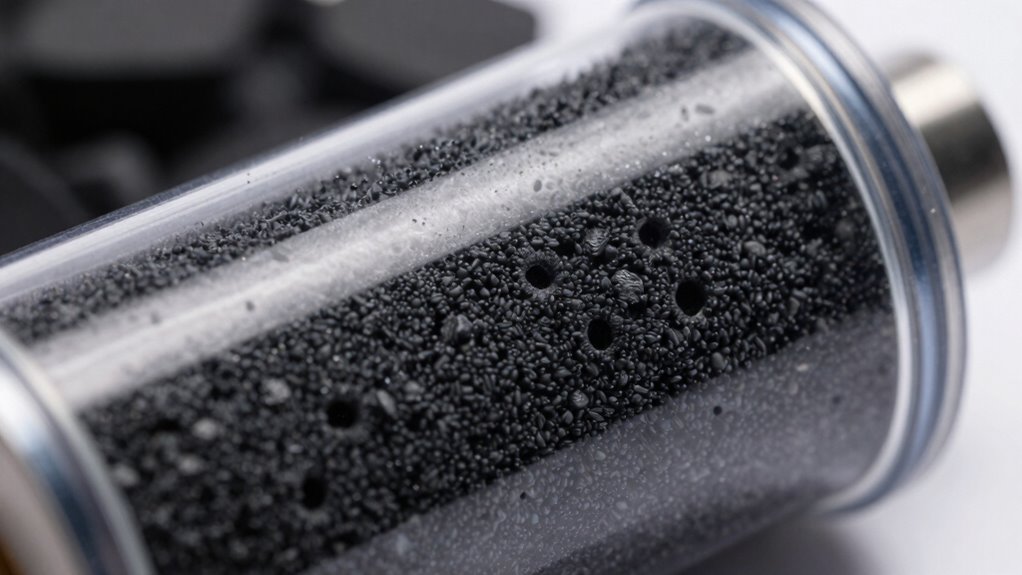
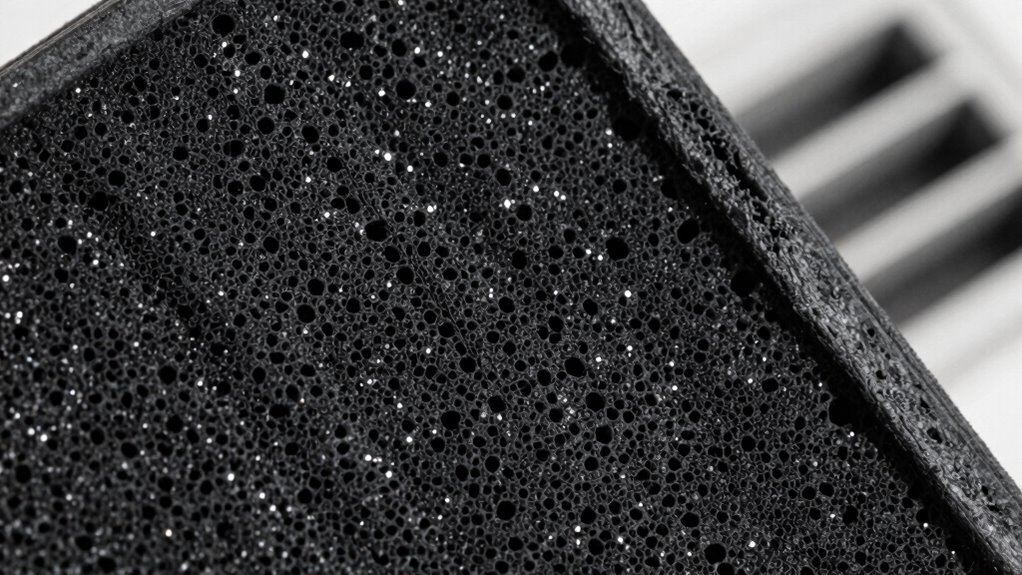
Are you looking for an effective way to improve your water or air quality? Activated carbon filters are a popular choice because they excel at removing a wide range of contaminants. When it comes to VOC reduction and odor elimination, these filters are especially valuable. VOCs, or volatile organic compounds, are chemicals that easily become vapors or gases, often causing health issues and unpleasant smells. Activated carbon’s porous structure allows it to trap these harmful compounds efficiently, making your environment safer and more pleasant. Whether you’re dealing with household odors, chemical fumes, or airborne pollutants, activated carbon filters can considerably cut down on these issues.
Activated carbon filters effectively reduce VOCs and odors, making your environment safer and more pleasant.
But it’s important to understand what activated carbon filters can and can’t do. They are excellent at removing many organic chemicals, odors, and gases, but they don’t remove everything. For instance, heavy metals like lead or mercury, or biological contaminants such as bacteria and viruses, aren’t effectively filtered out by activated carbon alone. If your water source contains heavy metals, you’ll need a specialized filter designed for those contaminants. Similarly, for airborne pathogens, you’ll want to consider additional filtration methods, such as HEPA filters, which target particles like bacteria and viruses that activated carbon can’t catch.
In terms of odor elimination, activated carbon filters are among the best options available. They absorb odors from cooking, pets, smoke, and even chemical fumes, leaving your air fresher and more breathable. Regular maintenance, like replacing the filters as recommended, guarantees ongoing VOC reduction and odor control. Without proper upkeep, the pores of the activated carbon become saturated, and its ability to trap new contaminants diminishes. This diminishes its effectiveness in VOC reduction and odor elimination, so paying attention to filter lifespan is key.
In water filtration applications, activated carbon effectively removes chlorine, bad taste, and foul odors, making water more palatable. However, it doesn’t target dissolved inorganic contaminants like nitrates or fluoride. For extensive water purification, combining activated carbon with other filtration media is often necessary.
Frequently Asked Questions
How Long Do Activated Carbon Filters Typically Last?
You can expect activated carbon filters to last about 3 to 6 months, depending on usage and water quality. The filter lifespan varies, so it’s essential to monitor for signs like decreased water taste or flow rate. Follow the recommended replacement intervals provided by the manufacturer to guarantee peak performance. Regularly changing your filter prevents buildup of contaminants and maintains the effectiveness of your filtration system.
Are Activated Carbon Filters Effective Against Bacteria?
Think of activated carbon filters as guardians, but not against every foe. They aren’t effective for bacterial filtration or microbial removal, so bacteria can slip past their defenses. While they excel at odors and chemicals, if you need protection from harmful microbes, you’ll want a filter specifically designed for microbial removal or UV sanitation. Rely on the right tool to keep your air or water truly safe.
Can Activated Carbon Filters Remove Heavy Metals?
Activated carbon filters aren’t effective for heavy metal removal because their filtration limitations prevent them from capturing dissolved metals like lead or mercury. You might notice some reduction in contaminants, but heavy metals often pass through these filters. If you need to remove heavy metals from your water, consider specialized filtration systems like reverse osmosis or ion exchange filters. Relying solely on activated carbon won’t provide the thorough heavy metal removal you require.
How Often Should I Replace My Filter?
You should replace your activated carbon filter every 2 to 6 months, depending on your filter’s lifespan and usage. Check the manufacturer’s recommendations for ideal replacement frequency, especially if you notice a decrease in water quality or taste. Regularly replacing your filter ensures it continues to effectively remove contaminants. Keep an eye on filter performance and replace it sooner if it becomes saturated or clogged to maintain clean, fresh-tasting water.
Do Activated Carbon Filters Affect Water pH Levels?
Activated carbon filters can cause minor pH alteration in your water, usually making it slightly more acidic or alkaline depending on your water’s original composition. They might also lead to mineral leaching, which can subtly impact pH levels. However, these changes are typically minimal and won’t substantially affect your water’s safety or taste. If you’re concerned about pH, consider testing your water regularly and using additional treatments if needed.
Conclusion
While activated carbon filters effectively remove many odors and chemicals, they aren’t a cure-all. Don’t rely solely on them for all air quality issues, especially gases like radon or odors from sewage. Consider combining filters with other methods for thorough protection. Remember, understanding their limits helps you make smarter choices. By using activated carbon filters wisely, you ensure cleaner air without false expectations, giving you peace of mind in creating a healthier environment.