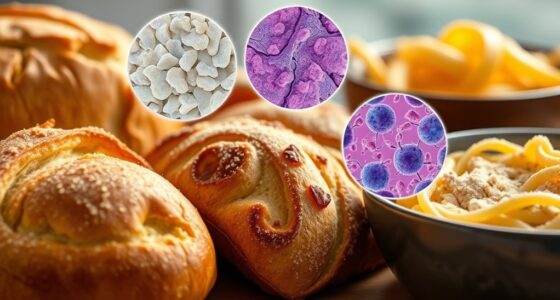
Some carbs, known as FODMAPs, are fermentable sugars your gut bacteria easily break down. When these sugars ferment, they produce excess gases like hydrogen, methane, and carbon dioxide. This gas buildup causes bloating, discomfort, and foul odors. Not everyone reacts the same, but reducing foods high in FODMAPs can help manage these symptoms. To understand which carbs might be causing your issues and how to control them, keep exploring the details below.
Key Takeaways
- Fermentable carbs pass into the large intestine undigested, where bacteria ferment them, producing gas and odor.
- High-FODMAP foods contain specific sugars that are easily fermented, increasing gas and bloating.
- Gas buildup from fermentation causes distension, bloating, and foul-smelling emissions.
- Limiting high-FODMAP foods reduces fermentable sugars reaching the gut, decreasing gas and odor.
- Understanding which carbs are fermentable helps manage gas and odor in sensitive individuals.

Have you ever wondered why certain foods cause digestive discomfort? The answer often lies in the types of carbs you consume and how your body processes them. Many foods contain fermentable sugars, which are a subset of carbohydrates that can be difficult for your digestive system to break down. When these fermentable sugars reach your gut, they act as digestive triggers, leading to symptoms like gas, bloating, and even foul odors. Understanding why some carbs create these effects can help you make smarter dietary choices and manage your symptoms more effectively.
Fermentable sugars are small molecules that ferment easily when they encounter bacteria in your intestines. Unlike other carbs that are digested and absorbed in the small intestine, these sugars pass into the large intestine largely intact. Here, the bacteria ferment them, producing gases like hydrogen, methane, and carbon dioxide. This fermentation process is natural but can become problematic if your gut is sensitive or if you consume large amounts of these sugars at once. The excess gas causes distension and discomfort, while the byproducts can lead to unpleasant odors.
Fermentable sugars ferment in your gut, producing gas and odors that cause discomfort and bloating.
The problem intensifies when these fermentable sugars are present in high quantities or are especially difficult to digest. Common foods rich in fermentable sugars include certain fruits, vegetables, dairy products, and processed foods containing added sweeteners. For example, apples, onions, garlic, milk, and wheat are known to contain significant amounts of fermentable sugars that can act as digestive triggers. If you’re prone to bloating or gas after eating these foods, it’s likely because your gut is reacting to the fermentable sugars they contain.
The Low-FODMAP diet was developed precisely to address this issue. FODMAP stands for fermentable oligosaccharides, disaccharides, monosaccharides, and polyols—categories of fermentable sugars that tend to trigger digestive symptoms. When you limit your intake of high-FODMAP foods, you reduce the amount of fermentable sugars reaching your gut, which in turn minimizes gas production and related symptoms. Many people find relief by identifying their specific food triggers and adjusting their diet accordingly.
Knowing about fermentable sugars and their role as digestive triggers empowers you to take control of your gut health. By reading labels carefully, choosing low-FODMAP alternatives, and moderating your intake of certain foods, you can reduce the likelihood of gas, bloating, and foul odors. It’s not about avoiding carbs altogether but about understanding which ones are more likely to cause trouble and managing your intake to keep your digestive system comfortable.
Frequently Asked Questions
Can I Reintroduce High-Fodmap Foods After Elimination?
Yes, you can reintroduce high-FODMAP foods after elimination, but it’s essential to do FODMAP reintroduction carefully. Start with small portions and monitor your individual tolerance. Keep a food diary to track symptoms and identify which foods cause issues. This gradual process helps you determine your personal limits, allowing you to enjoy a wider variety of foods while managing symptoms effectively.
Are All Low-Fodmap Foods Equally Safe for Everyone?
Not all low-FODMAP foods are equally safe for everyone because individual sensitivities vary. You might tolerate certain low-FODMAP options better than others, so it’s crucial to pay attention to your body’s responses. Also, make sure your diet remains nutritionally complete; consult a healthcare professional or dietitian to personalize your plan. This way, you can enjoy a balanced diet while managing symptoms effectively.
How Long Does It Take to See Improvements?
You might start noticing symptom improvement within a few days to a week, but for others, it can take up to six weeks. The symptom timeline varies based on your body’s response and adherence to the low-FODMAP diet. Remember, improvement patience is key, and sticking consistently with the plan helps your gut adjust. Keep track of your symptoms to see how your body responds over time, and consult your healthcare provider if needed.
Do FODMAPS Affect Other Digestive Symptoms Besides Gas?
Yes, FODMAPs can affect other digestive symptoms beyond gas. When you consume dietary triggers like high-FODMAP foods, you might experience bloating, stomach pain, diarrhea, or constipation. These symptoms occur because FODMAPs ferment in your gut, drawing in water and causing distention. Managing FODMAP intake helps reduce not just gas but also overall digestive discomfort, making your digestive system more comfortable and balanced.
Can FODMAPS Impact Conditions Like IBS or SIBO?
Think of your gut microbiome as a bustling city, and FODMAPs as unruly crowds causing traffic jams. Yes, FODMAPs can impact conditions like IBS and SIBO by fueling gas, bloating, and discomfort. When you manage fiber intake carefully, you help clear the streets, easing symptoms. By balancing FODMAPs, you support a healthier microbiome, reducing chaos and restoring harmony in your digestive city.
Conclusion
Understanding low-FODMAP carbs helps you manage gas and odor better, so you can enjoy your meals without discomfort. By choosing the right foods and being mindful of your body’s reactions, you’re taking control—just like a wise sage of old who knew the value of moderation. Remember, patience and experimentation are your best allies in this journey. With a little wisdom and a dash of humility, you’ll find your digestive peace and regain your joie de vivre.