
When anxiety hits, I find that simple deep breathing helps me quickly calm my nervous system. I focus on taking slow, steady breaths—inhale deeply through my nose and exhale slowly through my mouth. Practicing mindful breathing or progressive muscle relaxation can reduce racing thoughts and restore clarity. These techniques are easy to do anywhere, anytime, and with consistent practice, I notice a real difference in feeling more in control. Keep going to discover more effective ways to soothe your nerves.
Key Takeaways
- Deep, steady breathing activates the parasympathetic nervous system, reducing anxiety and calming the nervous system.
- Mindfulness meditation with focused breathing helps prevent spiraling worries and promotes mental clarity.
- Progressive muscle relaxation combined with breathing techniques releases physical tension and enhances overall relaxation.
- These techniques are simple, accessible, require no equipment, and can be practiced in brief daily sessions.
- Regular use of breathing exercises decreases panic, restores control, and fosters a peaceful, centered state of mind.
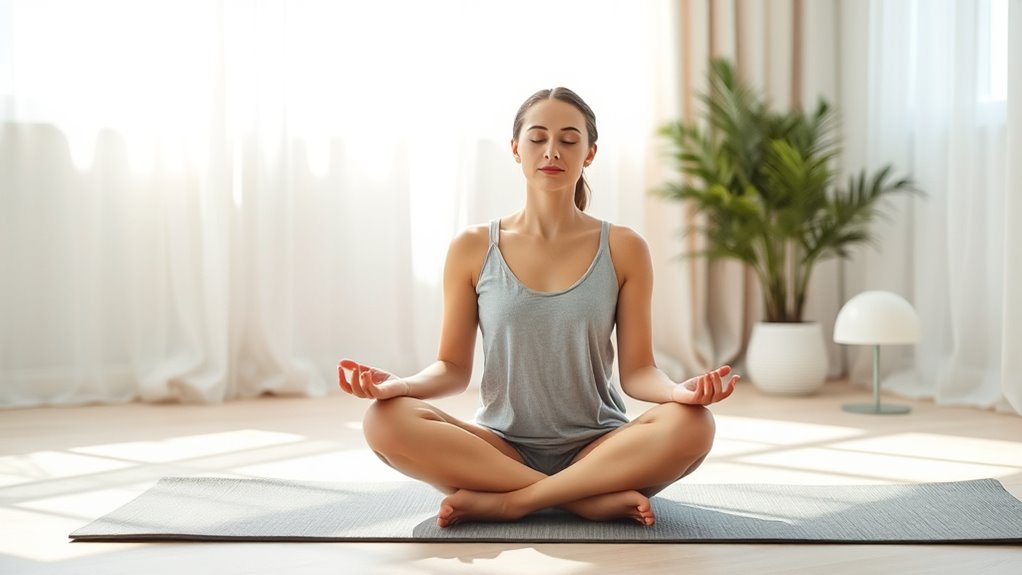
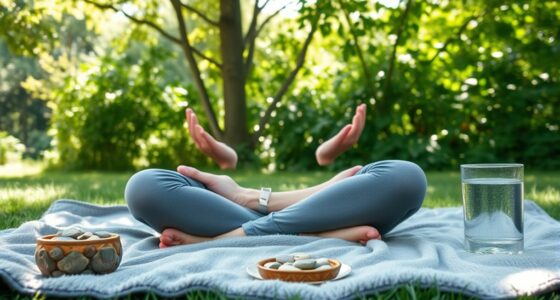
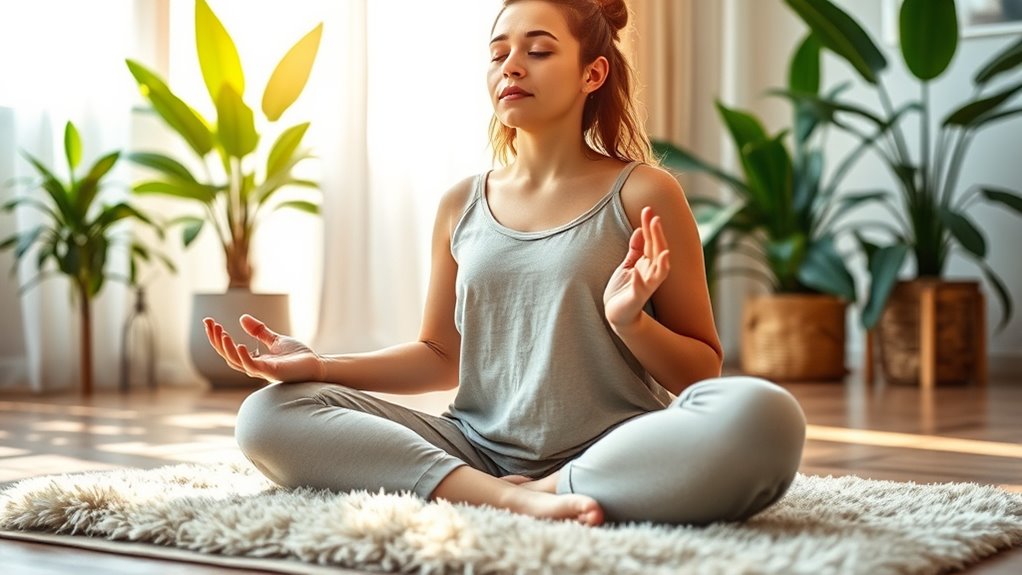
Have you ever noticed how a deep, steady breath can instantly calm your nerves? I’ve experienced it myself, especially during moments of anxiety when everything feels overwhelming. That’s when I turn to simple breathing exercises that help soothe my nervous system. One technique I find particularly effective is mindfulness meditation combined with focused breathing. I sit quietly, close my eyes, and pay close attention to my breath, noticing the sensation of the air entering and leaving my body. This practice grounds me in the present moment, preventing my mind from spiraling into worries. It’s amazing how just a few minutes of mindful breathing can reduce feelings of panic and bring clarity back to my thoughts.
Deep, steady breathing grounded in mindfulness can instantly calm your nerves and bring clarity during overwhelming moments.
Another powerful method I use is progressive muscle relaxation, which complements mindfulness meditation nicely. I start by tensing each muscle group in my body—my shoulders, arms, legs—then slowly release the tension, paying attention to how my muscles feel as they relax. This process helps me become more aware of physical sensations and releases stored tension that often accompanies anxiety. By combining this with conscious breathing, I can deepen my sense of calm. I focus on taking slow, deliberate breaths as I tense and relax different muscle groups; this not only relaxes my body but also signals my brain that it’s safe to let go of stress.
What I love about these techniques is how accessible they are. You don’t need special equipment or a lot of time—just a quiet space and a few minutes. When I practice mindfulness meditation with a focus on my breath, I notice a significant decrease in racing thoughts and a sense of control returning. Similarly, progressive muscle relaxation helps me physically unwind, which in turn relaxes my mind. Incorporating these methods can also improve color accuracy and overall image quality in visual practices like home cinema setups. Over time, integrating these practices into my daily routine has made a noticeable difference in managing my anxiety. They teach me to observe my nervousness without judgment and to gently guide myself back to calmness through my breath and body awareness.
If you’re feeling anxious and overwhelmed, I encourage you to try these techniques. Start with just a few minutes each day, focusing on your breath—deep, steady inhales and slow exhales—while practicing mindfulness meditation or progressive muscle relaxation. You’ll be surprised how quickly your nervous system responds, helping you regain a sense of peace and control. These simple, effective tools can truly transform how you manage anxiety, one mindful breath at a time.
Frequently Asked Questions
Can Breathing Exercises Replace Medication for Anxiety?
Breathing exercises can’t fully replace medication for anxiety, especially if you’re dealing with severe symptoms or medication dependence. I believe they’re a great tool for symptom management and can complement treatment. While they help calm your nervous system, it’s essential to work with a healthcare professional to develop a holistic plan. Combining both approaches often provides the best support for managing anxiety effectively.
How Long Should I Practice Breathing Exercises Daily?
I recommend practicing breathing exercises for about 10 to 15 minutes daily. Making it part of your daily routine helps build consistency, which greatly enhances the benefits. The more regularly you do it, the more your nervous system adapts to calmness, reducing anxiety over time. Even a few minutes each day can make a significant difference, so aim for consistency, and you’ll likely notice the positive effects.
Are There Any Risks or Contraindications?
There are minimal risks with breathing exercises, but I recommend doing a risks assessment and being aware of contraindications. If you have respiratory issues, heart problems, or anxiety disorders, consult a healthcare professional first. I advise listening to your body and stopping if you feel dizzy or uncomfortable. Being cautious and aware of contraindications guarantees you benefit safely from these calming techniques without unintended effects.
Can Children Benefit From Breathing Exercises for Anxiety?
Yes, children can definitely benefit from breathing exercises for anxiety. I recommend incorporating child mindfulness techniques, making the practice engaging and age-appropriate. Parental guidance is essential, as it helps children feel supported and understand how to do the exercises correctly. These techniques can help kids manage stress, improve focus, and build emotional resilience, all while fostering a calming routine that benefits their overall well-being.
How Quickly Do Breathing Exercises Reduce Anxiety Symptoms?
I’ve found that the timing effectiveness of breathing exercises varies, but many people notice symptom relief within just a few minutes. When I use these techniques, I often feel calmer quickly, as they help slow my nervous system and reduce anxiety symptoms fast. For some, it might take a bit longer, but with regular practice, these exercises become even more effective at providing ongoing relief.
Conclusion
Just like a gentle tide calms restless shores, these breathing exercises can soothe your anxious mind. Whenever anxiety starts to feel overwhelming, remember you hold the power to steady your breath and anchor yourself. With practice, these techniques become a safe harbor amid life’s storms. So, take a deep breath now—your calm, like a peaceful lake, is just a breath away. Trust in your ability to find serenity within, one breath at a time.