When I need a urine culture, I make sure to collect it midstream into a sterile container to avoid contamination from skin bacteria. The sample is then sent to the lab, where they grow bacteria to identify the infection. They also perform sensitivity testing to figure out the best antibiotics. If you want to understand how this process helps diagnose and treat urinary infections effectively, keep exploring the details that follow.
Key Takeaways
- Urine is collected midstream into a sterile container to minimize contamination and ensure accurate results.
- Proper collection techniques are essential for reliable lab analysis and correct diagnosis of urinary tract infections.
- The lab culture involves growing bacteria from the sample to identify specific pathogens causing infection.
- Sensitivity testing determines which antibiotics effectively treat the identified bacteria.
- Results from urine culture guide targeted treatment, improving effectiveness and reducing antibiotic resistance.
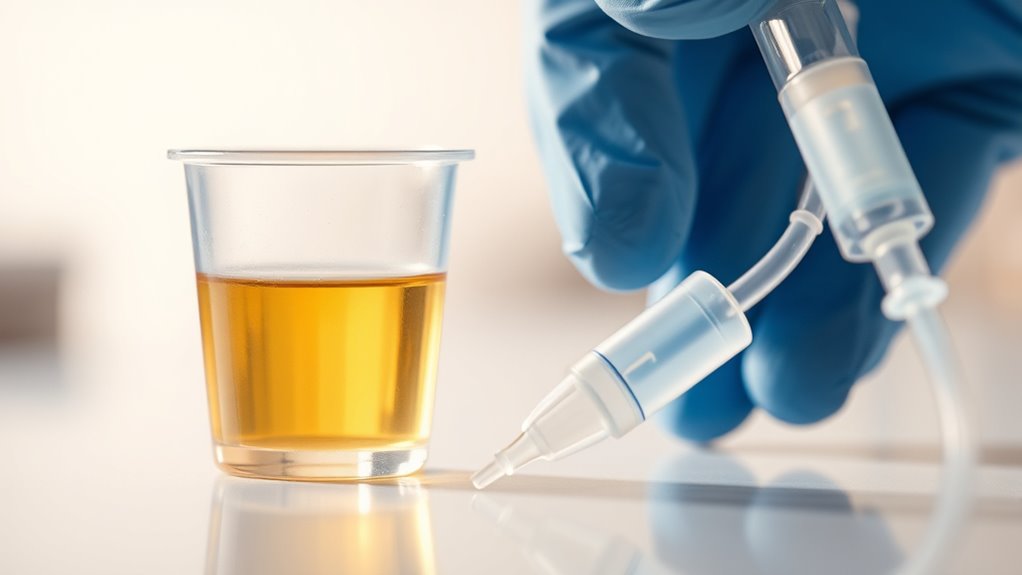
Have you ever wondered how doctors identify urinary tract infections? It’s a good question, and the answer often involves a simple yet essential test: a urine culture. When I need to diagnose a UTI, I start by collecting a urine sample from the patient. This sample isn’t just any urine; it’s carefully collected to verify it accurately reflects what’s happening inside the urinary tract. The goal is to prevent contamination from skin bacteria or other sources, so I usually instruct the patient on proper collection techniques, such as midstream collection. This process involves urinating a small amount into the toilet first, then collecting the urine in a sterile container midstream. Once I have the sample, I send it to the lab for analysis.
The lab then performs an infection diagnosis by culturing the urine sample. This means they place a small amount of the urine onto a nutrient-rich medium that encourages bacterial growth. The sample is kept in controlled conditions to see if any bacteria from the sample multiply over several hours or days. The presence of bacteria indicates an infection, but the lab also identifies the specific type of bacteria involved. Knowing whether it’s E. coli, Klebsiella, or other bacteria helps determine the most effective treatment. Additionally, the lab will often perform a sensitivity test, which shows which antibiotics can best combat the bacteria. This step is essential because it guides the healthcare provider in prescribing the most effective medication, especially if initial treatments haven’t worked.
A urine culture provides more than just a binary answer of infection or no infection. It gives a detailed picture of the bacteria causing the problem, which helps in infection diagnosis and guides targeted treatment. This process is especially important because symptoms alone can sometimes be misleading, and other conditions may mimic a UTI. By analyzing the urine sample, I can confirm whether a bacterial infection is present and identify the specific pathogen responsible. The use of culture media is crucial in facilitating bacterial growth and detection. This guarantees that treatment is precise and effective, reducing the risk of antibiotic resistance or unnecessary medication use.
Frequently Asked Questions
How Long Does It Take to Get Urine Culture Results?
The processing time for urine culture results usually takes about 24 to 48 hours, depending on the lab. I find that the result turnaround can vary slightly, but most labs aim to provide results within two days. During this time, they identify any bacteria or fungi in your urine and determine the best treatment. If you’re waiting, I recommend staying patient and following up with your healthcare provider.
Can a Urine Culture Detect All Types of Urinary Infections?
A urine culture can’t detect all types of urinary infections because of its limitations in accuracy and infection diversity. While it’s effective for most common bacteria, some infections, like viral or fungal cases, may not show up. Additionally, certain bacteria might be missed if they’re present in low numbers or if the sample isn’t collected properly. So, it’s a helpful tool but not foolproof for every urinary infection.
Are There Any Foods or Drinks That Affect Urine Culture Accuracy?
Think of your urine like a clear pond; what you consume can muddy the waters. Foods with strong dyes, like beets or spinach, or beverages like alcohol and caffeine, can interfere with urine culture accuracy. Food interactions and beverage effects might mask or mimic infections, making results less reliable. To get the clearest picture, it’s best to avoid these before testing. Trust me, it helps your doctor pinpoint the real issue.
How Does a Urine Culture Differ From a Urinalysis?
A urine culture differs from a urinalysis mainly in purpose and test specifics. While a urinalysis checks for overall health indicators like pH, protein, and cells, a urine culture specifically identifies bacteria or fungi causing infection. I see it as a more targeted test, helping determine the right treatment, whereas a urinalysis offers a broader view of your urinary health.
What Should I Do if My Urine Culture Shows Contamination?
Back in the day, folks had to rely on proper sample collection, and contamination can still trip us up today. If your urine culture shows contamination, don’t panic. I recommend informing your healthcare provider, who might suggest a new sample collection with improved contamination prevention methods. Be sure to follow instructions carefully for sample recollection, ensuring cleanliness and proper technique to get an accurate result next time.
Conclusion
Just as the river reveals its secrets through careful observation, a urine culture uncovers what lies beneath the surface of discomfort. By understanding how it’s collected and what it shows, you gain insight into your health’s hidden currents. Remember, every drop tells a story—sometimes of imbalance, sometimes of healing. Embrace this knowledge as a guiding light, leading you toward clarity and well-being, much like a compass pointing true north in uncharted waters.