
TL;DR

Get oils, diffusers and self-care delivered free with Prime
- Fast, free delivery on millions of items
- Prime Video, Amazon Music and more included
- Member-only deals all year
The DEA announced plans to temporarily ban 7-OH, a potent component of kratom, under Schedule I. The move aims to address public health concerns, but industry advocates oppose it.
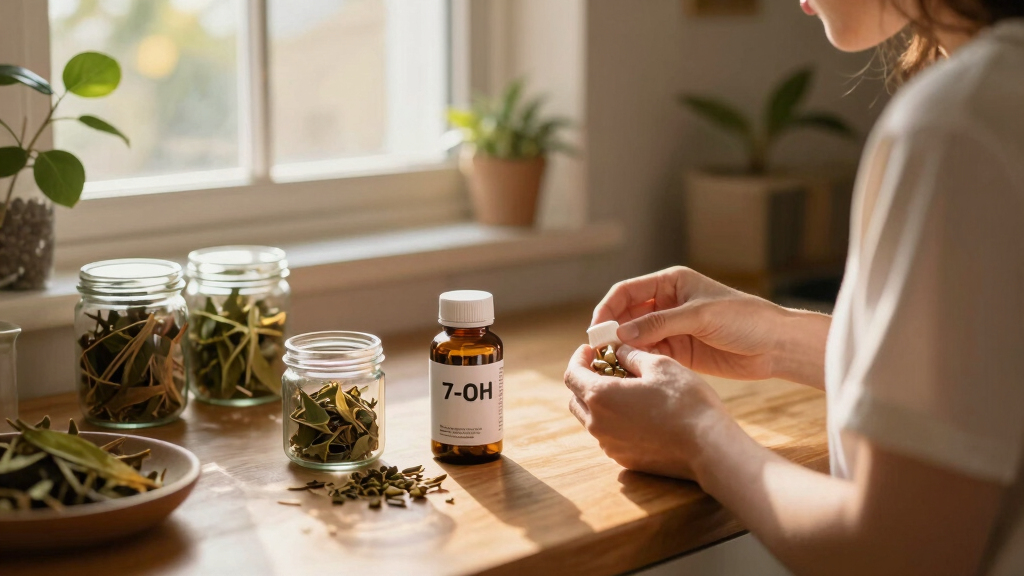
The Drug Enforcement Administration announced plans to temporarily classify 7-OH, a component of kratom with opioid-like effects, as a Schedule I drug. This move aims to curb the public health risks associated with high-potency 7-OH products sold in gas stations and shops nationwide. The decision is a significant development in ongoing debates over kratom regulation and safety.
The DEA’s draft notice, published in the Federal Register, states that 7-OH will be designated as a Schedule I substance for a period of two years, with the possibility of a third extension. This classification aligns 7-OH with drugs like heroin, citing concerns over tolerance, dependence, and addiction. The ban targets products exceeding a specified threshold of 7-OH, which are often marketed as gummies, drinks, and capsules, sometimes with higher potency than natural kratom.
The move follows increased production and sale of unregulated 7-OH products, which have been linked to health issues and withdrawal symptoms among users. The federal agency emphasizes that 7-OH activates mu-opioid receptors in the brain, contributing to its addictive potential. The ban is viewed as a major step toward regulation amid industry resistance and claims of scientific uncertainty.
Implications for Public Health and Industry
This proposed ban signals a shift toward stricter regulation of substances with opioid-like effects derived from natural plants. It aims to mitigate health risks, including dependence and overdose potential, associated with synthetic 7-OH products. However, it also raises concerns among advocates and consumers who claim that kratom and its derivatives have helped manage pain and improve quality of life. The decision could influence future legislation and industry practices, impacting thousands of users and producers.
As an affiliate, we earn on qualifying purchases.
Background on Kratom and 7-OH Regulation Efforts
Kratom is a Southeast Asian plant traditionally used for its analgesic and mood-enhancing properties, containing trace amounts of 7-OH naturally. In recent years, unregulated production of synthetic 7-OH, which can be much more potent, has surged, often marketed in convenience stores and online. The substance has been dubbed “gas station heroin” due to its opioid-like effects. The federal government has previously considered regulation, with President Trump endorsing “natural 7-OH” in 2020 and officials from agencies like HHS and DHS showing interest in tighter controls amid industry lobbying and consumer reports of withdrawal symptoms.
In 2023, the Department of Justice dropped a federal case against a kratom product company linked to 7-OH, highlighting ongoing legal and regulatory debates. Industry advocates argue that there is insufficient scientific evidence to justify a ban, while health officials warn of severe public health consequences from unregulated synthetic derivatives.
“The DEA’s move to schedule 7-OH reflects a recognition of its significant health risks and potential for addiction.”
— an anonymous researcher
Unanswered Questions About Scientific Evidence and Impact
It is not yet clear what specific scientific studies the DEA used to justify the Schedule I classification or how the threshold levels for products will be determined. The potential impact on consumers relying on kratom for pain management and the legal repercussions for producers remain uncertain as the public comment period progresses and further details emerge.
Next Steps in the Regulatory Process and Industry Response
The DEA’s draft notice opens a 30-day public comment period, during which stakeholders can submit feedback. Following this, the agency will review comments before finalizing the temporary ban. Industry groups are expected to continue lobbying against the measure, while health officials prepare to enforce the new regulations. The decision could set a precedent for future regulation of plant-derived substances with synthetic derivatives.
Key Questions
What is 7-OH and why is it considered dangerous?
7-OH is a synthetic compound derived from kratom that activates opioid receptors in the brain, potentially leading to dependence, tolerance, and addiction. Its high potency and unregulated production have raised public health concerns.
How will the proposed ban affect kratom users?
If finalized, the ban could restrict access to high-potency 7-OH products, potentially impacting those who rely on kratom or related substances for pain management. Legal and supply chain changes are expected to follow.
What is the timeline for the DEA’s decision?
The DEA has set a 30-day public comment period following the draft notice, after which it will review feedback before issuing a final rule. The ban could take effect shortly thereafter.
Are natural kratom products affected by this ban?
No, the current proposal targets synthetic 7-OH products exceeding certain thresholds. Natural kratom with trace amounts of 7-OH is not directly impacted, but the regulation may influence broader industry practices.
What are the arguments against the ban?
Opponents argue that there is insufficient scientific evidence to justify scheduling 7-OH as a Schedule I drug and that the move could unfairly restrict access to potentially beneficial products used for pain relief and recovery.
Source: WIRED · Culture
Halloween Picks
halloween
As an affiliate, we earn on qualifying purchases.