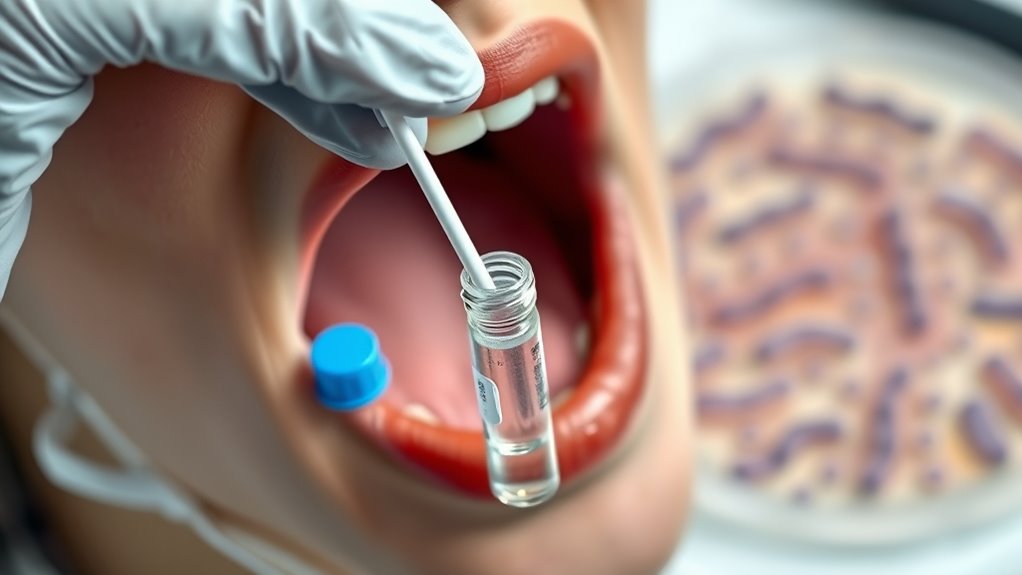

When testing for strep throat, I find that rapid antigen tests give quick results within about 10 to 15 minutes and are useful for initial screening. However, they can sometimes miss infections, leading to false negatives. Throat cultures are more accurate but take a day or two to process. If symptoms persist despite a negative rapid test, a culture may be necessary. To learn more, let’s explore these methods further.
Key Takeaways
- Rapid antigen tests provide quick results (10-15 minutes) but may yield false negatives.
- Throat cultures are more accurate and considered the gold standard but take 24-48 hours.
- Rapid tests are useful for immediate diagnosis, while cultures confirm results when needed.
- Combining both methods improves diagnostic accuracy, especially if symptoms persist after a negative rapid test.
- Proper testing by healthcare providers ensures accurate diagnosis and effective treatment of strep throat.
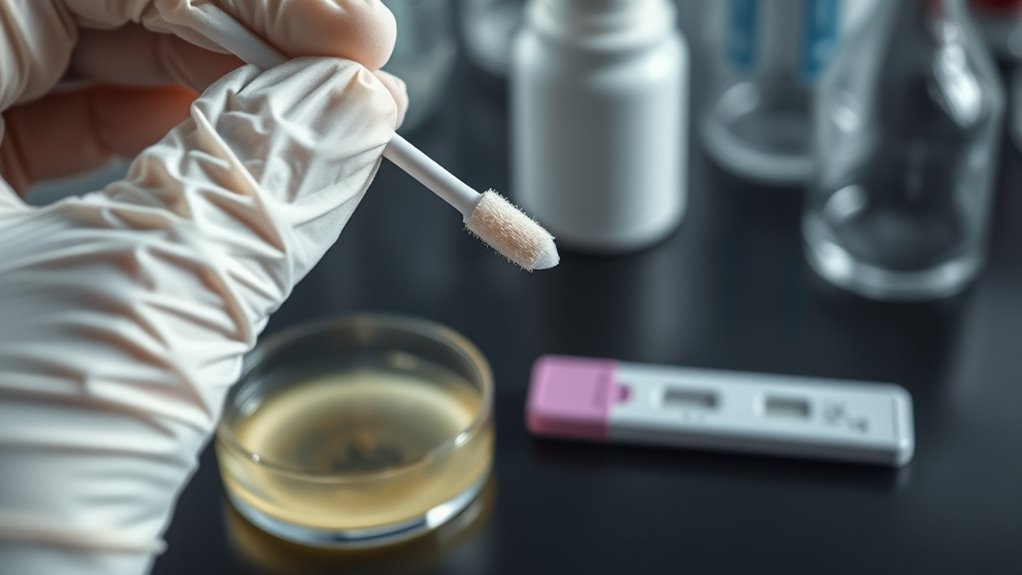
Have you ever wondered how doctors quickly determine if you have strep throat? It’s a common question, especially when you’re feeling miserable and just want relief. The good news is that there are two main testing methods: rapid antigen tests and throat cultures. Both have their strengths and weaknesses, and understanding them can help you better navigate your healthcare options.
When I first experienced symptoms like a sore throat, fever, and difficulty swallowing, I wondered whether I could just try some home remedies first. While remedies like gargling salt water, staying hydrated, and resting can soothe symptoms, they don’t actually diagnose the infection. That’s why visiting a healthcare provider is essential for an accurate diagnosis. Prevention tips, such as good hand hygiene and avoiding close contact with infected individuals, can reduce your risk of catching strep in the first place, but if you do get sick, proper testing is key.
Home remedies soothe symptoms but don’t diagnose strep; proper testing by a healthcare provider is essential.
The rapid antigen test is often the first step in diagnosing strep throat. It’s quick—usually giving results within 10 to 15 minutes—and involves swabbing the back of your throat. If the test detects the presence of streptococcal bacteria, the result is typically positive, and treatment can begin immediately. However, it’s important to remember that rapid tests are not 100% accurate. False negatives can occur, especially if the sample isn’t collected properly or if the bacterial load is low. That’s where throat cultures come in.
Throat cultures are considered the gold standard for diagnosing strep throat. They take longer—usually 24 to 48 hours—because the sample is sent to a lab to grow bacteria. This process ensures a more accurate diagnosis, reducing the chances of false negatives. If your rapid test is negative but your symptoms strongly suggest strep, your doctor will likely recommend a throat culture to confirm the diagnosis. The downside is the wait time, but the accuracy makes it worthwhile.
In my experience, understanding these testing methods helps reduce anxiety about getting diagnosed. If you’re concerned about false negatives, ask your doctor about a throat culture, especially if your symptoms persist or worsen. Remember, while home remedies can ease discomfort, they’re not substitutes for proper testing. Prevention tips like maintaining good hygiene and avoiding sharing utensils can help prevent future infections, but when symptoms strike, prompt and accurate testing remains your best tool for recovery. Additionally, being aware of the cycle of infections can help you better understand why timely testing and treatment are important for your health.
Frequently Asked Questions
How Accurate Are Rapid Antigen Tests in Children Versus Adults?
Rapid antigen tests are generally more accurate in children than adults because of higher antigen sensitivity, which boosts diagnostic reliability. In kids, these tests have a quick turnaround and good sensitivity, but in adults, their accuracy drops slightly due to lower sensitivity, leading to more false negatives. I recommend confirmatory throat cultures if there’s high suspicion, especially in adults, to guarantee the most reliable diagnosis.
Can Strep Throat Be Diagnosed Without Any Testing?
Imagine trying to identify a mystery by just looking at its shadow—that’s what symptom diagnosis and clinical examination do for strep throat, but they can’t replace testing entirely. While a doctor can often suspect strep from symptoms like sore throat and fever, a definitive diagnosis needs a test. So, technically, you can suspect strep without testing, but confirming it requires a quick swab or culture to be sure.
How Long Do Strep Test Results Typically Take?
Typically, rapid strep tests give results within 10 to 15 minutes, making them quick and convenient for testing turnaround. However, their result reliability can sometimes be lower than a culture, especially if the test is negative but symptoms persist. Throat cultures usually take about 24 to 48 hours for results, but they’re more accurate. I recommend discussing with your healthcare provider to determine the best testing method for you.
Are There Any Risks or Side Effects From Testing?
They say “better safe than sorry,” but testing for strep throat is generally secure. While rare, some people might experience minor test side effects like slight discomfort or a brief sore throat. False positives can happen, leading to unnecessary antibiotics. Overall, the risks are minimal, and testing helps ensure accurate diagnosis. If you have concerns, talking with your healthcare provider can put your mind at ease.
When Should a Follow-Up Culture Be Performed After a Rapid Test?
If your rapid test is negative but symptoms persist or worsen, I recommend a follow-up culture after 24 to 48 hours. This helps confirm the diagnosis, especially if symptom monitoring indicates strep throat. Proper timing of antibiotics depends on accurate results, so a culture guarantees you get the right treatment. Don’t hesitate to consult your healthcare provider if symptoms continue despite initial testing.
Conclusion
In the end, choosing between rapid antigen tests and cultures is like picking a quick flash of lightning or a steady lighthouse beam — both guide you, but one’s faster, while the other’s more detailed. Rapid tests give quick answers but may miss some cases, while cultures are thorough but take longer. Understanding their strengths helps us navigate diagnosis confidently, ensuring we catch strep throat early and get the right treatment. After all, a clear path leads to a healthier recovery.