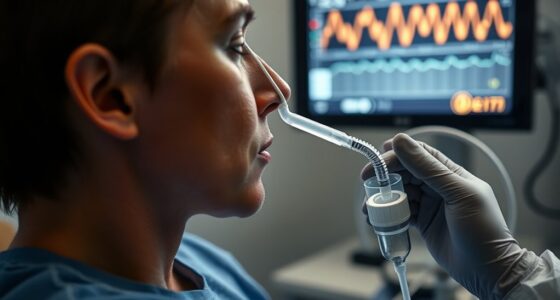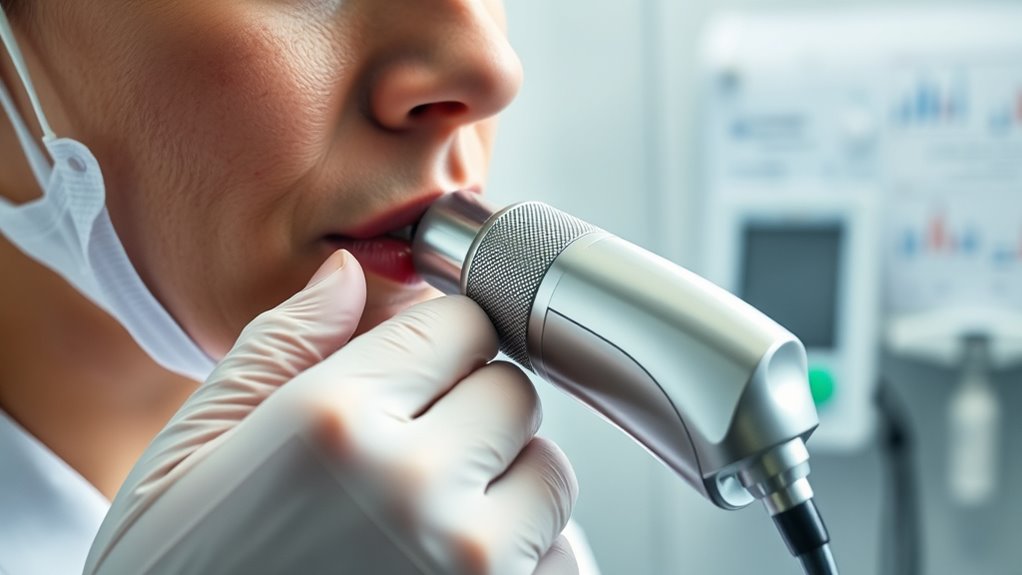
Spirometry is a quick and simple test I use to measure how well my lungs work. I breathe into a device that records the volume and speed of air I inhale and exhale. It helps detect airway blockages and assess overall respiratory health. The test is painless, takes just a few minutes, and gives immediate results. If you’re curious about how it works and why it’s important, keep going to learn more.
Key Takeaways
- Spirometry uses a device called a spirometer to measure airflow and lung volume during breathing tests.
- It assesses key lung function metrics like FVC and FEV1 to identify airway obstruction.
- The test is quick, painless, and involves breathing into the device following instructions.
- Results are available immediately, helping healthcare providers diagnose and monitor respiratory conditions.
- Incorporating calming sounds can make the test more comfortable and reduce patient anxiety.

Have you ever wondered how doctors measure lung function? It’s actually quite straightforward, and it plays an essential role in diagnosing and managing respiratory conditions. At the heart of this process is a simple test called spirometry. When you undergo a spirometry test, you’re asked to breathe into a device called a spirometer, which measures how much air you can inhale and exhale, as well as how quickly you can do it. This data helps doctors assess your lung capacity and identify potential issues like airway obstruction, which can be caused by conditions such as asthma or COPD.
Spirometry measures lung function to diagnose airway issues like asthma and COPD.
Lung capacity is a key indicator of your respiratory health. It refers to the total amount of air your lungs can hold and is fundamental for understanding how well your lungs are functioning. During the test, your doctor can determine different measurements, such as the forced vital capacity (FVC), which is the maximum amount of air you can forcibly exhale after taking a deep breath. They also measure the forced expiratory volume in one second (FEV1), which is how much air you can exhale in the first second of that forced breath. Comparing these numbers helps identify if your lungs are operating normally or if there’s an issue like airway obstruction, which restricts airflow and reduces your ability to breathe efficiently.
Understanding airway obstruction is important because it’s often a sign of conditions that require treatment. When your airways are obstructed, the airflow becomes limited, making it harder to breathe deeply or quickly. Spirometry helps detect these obstructions early, even before symptoms become severe. It provides a clear picture of the severity and nature of the problem, guiding treatment decisions. For example, if your spirometry results show a reduced FEV1 and a low FEV1/FVC ratio, it indicates airway obstruction, which could be caused by inflammation, mucus build-up, or structural changes in the airways.
Additionally, research in sound healing science suggests that integrating calming sounds or frequencies into medical procedures can help reduce patient anxiety and improve overall comfort during testing. I find that many people are surprised at how quick and painless the spirometry test is. You simply breathe into the device as instructed, and it takes only a few minutes. The results are immediate, and your doctor can interpret them to evaluate your lung health accurately. It’s a valuable tool that provides a snapshot of your respiratory function, helping catch issues early and monitor ongoing conditions. Whether you’re experiencing breathing problems or just want to check your lung health, spirometry is a simple, effective way to understand how well your lungs are working.
Frequently Asked Questions
How Often Should I Get Spirometry Testing?
I recommend getting spirometry testing at least once a year to monitor your lung capacity and catch any issues early. If you have respiratory conditions like asthma or COPD, your doctor might suggest more frequent tests to track progress and adjust treatments. It’s important to follow your healthcare provider’s advice on test frequency, especially if you notice changes in breathing or symptoms. Regular testing helps keep your lung health in check.
Can Spirometry Detect Early Lung Disease?
Yes, spirometry can detect early lung disease. It measures lung capacity and airflow, revealing issues before symptoms appear. By evaluating how well your lungs expand and how airflow is moving, I can identify potential problems early on. Regular testing helps catch conditions like asthma or COPD early, giving us a chance to manage them effectively. So, if you’re concerned, talk to your doctor about spirometry.
Are There Any Risks Associated With Spirometry?
Imagine a tiny window into your lungs—spirometry is generally safe, but like any test, it carries some risks. I’ve seen cases where vigorous breathing during the test caused minor lung injury or dizziness. However, with proper technique, the test’s accuracy remains high, and serious issues are rare. Always tell your doctor if you have a lung injury or breathing difficulties before testing, so they can keep you safe.
How Should I Prepare Before a Spirometry Test?
Before a spirometry test, I recommend avoiding heavy meals or pre-test fasting for a few hours, as it helps guarantee accurate results. You should also discuss any medications you’re taking with your doctor, since some might need adjustments or temporary stopping. Staying relaxed and following your healthcare provider’s instructions can make the test smoother. Always inform them of any recent respiratory infections or symptoms for the best results.
What Do the Results Indicate About My Lung Health?
Your spirometry results reveal your lung capacity and whether there’s airway obstruction. If your lung capacity is normal and there’s no airway obstruction, it suggests healthy lungs. However, reduced lung capacity or signs of airway obstruction could indicate conditions like asthma or COPD. I recommend discussing your specific results with your doctor, who can interpret them accurately and suggest appropriate treatment or lifestyle changes to improve your lung health.
Conclusion
In the end, spirometry is a straightforward way to get a clear picture of your lung health. It’s a small step that can make a big difference in catching issues early. Think of it as your lungs’ report card—knowing where you stand helps you breathe easier and take action if needed. Don’t wait for trouble to knock; a quick test now can keep problems at bay and guarantee you’re always at your best.