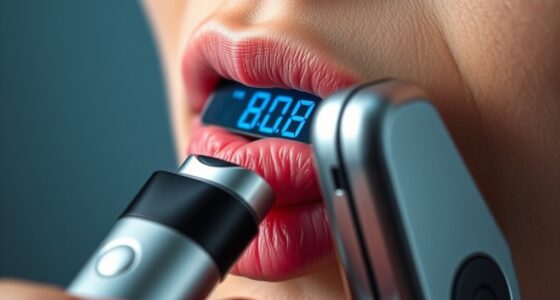
When comparing home sleep apnea testing to lab polysomnography, I find that home tests are quicker, more affordable, and convenient, letting me sleep in my own bed. However, lab studies provide more detailed data that can better diagnose complex sleep issues. If you’re looking for an easier option for straightforward cases, home testing might suit you. But for a complete understanding of sleep health, learning more can help you decide the best choice.
Key Takeaways
- Home testing is more affordable, convenient, and comfortable but may lack detailed data compared to lab polysomnography.
- Lab studies provide comprehensive monitoring, including brain activity and muscle movements, making them the gold standard for complex cases.
- Home sleep apnea tests are suitable for straightforward obstructive sleep apnea diagnosis, while lab tests are better for complex or inconclusive cases.
- Home testing allows sleep in a familiar environment, reducing anxiety and sleep disruption, unlike in-lab studies.
- The choice depends on symptom complexity, diagnostic needs, comfort preferences, and budget considerations.

If you suspect you have sleep apnea, understanding your testing options is the first step toward better sleep and health. When it comes to diagnosing this condition, two main methods stand out: home sleep apnea testing and lab polysomnography. Each has its advantages and drawbacks, so knowing what to expect can help you choose the best route for your situation.
Home sleep apnea testing is often more convenient and less intimidating. You simply spend the night at home, using a portable device that records your breathing, oxygen levels, airflow, and sometimes heart rate. This approach is generally more affordable, with sleep study costs being markedly lower than those of in-lab tests. Plus, it offers the comfort of sleeping in your familiar environment, which can reduce anxiety and lead to more natural sleep patterns. However, home testing may not capture all the nuances of your sleep, especially if you have complex sleep issues or other medical conditions. It’s typically recommended for straightforward cases where obstructive sleep apnea is suspected.
Lab polysomnography, on the other hand, involves spending a night in a sleep center under close supervision. You’re hooked up to multiple sensors that monitor a wide range of physiological signals—brain activity, eye movements, muscle activity, heart rhythm, breathing patterns, and oxygen saturation. This detailed data collection provides a comprehensive picture of your sleep, making it the gold standard for diagnosis. Yet, it’s more costly, with higher sleep study costs, and can be less comfortable for some. Sleeping in an unfamiliar environment might impact your sleep quality, potentially influencing the results. Additionally, advances in sleep monitoring technology continue to improve the accuracy and accessibility of these tests, making them more reliable for complex cases.
When considering these options, think about your specific needs and circumstances. If you’re worried about the cost, home testing often offers a more budget-friendly solution. But if your symptoms are complex or if previous tests were inconclusive, a lab sleep study might be necessary. Also, if you’re exploring CPAP alternatives, knowing your exact diagnosis from a thorough sleep study is vital. Some treatments work better based on specific sleep patterns or severity levels that only a professional sleep study can reveal.
Ultimately, your choice depends on your health, comfort, and budget. Both methods aim to give you an accurate diagnosis so you can start effective treatment. Whether you opt for the convenience of home testing or the detailed insights from a lab polysomnography, understanding your options empowers you to take control of your sleep health.
Frequently Asked Questions
Can Home Tests Detect All Types of Sleep Apnea?
Home sleep tests can’t detect all sleep apnea variants. While they’re convenient, testing limitations mean they might miss complex or central sleep apnea cases, which require a lab setup for thorough monitoring. I recommend seeing a sleep specialist if you suspect more complicated sleep issues. Home tests are great for straightforward obstructive sleep apnea, but they might not capture the full picture for every patient.
How Accurate Are Home Sleep Apnea Tests Compared to Labs?
Home sleep apnea tests are pretty accurate, but they can’t match the detail of lab polysomnography. While I find that home tests give a good snapshot of sleep quality and are convenient, they might lack some precision, especially if mask comfort or movement affects results. For most, they’re a reliable first step, but if issues persist, a sleep lab provides the thoroughness needed for a definitive diagnosis.
Are There Specific Conditions That Require Lab-Based Testing?
If you have complex health issues or suspected conditions like heart problems, I recommend lab-based testing. Specialized equipment used in labs handles complex cases better, providing more detailed data. For most straightforward sleep apnea cases, home tests work well, but if your situation involves other health concerns, a lab gives a clearer, more thorough picture. Always consult your healthcare provider to determine the best testing option for your needs.
What Are the Costs Differences Between Home and Lab Testing?
Home sleep testing is generally more affordable than lab polysomnography, mainly due to lower equipment costs and fewer facility fees. Insurance coverage often favors home testing because it’s less expensive and more convenient, reducing costs for both patients and providers. While lab tests can be pricier due to specialized equipment and personnel, home tests offer a cost-effective alternative, especially for straightforward cases where insurance approval is secured.
How Long Does It Take to Get Results From Each Testing Method?
The sleep study duration varies, but I usually get results faster with home testing—often within a few days—compared to lab polysomnography, which can take up to a week. The result turnaround depends on the method; home tests are quicker because they’re processed remotely, while lab studies require additional analysis. Overall, I find home testing offers a more convenient and speedy way to get sleep study results.
Conclusion
Ultimately, choosing between home sleep apnea testing and lab polysomnography depends on your specific needs. While home tests offer convenience, they might miss some details only a lab can catch. As the saying goes, “A chain is only as strong as its weakest link,” reminding us that thorough diagnosis is key. Trust your healthcare provider’s guidance, and remember that the right test can make all the difference in managing your sleep health effectively.