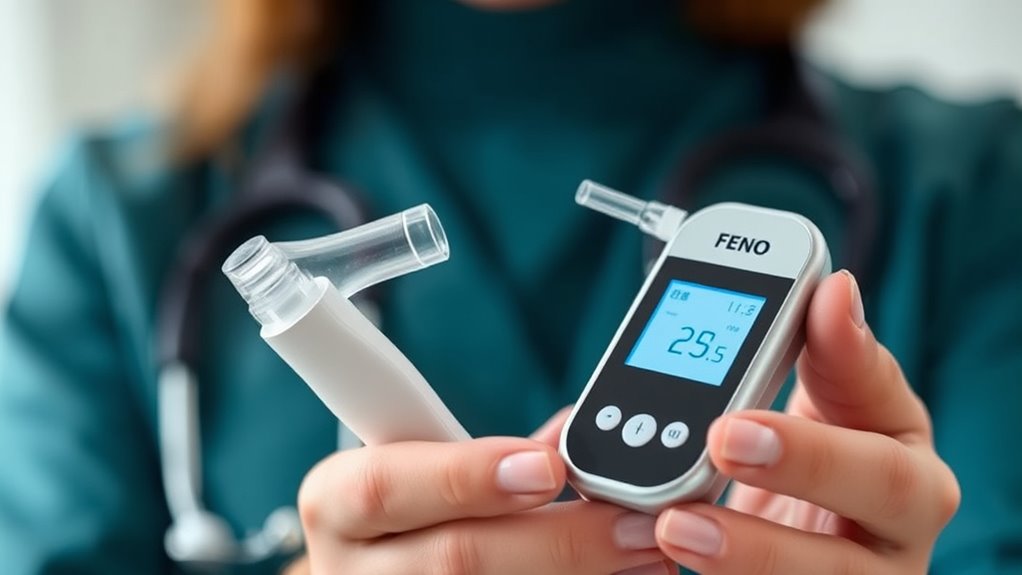

The FeNO test measures the level of nitric oxide in your exhaled air, giving a quick and painless way to check for airway inflammation linked to asthma. It helps diagnose the condition, monitor its severity, and assess how well your treatment is working—all in just a few minutes. Because it’s non-invasive and provides instant results, it’s a handy tool for managing asthma effectively. Keep going to discover more about how this test can benefit you.
Key Takeaways
- The FeNO test measures nitric oxide in exhaled air to assess airway inflammation associated with asthma.
- Elevated FeNO levels indicate eosinophilic inflammation, helping confirm asthma diagnosis.
- The test offers quick, non-invasive results to monitor asthma severity and treatment effectiveness.
- It aids in early detection of asthma flare-ups and guides personalized management strategies.
- FeNO testing is suitable for both children and adults, facilitating regular inflammation monitoring.
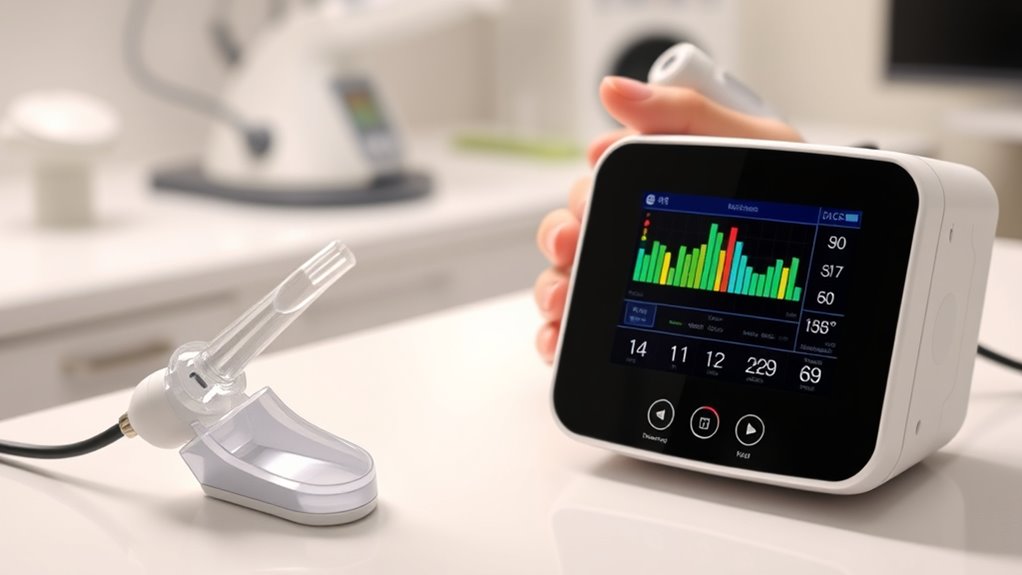
Have you ever wondered how doctors measure airway inflammation quickly and non-invasively? It’s fascinating because, with a simple test called the FeNO test, they can gather vital information about your respiratory health in just minutes. The FeNO test focuses on measuring airway markers, specifically the levels of fractional exhaled nitric oxide (FeNO), which serve as indicators of inflammation within the airways. This approach provides a snapshot of your respiratory health without the need for invasive procedures like biopsies or complex imaging.
Discover how the quick, non-invasive FeNO test reveals airway inflammation in minutes.
When I first learned about the FeNO test, I was surprised at how straightforward it is. You simply breathe into a device that analyzes the nitric oxide concentration in your exhaled air. Elevated levels of FeNO often point to eosinophilic airway inflammation, a hallmark of asthma and other respiratory conditions. This makes the test especially valuable in diagnosing asthma, monitoring its severity, and evaluating how well treatment is working. It’s a tool that empowers both doctors and patients to understand and manage airway health more effectively.
One of the biggest advantages of the FeNO test is its ability to provide immediate results. Unlike other diagnostic methods that require lab processing or waiting for symptoms to develop, this test gives instant feedback on airway markers. This immediacy helps clinicians make more informed decisions during the same appointment, whether that’s adjusting medication doses or exploring other potential causes of respiratory issues. For patients, it means fewer visits and quicker insights into their respiratory health.
Another aspect I appreciate is its non-invasive nature. Many respiratory assessments can be uncomfortable or invasive, but the FeNO test involves only a simple breath sample. It’s safe, painless, and suitable for people of all ages, including children. This simplicity encourages more frequent monitoring, which is essential for managing chronic conditions like asthma effectively. Regular testing can help catch flare-ups early or confirm that current treatments are keeping inflammation under control.
Additionally, understanding the role of ethical hacking methodologies in cybersecurity can help organizations better protect sensitive data and infrastructure.
Frequently Asked Questions
How Long Does a Feno Test Take to Perform?
A FeNO test usually takes about 10 to 15 minutes to perform. The procedure steps are simple: I have to sit comfortably, then blow into a tube after a quick explanation. The device measures the nitric oxide in my breath, which helps assess airway inflammation. It’s quick, non-invasive, and straightforward, making it easy to fit into my appointment without much hassle.
Are There Any Special Preparations Needed Before the Test?
You don’t need much to prepare for a FeNO test—just avoid eating or drinking anything except water for about an hour beforehand, and tell your doctor if you’re on inhalers or steroids, as you might need to adjust your medication. No fasting or complex prep is required. Just come relaxed and ready to breathe deeply; it’s quick and easy, and it could make a big difference in managing your asthma!
Can Children Safely Undergo the Feno Test?
Yes, children can safely undergo the FeNO test. I guarantee pediatric safety by following proper protocols, and I find the test highly feasible for kids because it’s quick and non-invasive. Most children tolerate it well, especially when explained clearly. It’s a valuable tool for evaluating airway inflammation in young patients, helping us tailor asthma treatment effectively without causing discomfort or risk.
How Accurate Is the Feno Test Compared to Other Methods?
Think of the FeNO test like a quick, reliable compass for asthma inflammation. It’s highly accurate in measuring airway inflammation, often surpassing traditional methods like spirometry for diagnostic reliability. I’ve seen it catch issues early when other tests missed subtle signs. While no test is perfect, FeNO provides a non-invasive, consistent way to monitor inflammation, making it a valuable tool alongside other assessments for a clearer picture of asthma control.
What Are the Costs and Insurance Coverage for the Feno Test?
Insurance coverage for the FeNO test varies, but many plans do include it, especially when recommended by a doctor for asthma management. Test costs can range from $50 to $150, depending on the provider and location. I suggest checking with your insurance company beforehand to understand your coverage and any out-of-pocket expenses. It’s often worth doing so to ensure you’re financially prepared before scheduling the test.
Conclusion
Think of the FeNO test as a window into your airways, revealing hidden inflammation that might otherwise go unnoticed. It’s quick, painless, and provides valuable insight into managing asthma effectively. Just like a lighthouse guiding ships safely through rough seas, the FeNO test helps me steer my treatment in the right direction. If you’re living with asthma, consider this test your trusty beacon—illuminating your path to clearer, healthier breathing every step of the way.