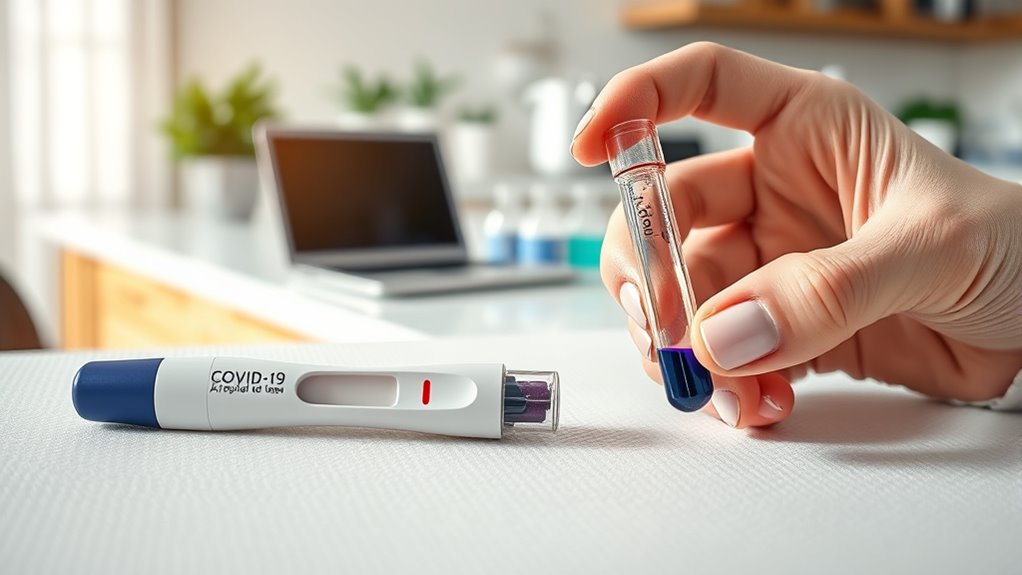

At-home COVID-19 antigen tests are quick and affordable but tend to have lower sensitivity, meaning they might miss some infections, especially early or late in the illness. PCR tests are more sensitive and accurate, but they take longer and cost more. Antigen tests are great for rapid screening, while PCR tests are better for definitive diagnosis. If you want to understand how these tests compare for your situation, keep exploring the details below.
Key Takeaways
- Antigen tests are less sensitive but provide rapid results, suitable for quick screening at home.
- PCR tests have higher sensitivity and specificity, making them ideal for definitive diagnosis.
- Positive antigen results are generally reliable, but negative results may require follow-up PCR testing.
- Antigen tests are more affordable and accessible, delivering results within 15-30 minutes.
- PCR tests, though costlier and slower, are preferred for high-accuracy needs like travel or medical decisions.

Have you ever wondered how to quickly find out if you might have COVID-19 without leaving your home? That’s a common concern nowadays, and thankfully, at-home testing options make it easier than ever. When choosing between an at-home COVID-19 antigen test and a PCR test, understanding their test accuracy, cost comparison, and ideal use cases is essential. Both tests have their strengths, but they serve different needs depending on how quickly you want results and how reliable those results need to be.
Antigen tests are popular because they’re fast, usually giving results within 15-30 minutes. They work by detecting specific viral proteins, which means they’re good at catching infections when the viral load is high. However, their test accuracy, especially sensitivity, is somewhat lower compared to PCR tests. This means they can sometimes produce false negatives, especially in the early or late stages of infection when viral levels are lower. Despite this, their high specificity — the ability to correctly identify those without the virus — makes positive results quite dependable. If you test positive on an antigen test, it’s usually a good sign you’re infected, and further confirmation isn’t always necessary.
On the other hand, PCR tests are considered the gold standard for COVID-19 detection. They detect the virus’s genetic material, which allows for higher sensitivity and greater test accuracy. This means PCR tests are much better at catching infections early, even when viral loads are low. The downside is that PCR tests typically require specialized lab processing, leading to longer turnaround times—often 24-72 hours—and higher costs. When comparing the cost, antigen tests tend to be more affordable and accessible for at-home use, making them ideal for quick screening. PCR tests, though more expensive, offer a higher reliability, which is vital if you need definitive confirmation, such as before traveling or attending large gatherings.
Additionally, the role of the contrast ratio in test detection can be loosely compared to how sensitive a test is in identifying true positives, especially in low viral load situations. In terms of use cases, if you’re feeling symptomatic or have had recent exposure, an antigen test can provide a rapid initial indication. However, if you need the most accurate result, especially in situations where a false negative could have serious consequences, a PCR test is the better choice despite the longer wait and higher cost. Ultimately, your decision should balance the need for quick results with the importance of test accuracy. Both tests are valuable tools in managing COVID-19 at home, but understanding their differences helps you choose the right one for your specific situation.
Frequently Asked Questions
How Long Do At-Home Tests Remain Effective After Purchase?
Typically, at-home COVID-19 tests remain effective for about 6 to 12 months after purchase, depending on the expiration period printed on the box. I always check the expiration date before use and confirm proper storage conditions—keeping them in a cool, dry place. If a test is past its expiration date, it’s best to get a new one, as effectiveness can decline and accuracy may be compromised.
Are There Differences in Test Accuracy for Vaccinated Individuals?
When it comes to vaccinated individuals, test accuracy can vary. Vaccination impact often means lower viral loads, making it trickier for antigen tests to detect infection early. I’ve noticed that PCR tests tend to remain reliable regardless of vaccination status, thanks to their higher sensitivity. So, if you’re vaccinated and symptomatic, I recommend a PCR for precise, powerful proof, even if an antigen test shows a negative result.
Can At-Home Tests Detect New COVID-19 Variants Accurately?
Yes, at-home tests can detect new COVID-19 variants, but their reliability fluctuates. Mutant detection depends on whether the test targets the virus’s specific proteins that mutate less frequently. While many at-home antigen tests are quite reliable, some newer variants may affect accuracy. I recommend checking the latest updates from health authorities to guarantee you’re using a test that maintains good reliability for mutant detection, especially as new variants emerge.
What Are Common User Errors That Affect Test Results?
I find that common user errors, like sample errors or user mistakes, can really affect test results. For example, not collecting enough sample, touching the swab tip, or not following timing instructions can lead to inaccurate results. I always remind myself to read the instructions carefully, make certain proper sample collection, and wait the full recommended time to get the most reliable outcome.
How Should I Dispose of Used At-Home COVID-19 Tests Safely?
Ever wondered how to dispose of used COVID-19 tests properly? I always make sure to follow proper disposal methods to minimize environmental impact. I double-bag the test components and throw them in the trash, avoiding recycling. It’s essential to handle these tests carefully to prevent contamination. Proper disposal helps protect others and the environment. Do you know the best way to dispose of your tests safely and responsibly?
Conclusion
In conclusion, at-home COVID-19 antigen tests are convenient but less sensitive than PCR tests, with a sensitivity of around 85%. Notably, studies show that antigen tests are most accurate when you’re symptomatic, catching about 90% of cases. So, if you need quick results and are feeling sick, they’re a good choice. But for the most reliable detection, especially if asymptomatic, PCR tests remain the gold standard. Stay informed and choose what’s best for your situation!