Regular cleaning methods often fail to eliminate pet urine odors because they only cover surface stains or mask smells, leaving behind proteins and uric acid crystals that keep producing odors on a microscopic level. To truly remove the smell, you need to target those residues with enzyme cleaners that break down organic compounds and odor neutralizers that deactivate odor molecules. If you’re curious about effective strategies, more details are waiting just beneath the surface.
Key Takeaways
- Traditional cleaning methods often only mask pet urine odors or push them deeper into surfaces, causing recurrence.
- Pet urine residues include proteins and uric acid crystals that microscopic cleaning alone cannot eliminate.
- Enzyme cleaners effectively break down organic compounds, neutralizing odors at their source when used properly.
- Odor neutralizers deactivate odor molecules chemically or biologically, preventing lingering or recurring smells.
- Deep, repeated cleaning of all affected areas, including padding and beneath surfaces, is essential for complete odor removal.
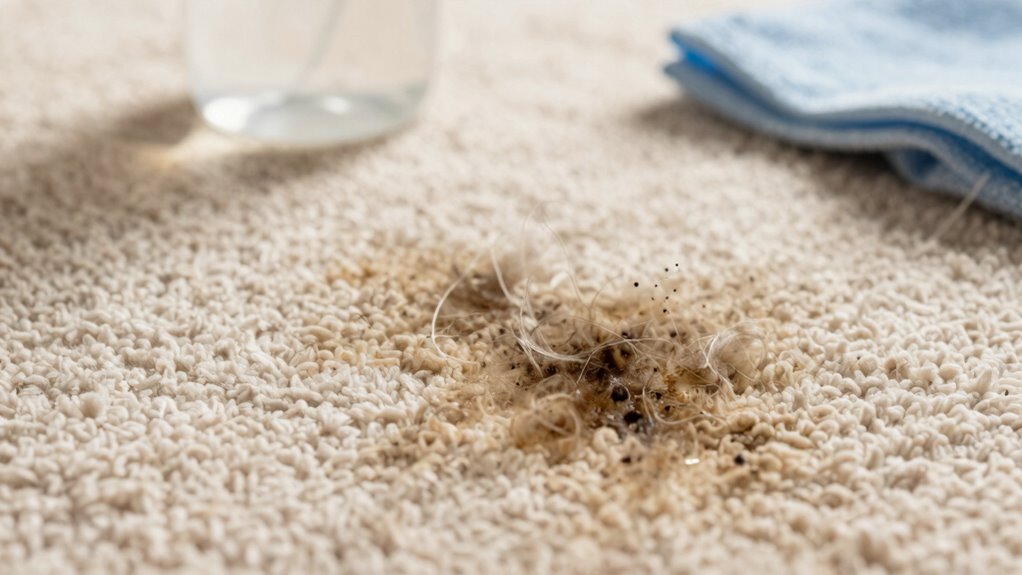
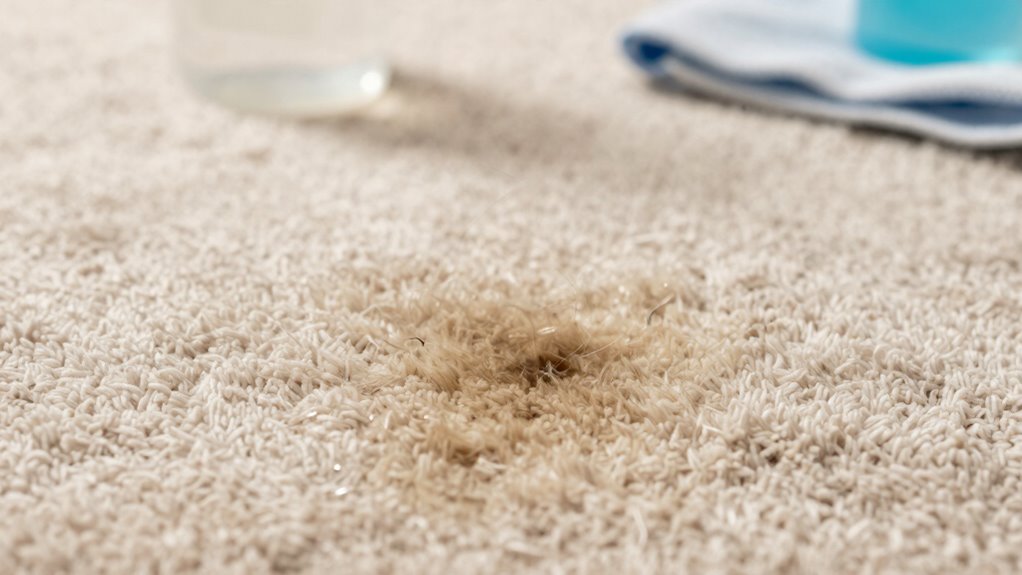
Pet urine odor can be stubborn and difficult to eliminate, especially if your pet has repeatedly marked the same spot. Many traditional cleaning methods only mask the smell temporarily or push the odor deeper into surfaces, making it even harder to remove. To truly get rid of the smell, you need to understand what’s happening at the microscopic level. When pet urine seeps into carpets, upholstery, or flooring, it leaves behind proteins, uric acid crystals, and other compounds that continue to produce odor even after cleaning. Regular soap and water won’t break down these substances effectively, which is why the smell often returns.
This is where enzyme cleaners come into play. These specialized products contain enzymes that target and break down the organic compounds responsible for the odor. Unlike basic cleaners, enzyme cleaners actively digest the proteins and uric acid, neutralizing the smell at its source. When used correctly—allowing enough time for the enzymes to work—they offer a much more effective solution than traditional detergents. Applying enzyme cleaners directly to the affected area, following the instructions, ensures that the enzymes have ample opportunity to do their job. You might need to repeat the process a few times for stubborn stains, but the results are worth it.
Alongside enzyme cleaners, odor neutralizers are essential tools in your cleaning arsenal. These products don’t just mask the smell; they chemically or biologically neutralize the odor molecules, rendering them odorless. Many odor neutralizers contain natural or synthetic compounds that bind to the odor molecules and deactivate them, preventing the smell from lingering or returning. When combined with enzyme cleaners, odor neutralizers can provide a thorough solution—first breaking down the source of the smell, then neutralizing any remaining particles. Additionally, understanding the microscopic level of urine residue can help you choose more effective cleaning strategies.
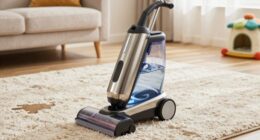
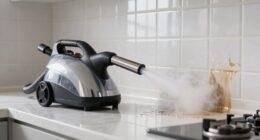
It’s also crucial to clean thoroughly and reach all affected areas, including underneath carpets and inside padding, where urine can seep unnoticed. Using a wet vacuum or steam cleaner can help extract residual moisture and odor from deep within the fibers. Remember, patience and persistence are key. Simply cleaning once usually isn’t enough; repeated treatments with enzyme cleaners and odor neutralizers will give you the best chance of fully eradicating the smell.
In the end, understanding the science behind pet urine odor helps you choose the right products and techniques. By focusing on enzyme cleaners to break down the organic compounds and odor neutralizers to eliminate residual smell, you’re more likely to succeed in creating a fresh, odor-free environment.
Frequently Asked Questions
Can Pet Urine Odor Be Completely Eliminated From Carpets?
Yes, you can eliminate pet urine odor from carpets completely. First, remove urine residue by blotting and using an enzymatic cleaner that breaks down the odor-causing proteins. Since odor absorption happens deep within the fibers, it’s essential to treat the stain thoroughly. Repeat this process if needed, ensuring all residue is gone. Proper cleaning not only removes visible stains but also prevents lingering odors.
Are Commercial Cleaning Products Effective Against Deep Urine Stains?
Commercial cleaning products can be somewhat effective against surface stains, but they often fall short on deep urine stains. Chemical cleaners may mask odors temporarily, but enzymatic solutions are more effective—they break down the proteins in urine that cause lingering smells. For best results, use enzymatic solutions directly on the stain, allowing ample time for them to work, and follow up with a thorough cleaning to eliminate both the stain and odor.
How Long Does It Take for Urine Odor to Fully Dissipate Naturally?
It can take anywhere from a few days to several weeks for urine odor to fully dissipate naturally, depending on factors like temperature, humidity, and the surface. Natural decomposition gradually breaks down the urine, but odor longevity varies. To speed up the process, guarantee good ventilation and allow sunlight to reach the area. Patience is key, as persistent odors may need additional treatment beyond natural decomposition.
Does Pet Urine Odor Return After Cleaning With Certain Methods?
Yes, pet urine odor can return after cleaning if you only mask the smell or don’t fully eliminate it. Using enzyme breakdown solutions targets the source of the odor, breaking down the proteins that cause it. Avoid relying solely on odor masking products, as they don’t address the root issue. Proper cleaning with enzyme-based cleaners guarantees the odor won’t come back, giving you a more lasting solution.
Are There Any Home Remedies Proven to Neutralize Pet Urine Smell?
Think of your home as a battlefield where odors try to hide. Natural remedies like vinegar and baking soda can help, but for real success, enzymatic solutions are your best allies. They break down the proteins causing the smell, offering lasting neutralization. While home remedies can temporarily mask odors, enzymatic cleaners attack the root, ensuring the pet urine smell doesn’t return, leaving your space fresh and odor-free.
Conclusion
You’ve tried sprays, you’ve scrubbed, you’ve hoped for fresh air. But true removal comes from understanding, from patience, from the right approach. You deserve a home free of lingering pet urine odor. You need solutions that penetrate deep, that break down the smell at its source. Because cleaning isn’t just about surface shine—it’s about restoring comfort, reclaiming freshness, and creating a space where you can breathe easy again. Trust the process, and let your home breathe anew.