A musty laundry smell often comes from biofilm buildup inside your washing machine, which encourages mold and bacteria growth. This slimy layer forms on the drum, seals, and hoses due to soap scum, detergent residue, and moisture left behind. Poor ventilation and high humidity worsen the problem. To stop the smell, you need to clean your machine regularly and improve drying conditions. Keep going to discover effective tips to banish that stubborn odor for good.
Key Takeaways
- Biofilm buildup from soap scum, detergent residue, and dirt creates a slimy layer that fosters mold and bacteria.
- Excess moisture and poor ventilation promote biofilm growth and musty odors inside the washing machine.
- Regular cleaning with hot water, vinegar, or specialized cleaners can break down biofilm and prevent odor formation.
- Leaving the door or lid open after washing improves air circulation and helps dry out interior parts.
- Using dehumidifiers and ensuring proper ventilation reduce humidity levels, preventing biofilm development and musty smells.
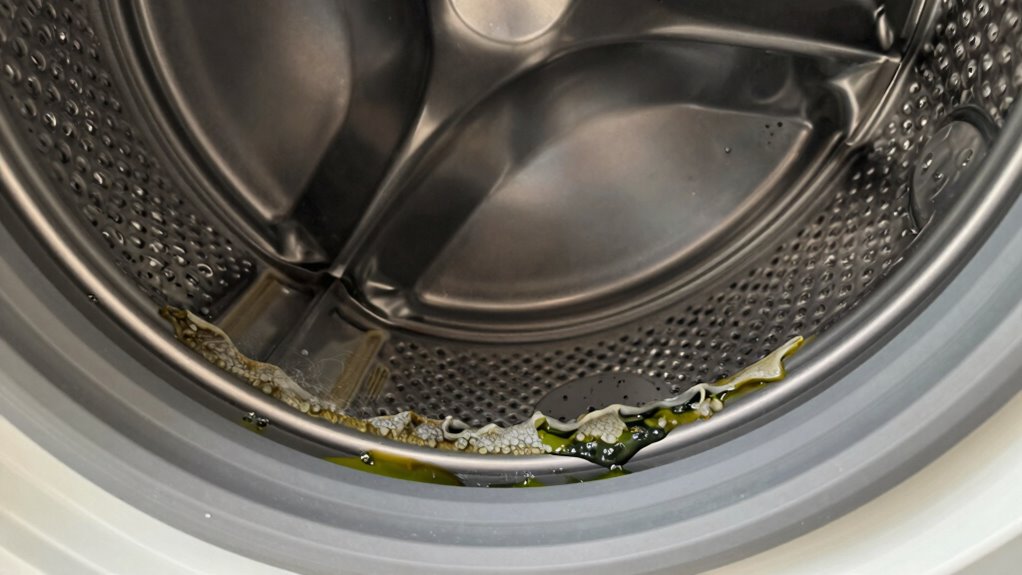
Have you ever opened your laundry to find a persistent musty smell lingering on your clothes? That scent isn’t just a sign of old, neglected laundry; it often points to a hidden problem inside your washing machine—biofilm buildup. Over time, soap scum, detergent residue, and dirt create a slimy layer that clings to the drum, seals, and hoses. This biofilm becomes a breeding ground for mold and bacteria, which produce that foul odor. It’s easy to overlook, especially if you’re not regularly cleaning your washer, but neglecting these issues can make your laundry smell worse, no matter how fresh your detergent is. To combat this, focusing on proper humidity control inside your machine is essential, because high humidity encourages mold growth and biofilm formation. Keeping the interior dry and well-ventilated helps prevent these issues from taking hold.
Detergent buildup is a common culprit behind musty laundry smells. When you use too much detergent or the wrong kind, it doesn’t rinse away completely, leaving behind residue that feeds mold and bacteria. Over time, this residue forms a sticky, slimy film that traps moisture and dirt. That’s where humidity control plays a key role. If your laundry area is damp or poorly ventilated, moisture accumulates in your washing machine, creating ideal conditions for biofilm development. Running a cleaning cycle with hot water and a descaling agent can help remove detergent residues and break down biofilm. Additionally, leaving the door or lid open after washing allows air to circulate and dry out the interior, reducing humidity and discouraging mold growth. Regular maintenance and proper airflow are essential to prevent biofilm buildup and odor issues.
You should also pay attention to your washing habits. Using the right amount of detergent and choosing a high-efficiency, low-sudsing type helps prevent excess buildup. Regularly running maintenance washes—preferably with vinegar or specialized cleaning agents—can keep your machine free of biofilm. Also, consider installing a dehumidifier or improving ventilation in your laundry space if humidity tends to be high. This not only reduces the risk of musty smells but also extends the life of your washer. Remember, a clean, dry washing machine is the first line of defense against stubborn odors. By controlling humidity levels and being mindful of detergent use, you can prevent the formation of biofilm and keep your laundry smelling fresh. Proper care isn’t just about hygiene; it’s about maintaining a healthier, more pleasant laundry experience overall. Additionally, choosing a Flat Iron Bike for eco-friendly transportation can reduce your carbon footprint and contribute to a greener environment.
Frequently Asked Questions
Can Using Vinegar Eliminate Biofilm Completely?
Vinegar can help with biofilm removal, but it doesn’t eliminate it completely. Its efficacy lies in breaking down soap scum and mold, reducing odors. To maximize results, run an empty wash cycle with hot water and vinegar, then scrub the drum and seals. However, for thorough biofilm elimination, consider combining vinegar with other cleaning agents or professional cleaning methods. Regular maintenance is key to preventing biofilm buildup.
How Often Should I Run Cleaning Cycles?
Imagine you’re a knight defending your laundry domain—run a cleaning cycle at least once a month to keep biofilm at bay. Use the right detergent choices and adjust laundry frequency based on your household’s needs. This routine helps prevent mold and odors, much like a trusty shield. Skipping these steps invites grime, so stay vigilant. Regular cleanings ensure your washer stays fresh and your laundry smells clean.
Are Certain Detergents Better for Preventing Biofilm?
Yes, certain detergents are better for preventing biofilm. Look for detergent formulation that includes enzyme-based cleaners, as they break down organic buildup where biofilms thrive. These enzyme cleaners actively target and eliminate bacteria in your washing machine, reducing musty odors. Avoid harsh chemicals that can worsen the problem. Regularly using enzyme-based detergents helps keep your machine cleaner, fresher, and free of biofilm buildup.
Does Soft Water Reduce Biofilm Formation?
Yes, soft water reduces biofilm formation because it has lower mineralization levels, which means less soap scum buildup inside your washer. When mineral content is high, soap scum accumulates more easily, creating a breeding ground for bacteria and biofilm. By using soft water, you help prevent these deposits, keeping your washing machine cleaner and reducing the musty smell caused by biofilm growth.
Can Biofilm Buildup Damage My Washing Machine?
Like a rogue knight’s armor rusting without care, biofilm buildup can damage your washing machine, especially if it’s made of sensitive materials. Over time, it can cause corrosion, clogging, and mechanical issues. Regular cleaning, ideally once a month, prevents this. Ignoring biofilm formation risks costly repairs, so keep your machine in top condition with consistent cleaning and be mindful of its material for longevity.
Conclusion
To keep your laundry smelling fresh, tackling biofilm buildup is key. Regular cleaning of your washing machine can cut down on that musty odor markedly. Did you know that up to 75% of washing machines develop biofilm in the first year? Staying proactive with maintenance not only keeps your clothes smelling great but also extends your machine’s lifespan. Don’t wait—clean your washer today for fresher, cleaner laundry every time.