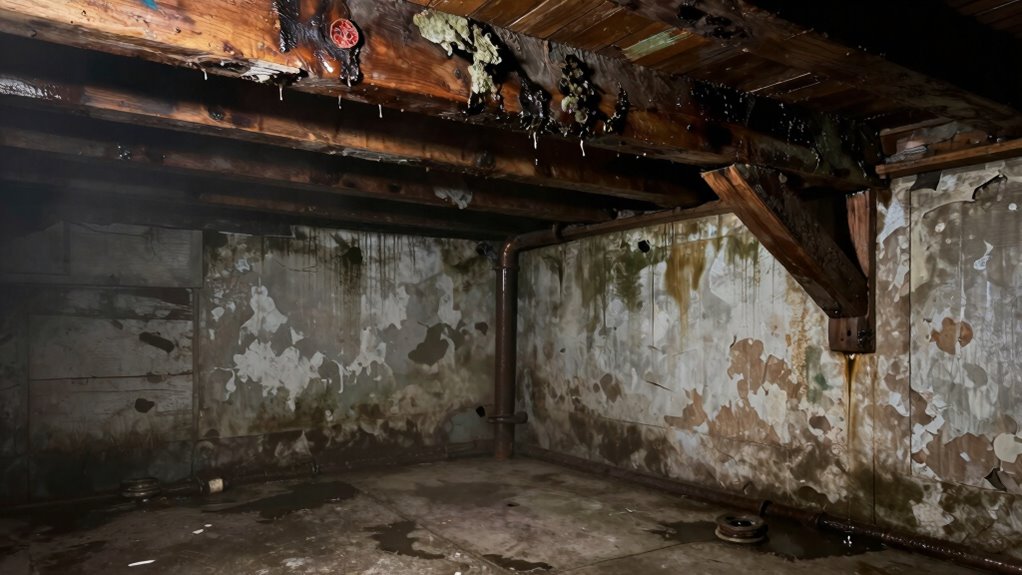

To get rid of that musty basement smell, start by checking for moisture sources like leaky pipes, foundation cracks, or standing water after heavy rains. Make certain your gutters drain properly and the basement has good ventilation. Use a dehumidifier to keep humidity low and inspect for mold or water seepage regularly. Addressing these issues quickly can make a big difference; keep going to discover more tips for a fresher, drier space.
Key Takeaways
- Check for leaks around pipes, windows, and foundation cracks that allow water entry.
- Inspect for standing water or pooling after heavy rains, indicating drainage issues.
- Ensure proper ventilation is in place to reduce humidity and stale air buildup.
- Look for damp or moldy surfaces, especially in hidden or poorly ventilated areas.
- Identify sources of high humidity, such as water intrusion or condensation, and address promptly.
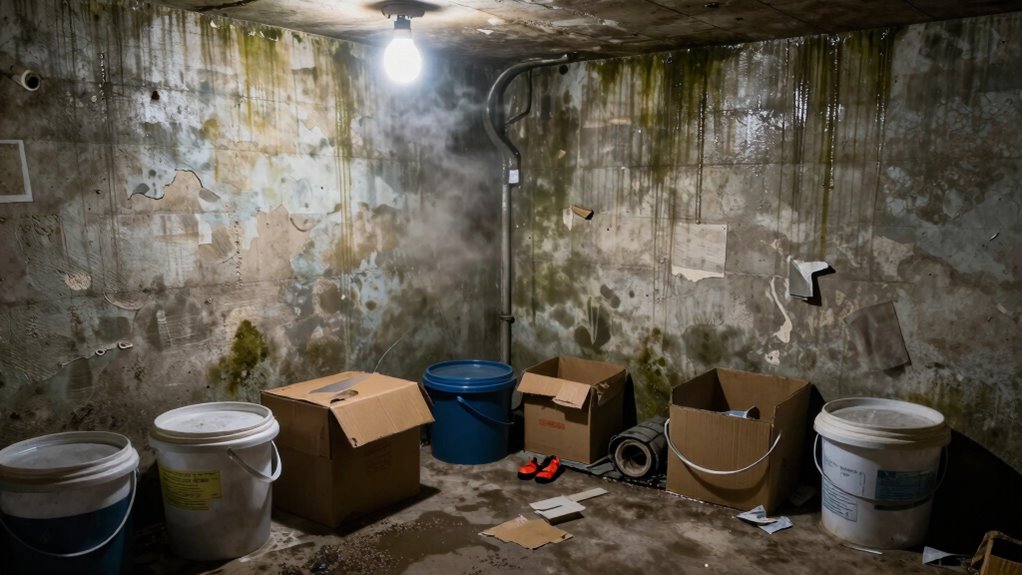
A musty basement smell can quickly become an overwhelming nuisance, making your space feel damp, stale, and uninviting. The good news is that many of these odors stem from moisture issues that are often fixable with some straightforward steps. One of the most effective ways to combat this problem is by improving ventilation. When your basement lacks proper airflow, humidity levels tend to rise, creating an ideal environment for mold and mildew to thrive. By increasing ventilation—whether through installing vents, using exhaust fans, or opening windows—you promote better air circulation, which helps dry out damp surfaces and reduces odor buildup. Not only does this make the space smell fresher, but it also plays a vital role in mold prevention, since mold spores need moisture to grow.
Improving basement ventilation helps reduce musty odors and prevents mold growth naturally.
To start, identify areas where air might be stagnant or blocked. Installing or repairing vents can make a significant difference, ensuring that moist air escapes and dry air enters. Using a dehumidifier can also help maintain ideal humidity levels, ideally between 30-50%, which discourages mold growth. Remember, mold isn’t always visible, but its presence often correlates with persistent musty smells. If you notice a mildew-like aroma, it’s a clear sign that mold prevention measures need to be intensified. Regularly cleaning surfaces with mold-inhibiting solutions and controlling moisture levels can prevent spores from settling and multiplying. Proper ventilation is essential not only for odor control but also for maintaining a healthy indoor environment.
Check your basement for sources of excess moisture, such as leaks around pipes, foundation cracks, or pooling water after heavy rains. Fixing these issues promptly stops water from seeping into your space and creating the damp conditions mold needs. Installing a sump pump or improving drainage around your foundation may also be necessary if water intrusion is a recurring problem. Remember, good ventilation isn’t just about air movement—it’s about creating an environment where moisture can’t accumulate. Combining ventilation improvements with moisture control strategies is your best defense against persistent odors and mold growth.
Finally, don’t underestimate the power of routine maintenance. Regularly inspecting your basement and cleaning vents or filters ensures that airflow remains unimpeded. This proactive approach keeps humidity levels in check and prevents mold spores from taking hold. By prioritizing ventilation improvement and mold prevention, you can transform your basement from a damp, musty space into a clean, fresh, and inviting area that’s safe and comfortable to use.
Frequently Asked Questions
How Long Does It Take to Eliminate a Musty Basement Smell?
It typically takes a few days to a week to eliminate a musty basement smell, depending on the severity. You should improve air circulation by opening windows and using fans, which helps speed up odor absorption. Regular cleaning and dehumidifying also make a difference. Consistently ventilating the space and using odor absorbers like charcoal or baking soda will gradually remove the smell, leading to a fresher, cleaner basement environment.
Can Ventilation Alone Remove a Persistent Musty Odor?
Think of ventilation as opening a window to release a trapped butterfly—while it helps, it might not fully clear the lingering musty odor. Ventilation effectiveness varies; it can reduce surface moisture and improve air flow, but odor absorption often requires deeper solutions like cleaning or dehumidifying. To truly eliminate the smell, combine ventilation with targeted efforts, ensuring fresh air replaces stale, musty air completely.
Are There Natural Remedies to Reduce Moisture in Basements?
Yes, you can use natural remedies to reduce basement moisture. DIY dehumidifiers like placing bowls of silica gel or activated charcoal help absorb excess humidity. Natural moisture absorbers such as charcoal briquettes or rock salt are also effective. Regularly replacing or recharging these materials keeps moisture levels low, preventing mold and musty odors. Combine these methods with good ventilation for the best results in maintaining a dry, fresh basement environment.
How Often Should I Check for Mold in My Basement?
Think of your basement as a protected treasure chest. You should check for mold at least once a month, especially during humid seasons when basement humidity rises. Regular inspections help you catch early signs of mold, preventing it from spreading. Keep an eye out for discoloration or a musty smell, and practice mold prevention techniques. Staying vigilant guarantees your basement remains safe, dry, and mold-free, preserving your home’s hidden treasure.
What Professional Services Are Recommended for Severe Odors?
For severe odors, you should consider professional mold remediation and odor removal services. These specialists have the expertise and equipment to identify hidden mold sources and eliminate persistent smells effectively. They use advanced techniques like HEPA filtration and ozone treatments to ensure your space is thoroughly cleaned and odors are permanently removed. Hiring professionals guarantees a safer, healthier environment and peace of mind, especially when odors persist despite regular cleaning efforts.
Conclusion
To banish that musty basement smell, you need to identify and eliminate the moisture sources first. Think of your basement like a sponge—if it’s soaked, it’ll always smell damp. By checking for leaks, ventilation issues, and hidden mold, you can dry things out and restore freshness. Don’t let hidden moisture turn your basement into a swamp; tackle the problem now to keep your space smelling clean and feeling comfortable.