

Mattress odors often come from sweat, skin oils, and dust mites feeding on organic debris. Sweat and oils seep into the mattress over time, while dust mites thrive on dead skin cells, creating unpleasant smells and possible allergens. Without proper cleaning and ventilation, odors can worsen. To keep your mattress fresh, address spills promptly, use cleaning techniques like baking soda or vinegar, and maintain good hygiene practices. Keep exploring to discover how to eliminate these odors effectively.
Key Takeaways
- Sweat and skin oils seep into mattresses, causing persistent odors and creating a breeding ground for bacteria and mold.
- Dust mites feed on shed skin cells, their waste contributing to musty smells and potential allergy triggers.
- Regular cleaning, including washing bedding and vacuuming, helps remove skin debris and reduce dust mite populations.
- Baking soda and vinegar treatments neutralize odors caused by sweat, skin oils, and dust mite waste.
- Proper ventilation and prompt spill cleanup prevent moisture buildup, minimizing mold growth and odor development.
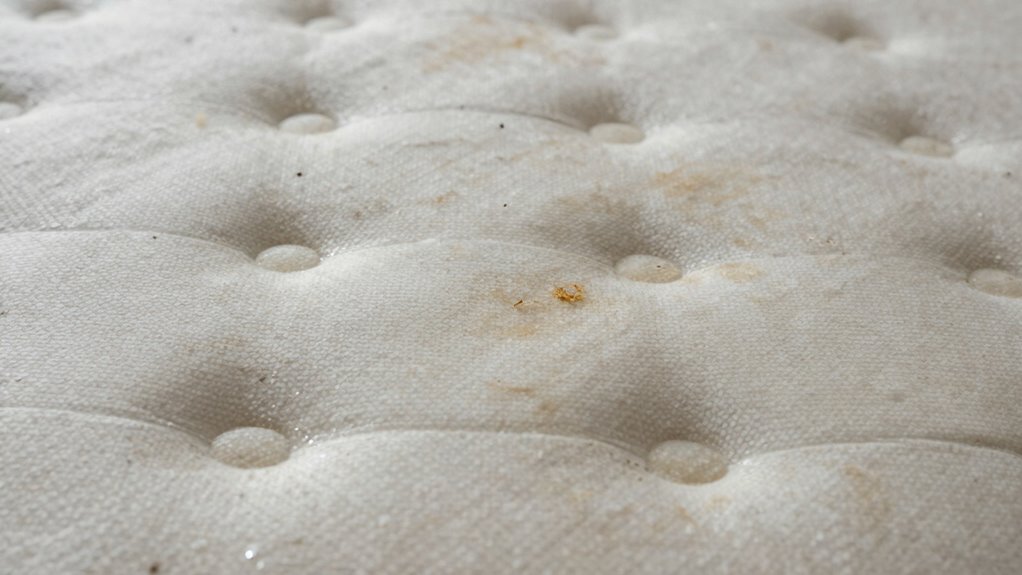
If your mattress smells unpleasant, it can disrupt your sleep and create an uncomfortable environment. That persistent odor often stems from everyday factors like sweat, skin cells, dust mites, and moisture buildup. The good news is that with proper bed cleaning and odor elimination techniques, you can restore freshness and guarantee your mattress remains a healthy, inviting place to rest. Addressing these smells promptly not only improves comfort but also promotes better hygiene and sleep quality. Regular maintenance, including maximizing your mattress’s potential, can significantly reduce odors and extend the lifespan of your mattress. Start by understanding the main causes of mattress odors. Sweat and body oils seep into the mattress over time, providing a breeding ground for bacteria and mold, which intensify unpleasant smells. Dead skin cells shed during sleep accumulate on the surface, attracting dust mites—tiny creatures that feed on organic debris. Dust mites produce waste that can trigger allergies and contribute to the musty scent. Moisture from humidity or spills worsens the situation, creating an environment ripe for mold growth. Recognizing these factors helps you target your cleaning efforts effectively. To tackle odor elimination, begin with a thorough bed cleaning routine. Strip off all bedding, including sheets, pillowcases, and blankets, and wash them in hot water with a good detergent. This step removes surface dirt, oils, and allergens. Next, sprinkle baking soda generously over the entire mattress surface. Baking soda acts as a natural deodorizer, absorbing moisture and neutralizing odors. Let it sit for at least 30 minutes—longer if possible—before vacuuming it off thoroughly. This simple step can profoundly reduce musty smells caused by sweat, skin cells, and dust mites. For deeper odor removal, consider using specialized mattress cleaners or disinfectants designed to eliminate bacteria and mold. Spray lightly and allow proper drying before putting your bedding back on. Additionally, airing out your mattress regularly by opening windows and exposing it to sunlight helps reduce moisture and inhibits mold growth. If you notice persistent odors, you might also apply a mixture of white vinegar and water or use commercial odor eliminators formulated for mattresses. These products can provide extra freshness without harsh chemicals. Maintaining a regular cleaning schedule is essential to prevent odors from returning. Rotate your mattress periodically, keep your bedroom well-ventilated, and wash bedding frequently. Using a mattress protector can also act as a barrier against sweat, skin, and dust mites, making your bed easier to keep clean. By incorporating these practices, you’ll create a cleaner, fresher sleeping environment. Remember, consistent bed cleaning and odor elimination are key to keeping your mattress smelling fresh and ensuring you get the restful sleep you deserve each night.
Frequently Asked Questions
How Long Does It Take for Mattress Odors to Fully Dissipate?
It usually takes about 24 to 72 hours for mattress odors to fully dissipate if you use proper ventilation techniques. To speed up odor absorption, open windows and use fans to increase airflow. Regularly airing out your mattress helps break down odor-causing particles and reduces lingering smells. Keep in mind, the time varies depending on the odor’s strength and ventilation effectiveness, so patience is key.
Can Specific Mattress Materials Contribute More to Persistent Odors?
Yes, certain mattress materials can contribute more to persistent odors. Material composition plays a big role, as some fabrics like memory foam tend to trap odors longer due to their dense structure. You might notice higher odor retention with synthetic materials compared to natural ones like latex or wool. To minimize this, choose breathable, natural materials and regularly air out your mattress to reduce lingering smells.
Are There Natural Remedies Effective Against Musty Mattress Smells?
Yes, natural remedies like herbal remedies and essential oils can help eliminate musty mattress smells. You can sprinkle baking soda on your mattress, let it sit, then vacuum it off. Adding a few drops of lavender or tea tree essential oil to water and spraying it lightly can refresh the scent. These natural solutions are effective, safe, and leave your mattress smelling fresh without harsh chemicals.
How Do Cleaning Products Impact Mattress Odor Removal?
Cleaning products can help remove mattress odors, but you should consider chemical reactions and product safety first. Some products contain strong chemicals that might cause allergic reactions or damage mattress materials. Always read labels carefully, use natural or mild cleaners when possible, and guarantee proper ventilation. By doing so, you minimize risks and effectively eliminate odors without compromising your health or your mattress’s integrity.
Do Mattress Protectors Help Prevent Odor Buildup Over Time?
Yes, mattress protectors can help prevent odor buildup over time. Look for protectors with odor barriers, which block sweat, skin oils, and dust mite allergens from penetrating your mattress. By creating a physical barrier, you reduce moisture and dirt accumulation, keeping your mattress fresher longer. Regularly washing the protector also enhances odor prevention. Overall, investing in a good mattress protector with odor barrier features is a smart move to maintain a clean, odor-free sleep environment.
Conclusion
Think of your mattress as a garden that needs tending. Without regular care, sweat, skin, and dust mites can turn it into a haven for unwanted odors. But with simple habits—like airing out your bed and cleaning—you’re tending to this garden, keeping it fresh and inviting. Remember, a healthy garden yields restful nights and bright mornings. Treat your mattress like a cherished plot, and it’ll reward you with comfort and freshness every night.