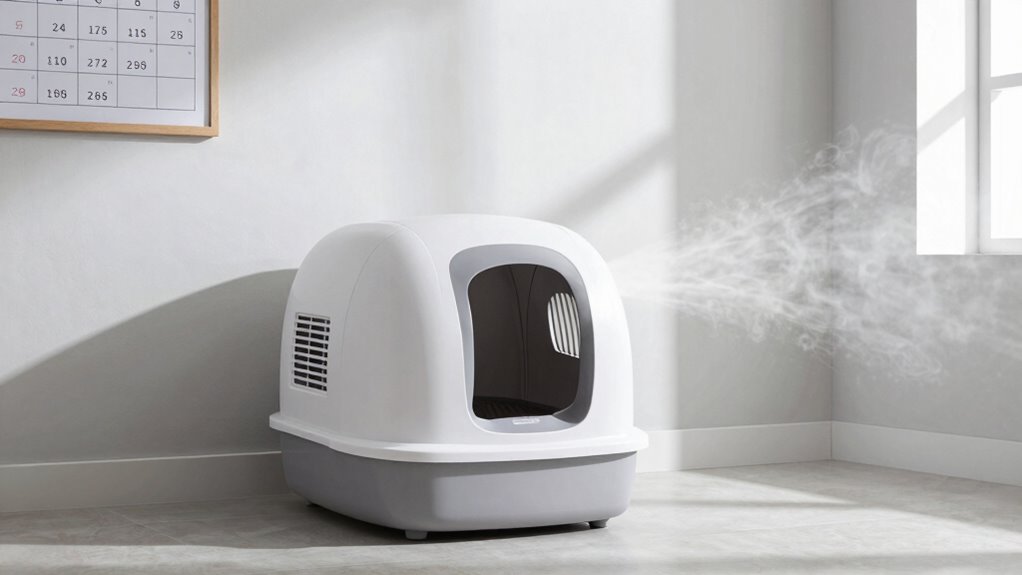

To truly control litter box odors, focus on optimizing airflow and establishing a consistent cleaning schedule. Use air purifiers or fans near the box to keep fresh air circulating, which helps prevent odor buildup. Scoop daily and change the litter regularly to minimize bacteria and smells. Combining good airflow with routine cleaning makes a noticeable difference—stick with these strategies, and you’ll discover more tips to keep your space smelling fresh.
Key Takeaways
- Proper airflow enhances air circulation, dispersing odors and preventing buildup around the litter box.
- Scheduling regular cleaning and scooping minimizes odor-causing bacteria and maintains freshness.
- Positioning air purifiers near the litter box ensures effective odor removal through continuous filtration.
- Combining airflow management with a consistent cleaning schedule offers a comprehensive odor control strategy.
- Maintaining routine and proper ventilation reduces odor retention, creating a cleaner indoor environment.
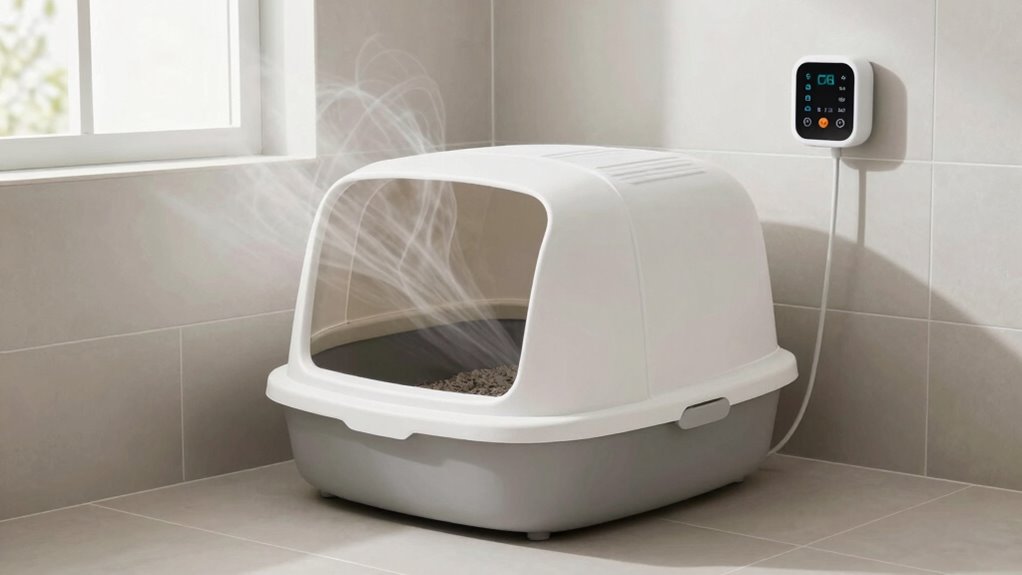
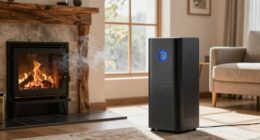
Litter box odor can quickly become a frustrating problem, especially if you’re not sure how to control it. The good news is that addressing odor isn’t just about scooping more often; it’s about creating an environment that actively minimizes smells. Air filtration plays a pivotal role here. Installing a high-quality air purifier near your litter box can considerably reduce airborne particles that cause odors to linger. Look for models equipped with HEPA filters and activated carbon, as they’re particularly effective at capturing both microscopic particles and odor molecules. These devices continuously cycle the air, preventing odors from building up and spreading throughout your home.
In addition to air filtration, odor neutralizers are your best friends. These products work by chemically reacting with odor molecules, either masking or destroying them altogether. You can find sprays, gels, or powders designed specifically for litter boxes. When used correctly, odor neutralizers can make a noticeable difference, especially when combined with regular cleaning. But don’t rely on them alone—use neutralizers as a supplement to proper hygiene routines, not a substitute. Always follow the instructions carefully to avoid overwhelming your space with artificial scents, which can sometimes be more irritating than the odor itself. Incorporating airflow management techniques can further enhance odor control, ensuring fresh air circulation and reducing stagnation.
Creating a schedule for cleaning your litter box is equally essential. The more frequently you scoop, the less chance there is for odor to develop and settle. Ideally, scoop at least once a day, and consider changing the litter completely every few weeks, depending on the type you use. Regular cleaning of the litter box with mild soap and water helps eliminate residual odors and prevents bacteria buildup, which can worsen smells over time. When you combine this routine with effective air filtration and odor neutralizers, you’re tackling the problem on multiple fronts, making it much easier to keep your space smelling fresh.
Frequently Asked Questions
Can Air Purifiers Alone Eliminate Litter Box Odors?
Air purifiers alone can’t fully eliminate litter box odors because of their limitations in odor molecule filtration. They can reduce some smells, but they don’t address airflow or scheduling issues that cause odors to linger. To truly control litter box odors, you need to combine an air purifier with good ventilation and a consistent cleaning schedule. This multi-faceted approach guarantees odors are effectively minimized and your space stays fresh.
How Often Should I Replace the Litter for Best Odor Control?
You should replace the litter every 7 to 10 days to keep litter freshness and guarantee ideal odor absorption. Think of it as rejuvenating a canvas; fresh litter keeps the air around your cat’s box vibrant and odor-free. Regular changes prevent build-up and help maintain a clean, inviting space. Don’t wait until it’s overwhelming—stay ahead of the smell for a cleaner home and happier kitty.
Are There Specific Litter Types That Reduce Odor More Effectively?
You should choose clumping, unscented litter for the best odor control, as it traps odors effectively without added scents that can irritate your cat. Clumping litter makes it easier to clean and reduces smells, while unscented options prevent overwhelming fragrances. Non-clumping litter tends to smell more and needs frequent changing. Scented litter might mask odors temporarily but can discourage your cat from using the box comfortably.
Does the Size of the Litter Box Impact Odor Retention?
You’ll notice that larger litter boxes with greater capacity substantially reduce odor because they contain more litter, which absorbs smells better. An enclosure design that’s spacious prevents waste from building up quickly, making odor less noticeable. Studies show that a bigger box with proper airflow and regular cleaning keeps odor under control longer. So, investing in a bigger, well-designed litter box helps you maintain a fresher environment effortlessly.
Can Adding Baking Soda Help With Litter Box Smell?
Adding baking soda can definitely help with litter box smell by enhancing odor absorption. You should sprinkle a thin layer of baking soda at the bottom of the box before adding fresh litter. This helps neutralize odors naturally and keeps your space smelling fresher longer. Just avoid overdoing it, and make sure to change the litter regularly for the best results. Baking soda is a simple, effective solution for odor control.
Conclusion
Remember, a clean litter box keeps odors at bay, but airflow and a consistent schedule are your secret weapons. Don’t wait until the smell takes over—stay proactive. As they say, “An ounce of prevention is worth a pound of cure,” so keep things fresh and regular. With a little effort, you can enjoy a odor-free space that’s comfortable for both you and your feline friend.