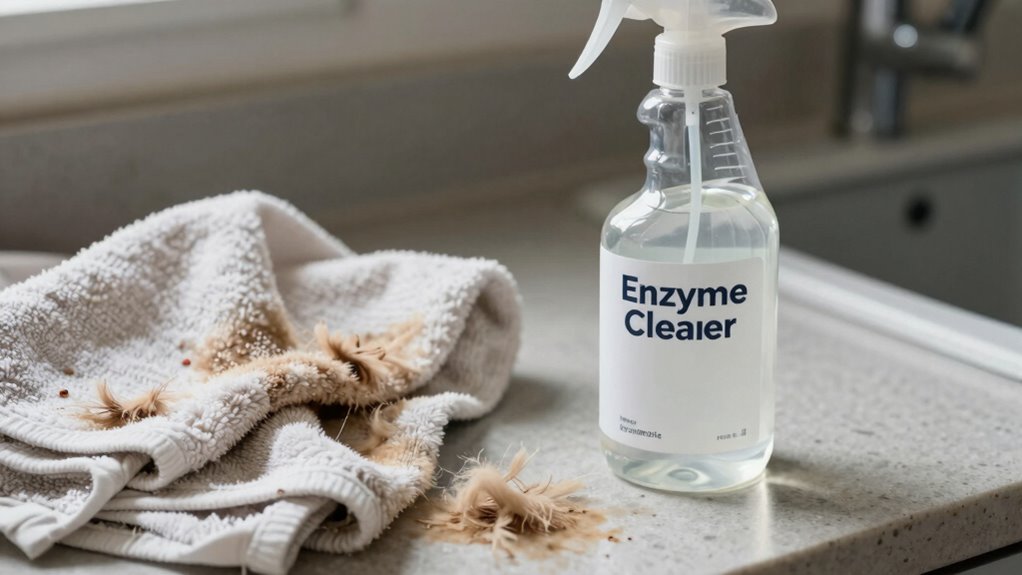
Enzyme cleaners break down organic stains and odors by using natural enzymes like proteases and lipases, but they work best under specific conditions. To be effective, you need to give them time—usually hours or overnight—and guarantee the environment isn’t too hot, cold, or dry. They’re most successful on fresh stains, but old, embedded spots may require multiple treatments. Keep these tips in mind to maximize their power and discover more insights below.
Key Takeaways
- Enzyme cleaners break down organic stains like food, pet accidents, and sweat, often outperforming traditional cleaners.
- They work best on fresh stains and require proper environmental conditions, such as moisture and suitable temperature.
- Enzymes need time (hours or overnight) to fully digest organic matter; quick fixes are usually ineffective.
- These cleaners are safe, biodegradable, and eco-friendly, making them suitable for households with children or pets.
- They are less effective on old, embedded, or heavily set-in stains, often needing multiple applications or alternative methods.
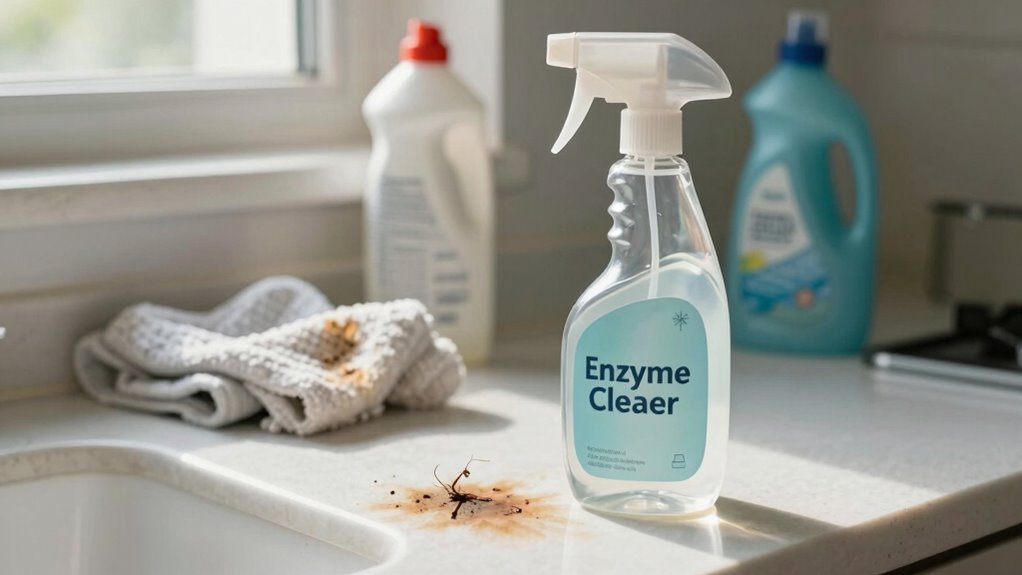
Have you ever wondered how enzyme cleaners can effectively tackle stubborn stains and odors? These products work by harnessing natural enzymes that break down organic matter, making them particularly useful for cleaning up messes rooted in biological materials like food, pet accidents, or sweat. Their effectiveness hinges on the specific enzymes they contain, such as proteases, lipases, or amylases, each targeting different types of stains. When used correctly, enzyme cleaners can be powerful tools, often surpassing conventional cleaning agents at removing tough spots and lingering smells. Proper enzyme activity depends on maintaining optimal environmental conditions for those enzymes to work effectively. However, understanding enzyme cleaners effectiveness isn’t just about knowing they can work — it’s also about recognizing their limitations. They perform best in conditions where the enzymes can actively break down organic material. That means they need time to work, usually a few hours or overnight, and an environment that isn’t too hot, cold, or dry, which can deactivate the enzymes. If you try to rush the process or use them on old, set-in stains, they might not deliver the results you’re hoping for. Also, enzyme cleaners are most effective on fresh stains; older or heavily embedded spots may require multiple treatments or additional cleaning methods.
When it comes to enzyme cleaners safety, they’re generally considered safe for most household surfaces and users. Because they rely on natural biological compounds, they tend to be less toxic than harsh chemical cleaners. This makes them a good choice for households with children, pets, or anyone sensitive to strong chemicals. Still, you should always read the label and follow instructions carefully, as some enzyme formulations might contain additives or preservatives that could cause irritation. Proper usage—such as wearing gloves or ensuring good ventilation—can help you avoid any unwanted reactions. Additionally, enzyme cleaners are biodegradable, which is a plus for environmentally conscious cleaning. They break down naturally without leaving harmful residues behind, making them safer for your home and the planet.
Frequently Asked Questions
Are Enzyme Cleaners Safe for Pets and Children?
Yes, enzyme cleaners are generally safe for pets and children when used properly, as they focus on breaking down organic stains without harsh chemicals. However, you should always check the label for pet safety and avoid ingestion or contact with eyes. Be mindful of chemical concerns, especially if your pets or kids have sensitivities. Keep the cleaner out of reach and follow instructions to guarantee safe, effective cleaning.
How Long Does It Take for Enzyme Cleaners to Work?
Like a skilled detective, enzyme cleaners work best when you give them time. Typically, they take 10 to 30 minutes to start breaking down stains, but this varies depending on enzyme concentration and stain type. For stubborn or deep-set stains, you might need to let the cleaner sit longer—sometimes up to a few hours. Patience is key; the longer they work, the better the results.
Can Enzyme Cleaners Remove All Types of Stains?
Enzyme cleaners can’t remove all types of stains because their biological breakdown targets specific substances like proteins, fats, or carbohydrates. Their stain removal efficiency depends on matching the enzyme to the stain’s composition. For example, they excel at organic stains like blood or food but struggle with synthetic or stubborn stains. So, while highly effective in many cases, enzyme cleaners aren’t universal solutions.
Do Enzyme Cleaners Have an Expiration Date?
Yes, enzyme cleaners do have an expiration date. Over time, their storage longevity and chemical stability decline, making them less effective. You should check the label for an expiration date and store the cleaner in a cool, dry place to extend its shelf life. Using expired enzyme cleaner might not yield the intended cleaning results because the enzymes can break down and become inactive, so it’s best to replace them when they expire.
Are Enzyme Cleaners Effective Against Mold and Mildew?
Enzyme cleaners can be effective against mold and mildew, especially for removal and prevention. They break down organic materials that mold feeds on, helping to eliminate existing growth and deter future development. To maximize their effectiveness, apply enzyme cleaners to affected areas and keep them dry afterward. While they work well for mild mold issues, severe infestations might require additional treatments or professional mold removal services.
Conclusion
Enzyme cleaners can be highly effective when used correctly, breaking down organic stains like food, blood, and pet messes. However, they don’t work well on synthetic or chemical stains. Did you know that enzyme cleaners can reduce bacteria and odor by up to 99%? So, next time you face tough stains, consider whether enzyme cleaners are your best option. Just remember, understanding when to use them guarantees you get the best cleaning results every time.